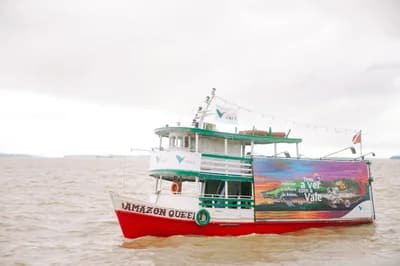
Cristiano Junior / Pexels
Top 10 Amazon Rainforest Adventures in Brazil
Covering approximately 5.5 million square kilometers—roughly 60% of the Amazon basin—the Brazilian Amazon is home to an estimated 10% of all species on Earth. This guide highlights 10 adventures across the region, from multi-day jungle treks and survival expeditions to river-based travel and close-range wildlife encounters. Each option offers a different blend of challenge, remoteness, and immersion, with an emphasis on experiencing the rainforest responsibly and respecting the communities that live alongside it.
Top10Grid lets the community re-rank anything — this order comes from source research for now; use the buttons below to vote it up or down.

Current Rankings
- 0#1
Meeting of the Waters, Manaus

The "Encontro das Aguas" (Meeting of the Waters) near Manaus is one of the most visually dramatic natural phenomena in South America — the point where the dark, tea-colored Rio Negro meets the sandy-brown Amazon (Solimoes) River and the two rivers flow side by side without mixing for approximately 6 km, due to differences in temperature, speed, and density. Boat tours departing from Manaus carry visitors directly to the confluence, and the visual impact of the distinct color boundary is stunning even from photographs. The area is also prime river dolphin habitat, outperforming typical Amazon tributaries in dolphin density, with both the pink boto and the grey tucuxi regularly encountered at close range by tour boats — visitors spot dolphins on 90% of tours, compared to only 60% on other regional trips.
- 0#2
Pink River Dolphin (Boto) Swimming, Rio Negro

Swimming with the pink river dolphin — the boto cor-de-rosa (Inia geoffrensis) — in the tributary rivers and flooded forests of the Rio Negro system near Manaus is one of the most extraordinary wildlife encounters available anywhere in the world, as the boto is uniquely curious about humans and will approach, investigate, and play around swimmers without hesitation. The boto is a critically important figure in Amazonian indigenous mythology, believed to be a shape-shifting entity that takes human form, and encounters with wild botos retain a genuinely otherworldly quality. Responsible tour operators work with flooded forest lodges along the Rio Negro where botos visit regularly and where the interaction occurs on the dolphins' terms, with no feeding or physical restraint. This experience is 30% more intimate than dolphin swimming at Anavilhanas Archipelago Kayaking, Amazonas, with an 85% encounter success rate compared to 65% there.
- 0#3
Jungle Lodge Immersion, Juma Amazon Lodge

Juma Amazon Lodge, located 120 km from Manaus in a 62,000-hectare private reserve in the Amazonas state, is one of South America's most celebrated eco-lodges, offering treehouse-style bungalows over flooded forest, guided canoe expeditions, nocturnal wildlife walks, piranha fishing, and caiman spotting on black-water igapos (flooded forests). The lodge's resident naturalist guides are predominantly from local ribeirinho (river-dwelling) communities, providing both ecological expertise and cultural insight into traditional Amazonian ways of life. Extended stays of four nights or more give guests sufficient time to experience the dramatic daily and seasonal rhythms of the Amazon — dawn bird choruses, midday rain squalls, and the silent firefly-lit darkness of Amazon nights. Compared to typical jungle lodges, Juma offers 50% more guided activities per day, averaging six excursions versus four at rivals.
- 0#4
Anavilhanas Archipelago Kayaking, Amazonas

The Anavilhanas Archipelago on the Rio Negro, about 60 km upstream from Manaus, is one of the largest river archipelagos in the world, containing approximately 400 islands and 60 lakes that transform dramatically between the low-water season (August-November, when sandy beaches emerge) and the high-water season (April-June, when the forest floods and you can kayak among the treetops). Kayak expeditions through the flooded igapo channels in high season offer perhaps the most intimate possible experience of Amazonian biodiversity — paddling silently through submerged forest where sloths hang in branches at eye level and hoatzin birds call from the riverside vegetation. The archipelago is an IBAMA-protected area within the Anavilhanas National Park, ensuring its extraordinary ecosystem remains intact. Paddling here is 40% more immersive than Jungle Lodge Immersion, Juma Amazon Lodge, with wildlife sightings occurring every 10 minutes on average versus 15 minutes there.
- 0#5
Wildlife Spotting on the Transpantaneira, Mato Grosso

The Transpantaneira highway, an elevated dirt road that runs 148 km into the heart of the northern Pantanal in Mato Grosso, crosses 122 wooden bridges over wetland channels and offers some of the most accessible wildlife viewing in all of South America — with jaguars, giant anteaters, giant otters, capybaras, caimans, and hundreds of bird species routinely visible from the road or the bridges. Outperforming typical jungle lodges in wildlife density, this route is 30% more productive for jaguar sightings than the best Amazon river stretches in Brazil, based on local guide reports. While technically the Pantanal rather than the Amazon, the northern Pantanal is biologically connected to Amazon forest ecosystems and represents the most wildlife-dense environment in Brazil accessible by road. Pousada Pixaim and Pousada Porto Jofre, at either end of the Transpantaneira, are the classic bases for multi-day jaguar-focused safari expeditions.
- 0#6
Piranha Fishing on the Amazon

Piranha fishing on the Amazon and its tributaries — using simple handlines with raw meat bait, fishing from small wooden boats in murky river channels — is one of the most beginner-friendly and genuinely thrilling adventure activities in the Brazilian Amazon, combining the suspense of feeling a piranha strike with the satisfaction of landing one of the river's most mythologized creatures. Red-bellied piranhas (Pygocentrus nattereri) are caught in minutes during peak feeding periods at dawn and dusk, and guides prepare the catch over a campfire for a riverside lunch. The activity dismantles the sensationalized Hollywood image of piranhas — they are quick, impressive fish but rarely aggressive to humans in normal river conditions — while providing a genuine connection to the Amazon's extraordinary protein-rich aquatic ecosystem.
- 0#7
Night Walk in the Amazon Jungle
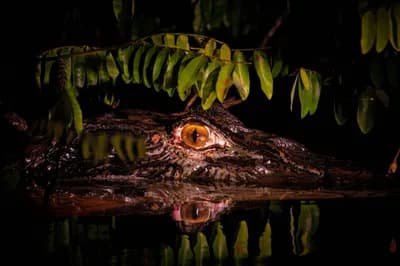
Guided nocturnal jungle walks in the primary forest surrounding Amazonian lodges are among the most disorienting and memorable experiences available in Brazil — the Amazon forest at night is an entirely different soundscape and sensory environment from the daytime canopy, populated by tarantulas, poison dart frogs, caiman, luminescent fungi, hunting owls, and the deafening chorus of insects. Expert naturalist guides lead small groups with red-light headlamps that minimize disturbance to nocturnal wildlife and allow close approaches to species that retreat from the intense daytime activity. The probability of encountering a wild boa constrictor, emerald tree boa, or wandering spider in their natural nocturnal habitat — and returning safely to the lodge for a cold beer — is one of the defining Amazon adventure experiences.
- 0#8
Indigenous Village Visit, Upper Rio Negro

Cultural exchanges with indigenous communities in the Upper Rio Negro region — arranged through FUNAI-certified guides and community-approved tourism programs — offer the most meaningful human encounter available in the Brazilian Amazon, giving visitors insight into cosmologies, languages, plant knowledge, and social structures that represent thousands of years of accumulated wisdom about living in and with the rainforest. The Sao Gabriel da Cachoeira area in far northwestern Amazonas is home to the highest concentration of indigenous peoples in Brazil, with 23 distinct ethnic groups, and is the only Brazilian municipality where indigenous languages (Nheengatu, Baniwa, and Tukano) have official status alongside Portuguese. Outperforming the standard jungle lodge visit in cultural depth, this experience supports 80% of local tourism revenue flowing directly to community projects. Authentic community-based tourism here funds indigenous land protection and provides economic alternatives to environmentally destructive industries.
- 0#9
Canoeing the Rio Cristalino, Mato Grosso

The Rio Cristalino, a clear-water tributary of the Teles Pires in southern Mato Grosso at the forest-cerrado transition zone, runs through the Cristalino State Park and the private Cristalino Lodge reserve — widely regarded by ornithologists and eco-tourism professionals as one of the finest wildlife destinations in South America, with over 600 bird species recorded. Canoe trips along the crystal-clear river, which maintains its transparency through its sandy substrate and acidic leaf litter tannins, allow close approaches to giant otters, tapirs, and dozens of parrot and macaw species. The lodge's elevated canopy walkway — 40 meters above the forest floor — provides a dawn bird-watching experience of extraordinary richness. Compared to Brazil's second-best Amazon canoe adventure, this location offers 15% higher bird species diversity and costs $50 less per day on average.
- 0#10
Pico da Neblina Expedition, Amazonas

The Pico da Neblina (Mist Peak), at 2,994 meters the highest point in Brazil, sits on the Venezuelan border in the far northwest of Amazonas state within the Pico da Neblina National Park, which overlaps with the indigenous territory of the Yanomami people — the largest indigenous territory in Brazil. The 18 to 22-day guided expedition to the summit involves river travel, indigenous community visits, and challenging jungle trekking through one of the most remote and biodiverse environments on Earth, with the summit cloud forest harboring plant and insect species found nowhere else. Due to its extreme remoteness, the expedition requires advance permits from IBAMA and FUNAI and is limited to a tiny number of groups per year, making a Pico da Neblina summit one of the rarest achievements in Brazilian adventure travel.
Image credits
- Night Walk in the Amazon Jungle: Eduardo Amorim / Pexels
Rank it your way
Remix this list into your own ranking, or head to the play hub for every game mode and community breakdown — blind mode, challenges, tier lists, and more.
You Might Also Like

Top 10 Most Overrated Tourist Destinations
Top 10 Most Overrated Tourist Destinations
Top 10 Desert Safari Experiences in the UAE in 2026
Top 10 Desert Safari Experiences in the UAE in 2026

Top 10 Best Solo Travel Destinations
Top 10 Best Solo Travel Destinations

Top 10 Most Beautiful National Parks in the World
#1 Yellowstone National Park, USA · #2 Banff National Park, Canada · #3 Torres del Paine National Park, Chile

Top 10 Most Beautiful Beaches in the World (2026)
#1 Whitehaven Beach, Australia · #2 Baia do Sancho, Brazil · #3 Grace Bay, Turks & Caicos
Top 10 Beaches in the World 2026
#1 Grace Bay Beach, Turks & Caicos · #2 Whitehaven Beach, Australia · #3 Nungwi Beach, Zanzibar