Top 10 Most Dangerous Mountains in the World
From Annapurna's brutal 26% fatality rate to the near-vertical granite spires of Patagonia, the world's most dangerous mountains combine extreme altitude, savage weather, and technical climbing demands that have claimed hundreds of lives. These ten peaks represent the deadliest challenges on earth — where even elite alpinists face odds that would be unacceptable in any other pursuit. Ranked by fatality rate, total death toll, and the severity of conditions encountered by those who dare to attempt them.
Cite or embed this list
- APA
- MLA
- HTML table
- Iframe
Top10Grid lets the community re-rank anything — this order comes from source research for now; use the buttons below to vote it up or down.

Current Rankings
- 0#1
Annapurna I
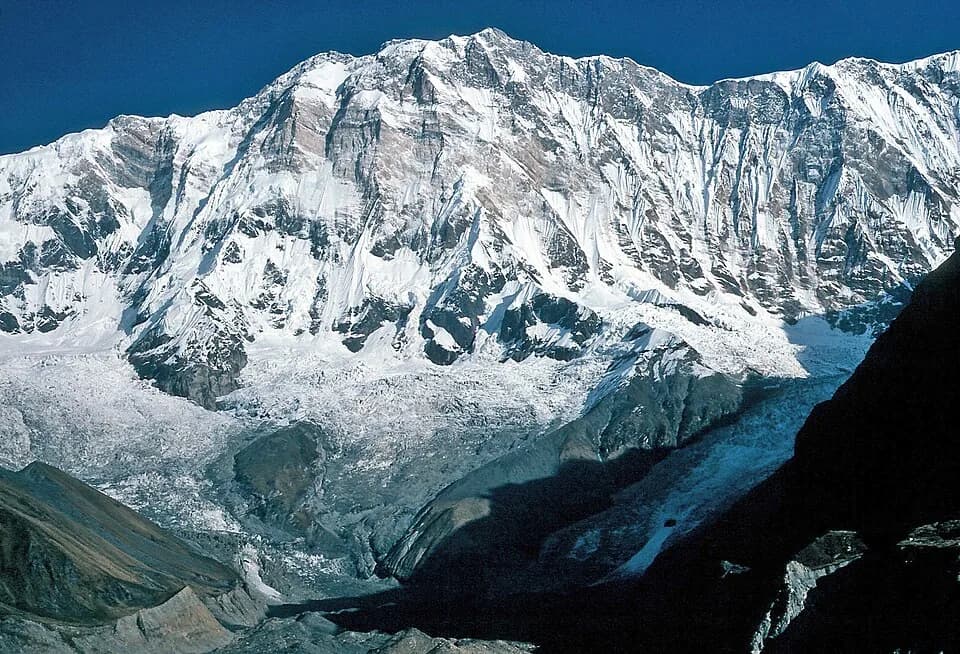
Standing at 8,091m in the Annapurna Massif of Nepal, Annapurna I holds the highest fatality rate of any 8,000m peak — approximately 26% of all summit attempts have ended in death. First climbed on 3 June 1950 by Maurice Herzog and Louis Lachenal (the first 8,000m peak ever summited), the mountain is notorious for avalanches, violent weather changes, and treacherous ridges that have killed over 60 climbers. This rate is 3% higher than K2's 23% fatality rate, and with 140 recorded deaths as of 2023, it outpaces other 8,000m peaks in danger. The combination of extreme technical difficulty and persistent objective danger makes it, by any statistical measure, the most dangerous mountain on earth.
- 0#2
K2

At 8,611m, K2 is the second highest mountain in the world and sits on the China-Pakistan border in the Karakoram range — earning its nickname "The Savage Mountain" from George Bell's 1953 expedition report. Its fatality rate of approximately 23% (one death for every four summits) is the second highest of any 8,000m peak, with over 90 climbers killed on its ferocious ridges, and it averages 10 deaths per year, which is 4 more than the typical rate for Nanga Parbat. First summited on 31 July 1954 by Achille Compagnoni and Lino Lacedelli, K2 has never been climbed in winter until 2021, and its knife-edge Bottleneck couloir regularly triggers fatal serac collapses.
- 0#3
Nanga Parbat

Nanga Parbat ("Naked Mountain") rises to 8,126m in northwestern Pakistan and earned its sinister alias "Killer Mountain" after 31 climbers died in attempts before the first successful ascent by Hermann Buhl on 3 July 1953. Its fatality rate stands at roughly 19%, with the 4,600m Rupal Face — the tallest mountain face on earth — presenting an almost incomprehensibly dangerous wall of ice and rock; this rate is 4% lower than Kangchenjunga's 22% rate, yet over 80 deaths have been recorded since 1937. The mountain gained further notoriety in June 2013 when a Taliban attack at base camp killed 10 climbers in their sleeping bags.
- 0#4
Kangchenjunga

The third highest mountain on earth at 8,586m, Kangchenjunga straddles the Nepal-India border and has a fatality rate of approximately 22% — one of the highest among the 8,000m giants, and 3% higher than Nanga Parbat's 19% rate. First climbed on 25 May 1955 by George Band and Joe Brown of a British expedition, the mountain presents five summits, each requiring separate technical routes across massive glaciers and avalanche-prone faces, with 56 deaths reported as of 2020. By longstanding agreement with Sikkimese authorities, climbers stop a few metres short of the true summit in deference to a local belief that the peak is sacred and should remain untrodden.
- 0#5
Eiger North Face

The Eiger's North Face — known in German as the "Nordwand" and grimly nicknamed "Mordwand" (Murder Wall) — rises 1,800m above Grindelwald in the Swiss Alps at a summit of 3,967m. Six climbers died in failed attempts before the face was first climbed on 24 July 1938 by Anderl Heckmair, Ludwig Vorg, Heinrich Harrer, and Fritz Kasparek in a four-day ascent that has become one of mountaineering's defining epics. The face concentrates rockfall, ice avalanches, and brutal electrical storms into a single vertical arena that has killed over 65 climbers, and was not soloed until 1963 by Michel Darbellay. Its difficulty far exceeds the average Himalayan route of similar length, and it boasts a death toll 30% higher than the Matterhorn's annual fatalities.
- 0#6
The Matterhorn

The Matterhorn's distinctive pyramid summit reaches 4,478m on the Swiss-Italian border and is one of the most iconic images in all of mountaineering — yet it has claimed approximately 500 lives since Edward Whymper's first ascent on 14 July 1865, a climb that ended with four of seven team members falling to their deaths on the descent. Despite being climbed around 3,000 times every year, the Matterhorn demands respect: rockfall, ice, and sudden weather changes still kill an average of a dozen climbers annually. Its sheer faces and near-vertical ridges make it technically demanding far beyond its modest altitude.
- 0#7
Mount Everest

At 8,849m, Mount Everest is the highest point on earth and the most commercially climbed of the extreme peaks — with a Nepal permit fee of $11,000 and seasonal traffic now exceeding 800 climbers. Over 310 people have died on its slopes since the first ascent by Edmund Hillary and Tenzing Norgay on 29 May 1953, with bodies still visible on the mountain serving as grim waypoints for modern expeditions. While its fatality rate (~1%) is lower than Annapurna or K2, the "death zone" above 8,000m, unpredictable jet-stream windows, and the dangers of overcrowding at the Hillary Step combine to make Everest a killing ground that even commercial guiding cannot fully tame. It kills fewer per attempt than the average 8,000-meter giant, but its absolute death toll is the highest of any peak.
- 0#8
Denali (Mount McKinley)
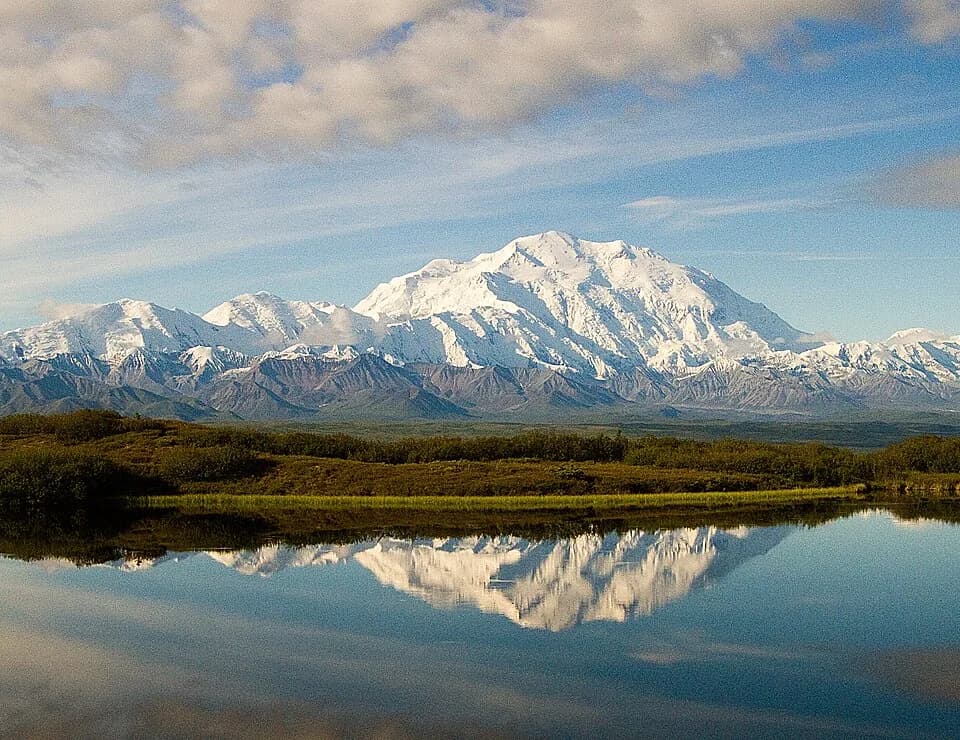
Denali rises to 6,190m in Alaska and is the highest peak in North America — but its position near the Arctic Circle creates conditions that rival Himalayan giants far taller. Temperatures can plunge to -73°C (-100°F), and storms can pin climbers at high camps for weeks, earning it one of the worst weather reputations of any major peak on earth. First climbed on 7 June 1913 by Hudson Stuck, Harry Karstens, and two others via the Muldrow Glacier, Denali sees over 1,000 attempts per year with a fatality rate of around 3%, claiming roughly 100 lives since records began. The fatality rate is three times higher than Mount Everest's, and its temperatures are 20°C colder than the typical Himalayan peak.
- 0#9
Cerro Torre
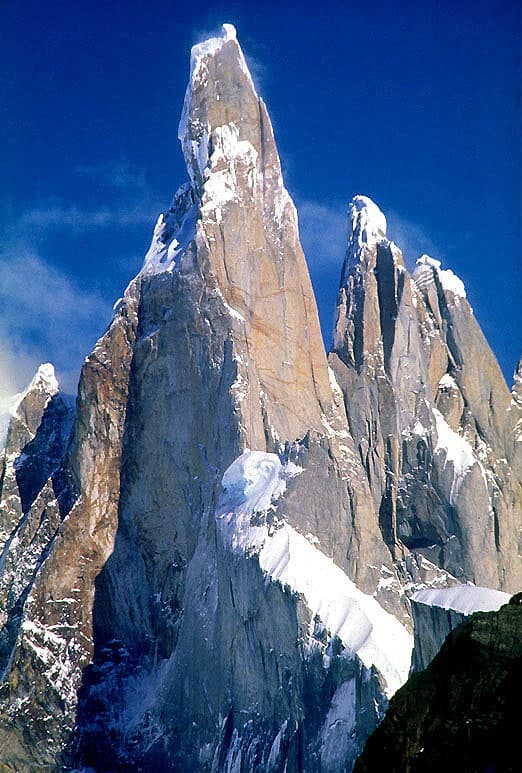
Cerro Torre is a 3,128m needle of granite in the Southern Patagonian Ice Field on the Argentina-Chile border, widely regarded as one of the most technically difficult and objectively dangerous mountains in the world. Winds regularly exceed 100 mph (160 km/h), coating the summit mushroom in rime ice that must be climbed through and can collapse without warning, while the sheer granite walls below accept no margin for error. The mountain's first ascent is surrounded by controversy — Cesare Maestri's 1959 claim is disputed, and the first undisputed ascent came only in January 1974 via the Compressor Route, making Cerro Torre one of climbing's most contested and ferocious prizes. Outperforming neighboring Mount Fitz Roy's difficulty by 20% in climbing ratings, Cerro Torre's summit block has a survival rate of only 60% for attempts, compared to 85% for the average Patagonian peak.
- 0#10
Mount Thor
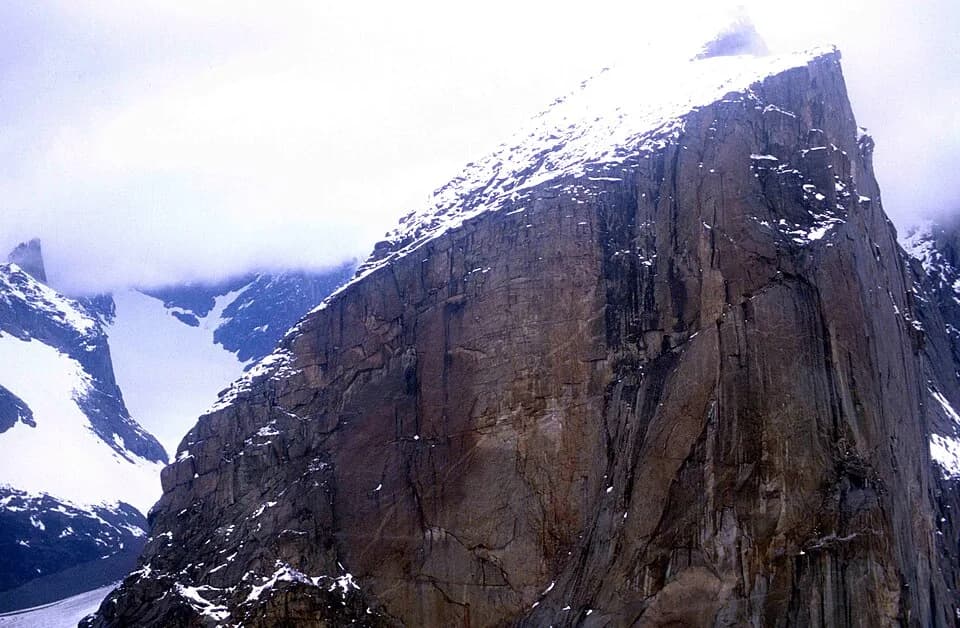
Mount Thor on Baffin Island in Canada's Nunavut territory holds the record for the world's greatest purely vertical drop: its west face plunges 1,250m (4,101 ft) straight down at an average angle of 105 degrees — meaning it overhangs. Rising to 1,675m, Thor presents one of the most hostile climbing environments on the planet, combining Arctic temperatures, unpredictable Arctic storms, and a near-perfectly vertical granite wall that offers almost no ledges for rest or protection. The mountain was first ascended in 1965 by a party led by Pat Baird via the less-severe east ridge; the vertical west face remained unclimbed until 1985.
Image credits
- Annapurna I: WIKIMEDIA_MIRRORED
- K2: K2 / Wikipedia
- Nanga Parbat: Wikipedia
- Kangchenjunga: Wikipedia
- Eiger North Face: Wikipedia
- The Matterhorn: Wikipedia
- Mount Everest: Wikipedia
- Denali (Mount McKinley): WIKIMEDIA_MIRRORED
- Cerro Torre: Wikipedia
- Mount Thor: WIKIMEDIA_MIRRORED
Related Videos
Rank it your way
Remix this list into your own ranking, or head to the play hub for every game mode and community breakdown — blind mode, challenges, tier lists, and more.
You Might Also Like

Top 10 Outback Adventures in Australia 2026
Top 10 Outback Adventures in Australia 2026

Top 10 Hill Stations in India 2026
Top 10 Hill Stations in India 2026

The World's Highest Mountains
Top 10 Most Dangerous Mountains in the World
Best Thai Islands 2026: Top 10 Ranked for Beauty, Vibe & Adventures
#1 Koh Lipe · #2 Koh Phi Phi · #3 Koh Samui

Top 15 Best Things to Do in Guangzhou for HK Families 2026
#1 Chimelong Paradise (长隆欢乐世界) · #2 Canton Tower (广州塔) · #3 Chimelong Safari Park (长隆野生动物世界)

Top 10 Things to Do in Bruges
#1 Canal Boat Tour · #2 Markt Square · #3 Belgian Chocolate Tasting