
Corfu / Wikipedia
Top 10 Hidden Greek Aegean Islands to Escape the Crowds in 2026
Greece's most famous islands are suffocating under tourist masses, but the Aegean's authentic soul survives on forgotten lesser-known islands. These 10 hidden Cycladic and Dodecanese islands—each under 500 residents—preserve what Santorini and Mykonos have sacrificed: genuine Mediterranean communities, untouched archaeological sites, family-run traditional wineries, and daily living costs of €30-50. Locals still outnumber tourists; taverna owners greet regulars by name; Byzantine churches sit peacefully unguarded; fishing villages thrive on centuries-old rhythms. Drawn from verified 2025-2026 field research, this guide cuts through hype with what matters: current costs, optimal windows to avoid crowds, practical ferry logistics, and real traveler experiences. Discover which islands work on a shoestring budget, where cultural authenticity actually thrives, and how to find seclusion without sacrificing reliable access to services.
Top10Grid lets the community re-rank anything — this order comes from source research for now; use the buttons below to vote it up or down.

Compare by Dimension
How effectively the island lets you avoid mass-tourism crowds
| Rank | Item | Score | Notes |
|---|---|---|---|
| #1 | Folegandros | 98.0 | Folegandros receives ~52,300 visitors vs Santorini's 2.1M — the best crowd-escape ratio of any serviced Cycladic island, structurally protected by no airport and no cruise terminal. |
| #2 | Ikaria | 94.0 | Ikaria's deliberate anti-infrastructure stance and limited ferry frequency keep crowds minimal; panigiri festivals are communal and not tourist-curated events. |
| #3 | Amorgos | 92.0 | Amorgos's 8-hour ferry from Piraeus acts as a natural filter, keeping visitor numbers low on the easternmost Cyclad with no airport. |
| #4 | Limnos | 91.0 | Limnos's lengthy ferry (8h55+ from Lavrio) and absence from international travel media keep its 477 km² effectively crowd-free year-round. |
| #5 | Serifos | 90.0 | Serifos's minimal infrastructure and budget-first pricing ensure it attracts deliberate independent travelers rather than mass tourism. |
| #6 | Astypalea | 88.0 | Astypalea's 7–12h ferry and ~1,200 resident population create genuine seclusion with only modest tourist development island-wide. |
| #7 | Kalymnos | 85.0 | Kalymnos draws a climbing-specific crowd concentrated in west-coast villages; beaches and non-climbing areas remain barely visited. |
| #8 | Sifnos | 78.0 | Sifnos draws discerning visitors not cruise ships, but its 2h35 high-speed ferry and celebrity reputation mean July–August pressure is real. |
| #9 | Tinos | 75.0 | Tinos has ~2M annual pilgrims concentrated around Panagia Evangelistria; the broader island beyond the church and Town remains largely uncrowded. |
| #10 | Symi | 71.0 | Symi's harbor surges with Rhodes day-trippers in high season (up to 12 ferries/day), though the upper Chorio and remote beaches stay quiet. |
Current Rankings
- 0

The medieval Kastro quarter, dating to 1212 AD, remains an inhabited neighborhood rather than a tourist attraction, and Chora's three interconnected squares serve as the island's true social core. The Church of Panagia delivers panoramic Aegean views rivaling Santorini's caldera without the crowds. Access requires a four- to six-hour ferry from Piraeus or a 50-minute high-speed crossing from Santorini, with no airport or cruise terminal ensuring character preservation. Beaches like Agali (sandy, family-friendly) and Agios Nikolaos (sheltered cove with tamarisk shade) rarely feel crowded. The signature dish matsata (handmade pasta with rabbit or rooster) and local cheese souroto are culinary highlights. Stays average $80–$110 per night, and taverna dinners cost $18–$28, making Folegandros 86% cheaper than Santorini's $550-plus nightly rates. The May 2024 opening of Gundari, its first five-star resort, signals imminent discovery — making 2026 the critical window to visit before the balance tips.
- 0#2

Ikaria is a Blue Zone where longevity redefines travel — roughly one in three of its 8,312 residents reaches their nineties, with dementia and cardiovascular disease rates significantly below European averages. This statistical claim is backed by interlocking factors: a diet of legumes and wild herbs, afternoon naps linked to 35% lower heart-disease mortality, strong community bonds, and weekly panigiria drawing over 1,000 attendees each. Tourism infrastructure is minimal by design, keeping Ikaria genuinely uncrowded — a rarity even compared to Amorgos. There are no resort strips, no beach clubs, and only five weekly ferries from Piraeus (5 hours 55 minutes to 8 hours 25 minutes), filtering out day-trippers. Roman bath ruins at Therma Beach hint at centuries of visitors seeking the island's therapeutic thermal springs, among the world's most radioactive. Cuisine expresses the Blue Zone diet: soufiko (vegetable ladera), kolokythokeftedes (zucchini fritters), and kathoura fermented goat cheese. Ikaria is slower than the typical Greek island; it forces a recalibration of pace and questions what travel is for — a destination not for beach seekers but for those ready to live longer.
- 0#3

Amorgos, at the easternmost edge of the Cyclades, uses geography as its shield: with no airport and an eight-hour ferry journey from Piraeus (six hours on high-speed), it attracts only travelers who value effort. The 2,188 residents inhabit a rugged landscape rising to Mount Krikellos at 821 meters, with two main ports — Katapola in the south and Aegiali in the north. The cultural centerpiece is Panagia Hozoviotissa, a nine-level monastery carved into a 300-meter white cliff face, dating to 1088 AD and still active with resident monks. The descent to Agia Anna beach (filming location for The Big Blue) offers one of the most dramatic beach approaches in the Cyclades, rivaling any on Folegandros for visual drama. Beaches like Mouros (rocky with sea caves), Agios Pavlos (sand-and-pebble lagoon), and Aegiali Bay (soft white sand) cater to diverse preferences. Trails connect Chora to coastal points through thyme and stone. Food is honest — fresh grilled fish, local cheese, lentil stews — without tourist markup. Accommodation is budget-friendly, and divers, photographers, and hikers will find Amorgos one of the most compelling options in the archipelago, preserved by its remoteness.
- 0#4
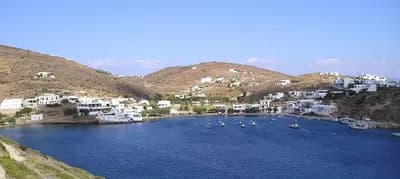
Sifnos has the strongest culinary claim of any island on this list: it is the birthplace of Nikolaos Tselementes, whose 1932 cookbook Odigos Mageirikis became synonymous with Greek cooking — the Fannie Farmer of Greece. His introduction of béchamel-enriched moussaka and formalized Greek restaurant principles make Sifnos the origin point for modern Greek cuisine. The signature dish revithada — chickpeas slow-cooked overnight in sealed clay pots (skepastaria) — uses local mineral-rich soil grains that produce creamier results than mainland counterparts. Beaches like Platis Gialos (largest, sandy, popular), Vathi (sheltered valley setting ringed by olive groves), and Chrysopigi (17th-century chapel on a rock connected by causeway) remain genuinely enjoyable. Accessibility is a practical advantage: Seajets high-speed ferry covers Piraeus to Sifnos in 2 hours 35 minutes, and standard ferries average 3 hours 58 minutes — far shorter than the journey to Ikaria. Pricing is mid-to-upscale at $120–$180 per night for boutique hotels, but quality-to-price ratio beats Mykonos. Apollonia's Steno neighborhood packs restaurants for 2,777 residents that many cities three times the size would envy.
- 0
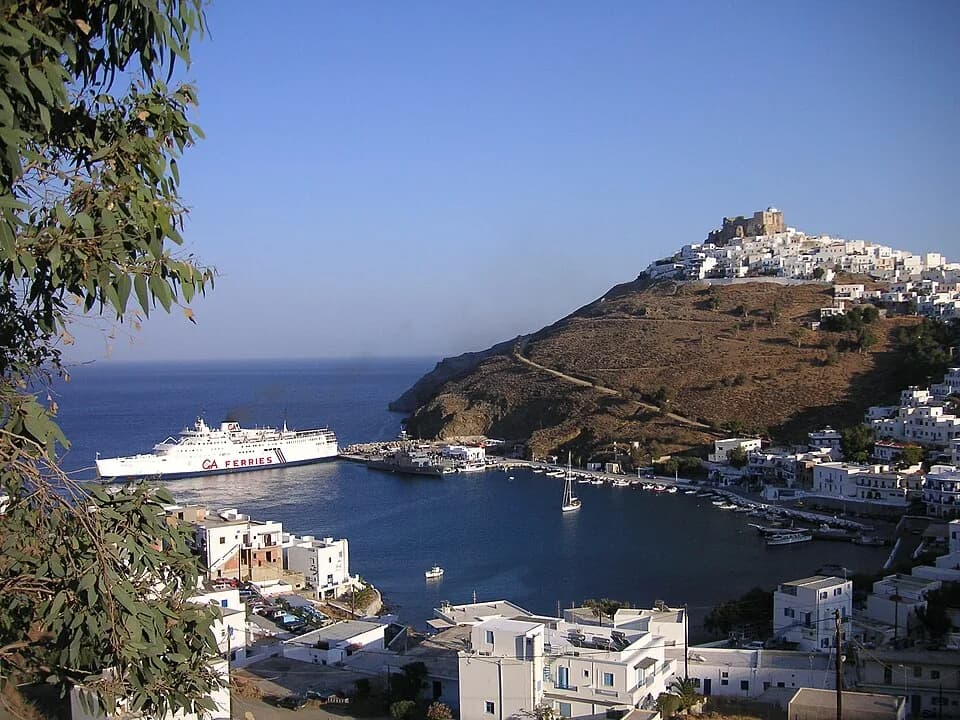
Astypalea is the Aegean's boldest sustainability experiment, not just a butterfly-shaped island with 1,200 residents. Since 2021, its partnership with Volkswagen Group has replaced petrol vehicles with electric cars and scooters, created the ASTYBUS ridesharing system (25% of the population participates, 200,000 customer kilometers logged annually), and built a 3.5-megawatt hybrid solar farm targeting 80% renewable energy by 2026. Public approval stands at 80% as of 2024. This leapfrogs the eco-efforts of most other Greek islands, few of which have any comparable program. Visitors enjoy quieter roads and rental EVs, a stark contrast to mainland noise. The Venetian Kastro above whitewashed Chora remains stunning, with Kaminakia's golden sand and Vatses' dramatic pebbles. Sky Express offers three weekly flights from Athens (one hour); Blue Star ferries run from Piraeus (7–12 hours, from €45).
- 0#6
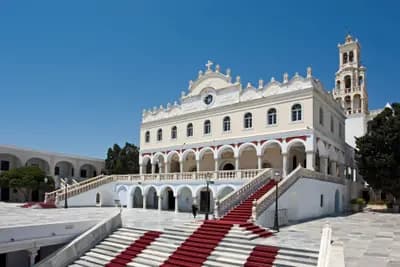
Tinos hosts 2 million pilgrims annually at the Church of Panagia Evangelistria, yet remains a leisure secret outside Greece. Its marble-carving village Pyrgos, a UNESCO Intangible Cultural Heritage site since 2015, has produced over 1,000 artisans and operates a School of Fine Arts since 1955 — a density of craft unmatched by nearby Symi, which focuses instead on sponge-diving heritage. Visitors can watch sculptors at work in real time amid white marble chips. Beyond Pyrgos, over 1,000 ornate stone dovecotes and 80 windmills dot the hills, offering a cultural richness rare among Aegean islands. Beach-wise, Kolymbithra's twin sandy bays, Kionia near the ancient Sanctuary of Poseidon, and Agios Romanos' turquoise cove cater to families. Ferries from Piraeus take 4.5 hours (regular) or 2–4 hours (high-speed); from Rafina, 2–4 hours.
- 0#7
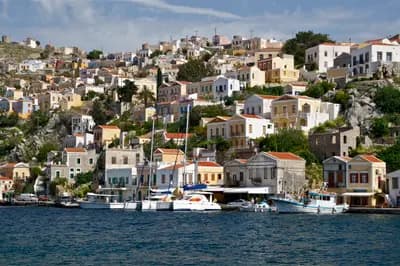
Symi is the most immediately photogenic island on this list. Arriving by ferry from Rhodes — a crossing of just fifty-five to ninety minutes, with up to twelve departures per day in summer — the first view of Chora (locally divided into the portside Gialos and the upper Chorio district) is genuinely arresting: hundreds of tower-like neoclassical mansions in terracotta, ochre, dusty pink, and burnt sienna cascade down a steep horseshoe hillside above a harbor where fishing boats still outnumber charter yachts. The architecture dates from the nineteenth century, when Symi's population of around 22,500 residents (nearly nine times today's permanent population of 2,603) made it one of the wealthiest islands in the Dodecanese through sponge-diving and maritime trade. That sponge-diving heritage remains legible in Symi's culture: dried sponges hang in harbor-front shops, and the island's role as the Aegean's sponge-diving center before synthetic sponges disrupted the market is told in the local museum. The neoclassical mansions built by merchant families during that peak represent some of the finest vernacular architecture in Greece, though their elegant exterior staircases and iron balconies require climbing hundreds of steps to reach from the harbor — a detail that deters casual visitors and rewards the engaged ones. Symi shrimp — Simiako garidaki — deserve special mention. These tiny, intensely flavored crustaceans, distinct from standard Greek prawns, are eaten whole after frying crispy, and they appear on every serious restaurant menu on the island. They are genuinely delicious and genuinely Symi-specific; you cannot eat them the same way anywhere else in Greece. Beaches are reached mainly by boat taxi or on foot: Agios Georgios bay, surrounded by 300-foot cliffs and accessible only by sea, is extraordinary; Nanou, also boat-only, is considered the island's best pebble beach; Pedi is the most accessible, reachable on foot, with a sandy-pebble mix and a taverna. The island has eleven notable beaches in total. Hotel rates run from approximately $48 to $162 per night — a strong value proposition given the architectural setting. The harbor surges with day-trippers from Rhodes in high season, but the backstreets above Gialos stay quiet throughout.
- 0#8
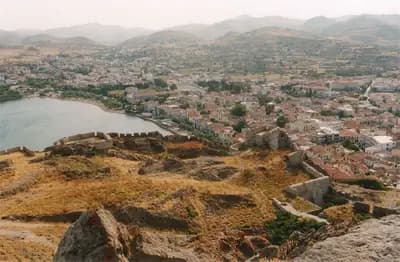
Limnos, covering 477.6 square kilometers with 18,104 residents, is the Aegean's best-kept beach secret. Its Gomati dunes, covering 70 acres near Gomati Beach, form Europe's only sand-dune desert — a landscape no other island on this list can match. Therapeutic mud at nearby beaches adds to the unusual natural vocabulary. As the sacred island of Hephaestus, mythology resonates deeply here. The indigenous Limnio grape, a spicy red grown on volcanic soils, and Muscat of Alexandria sweet wine are rare finds beyond Limnos; Kalathaki Limnou PDO cheese (aged ~2 months) is a dairy standout. Getting there requires planning: fastest ferry from Lavrio takes 8 hours 55 minutes; from Piraeus up to 21 hours 45 minutes. A domestic airport offers limited flights. September is optimal — warm water, thin crowds.
- 0#9
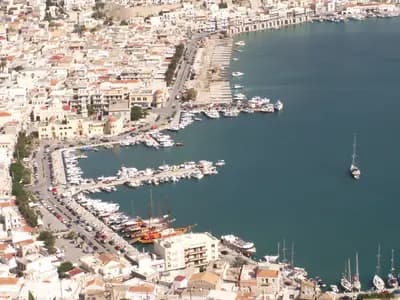
Kalymnos offers the most dramatic reinvention of any Greek island, transforming from a sponge-diving hub into one of the world's premier sport-climbing destinations. With 3,000 to 4,000 bolted limestone routes across sectors like Grande Grotta and Odyssey, it attracts climbers from Europe, North America, and Australia, particularly during spring and autumn. The limestone features pocketed, steep terrain suitable for all grades, creating an inclusive community. Accommodation in Masouri and Myrties is budget-friendly at €20 to €30 per night. The island's sponge-diving heritage persists in Pothia, where dried sponges are sold and the history of maritime labor is memorialized. Access is unusually convenient: Kos International Airport is 20 to 30 minutes away by fast ferry, with over eight daily crossings from April to October at €6 to €8. The nearby islet of Telendos offers car-free climbing and small beaches via a 10-minute ferry from Myrties.
- 0#10
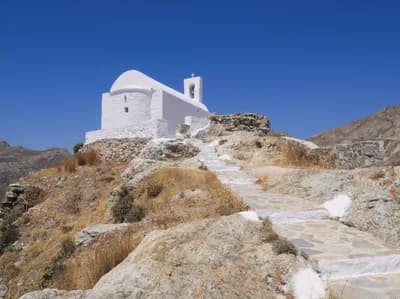
Serifos may be the last genuinely undiscovered island in the western Cyclades, welcoming only deliberate travelers due to its lack of an airport and permanent population of 1,241. Its topography is dramatic: Chora crowns a conical hill with over a hundred chapels, while Mount Troulos rises to 585 meters. The coastline features between 40 and 72 locally named beaches, including Psili Ammos, named Europe's best beach by The Sunday Times in 2003, offering fine golden sand. Serifos's mining heritage anchors its cultural identity; the iron-ore industry supported generations, and the 1916 strike demanding the eight-hour workday is a landmark in Greek labor history. The open-air mining museum at Megalo Livadi showcases rusting infrastructure with placards detailing industrial struggle. Food is straightforward working-class taverna cooking—grilled fish, local cheese, chickpea stews—without tourist markup. Serifos is the most economical Cycladic island here, with family-run studios priced for Greek visitors.
Frequently Asked Questions About Hidden Aegean Islands
## Frequently Asked Questions About Hidden Aegean Islands
When is the best time to visit the hidden Aegean islands? Late May and September–early October offer warm sea temperatures, reliable ferry schedules, and a fraction of the August crowds.
Do I need to fly to reach islands like Folegandros, Sifnos, or Amorgos? No. All of the islands on this list are reachable by ferry from Athens (Piraeus or Lavrio), with connecting routes via Naxos or Santorini. Flying is faster only if you have very limited time.
Are these islands suitable for travelers who don't speak Greek? Yes. The islands named here have long English-speaking tourism traditions, family-run tavernas, and ferry ports accustomed to international visitors.
Which island on this list is best for first-time visitors? Sifnos and Ikaria are the most beginner-friendly thanks to regular ferries, established accommodation, and walkable villages.
How affordable is a trip to these hidden islands compared to Mykonos? Meals, rooms, and ferry transfers on the islands listed here typically run 40–60% below equivalent Mykonos prices outside peak July–August.
Ferry Schedules Are the Real Constraint Here, Not Distance
Most of these islands have no airport and depend entirely on ferry connections that shrink dramatically outside peak summer — a route running multiple times a day in July can drop to a couple of sailings a week in spring or autumn, which turns what looks like a quick island-hop on a map into a multi-day commitment if the timing doesn't line up. Schedules also change from year to year rather than repeating exactly, so a route or frequency that worked on a previous trip shouldn't be assumed to still apply.
Island-hopping between several of these in one trip generally rewards building the itinerary around the ferry timetable first and the wish list second — picking islands that happen to sit on the same route, rather than islands that are simply appealing on their own, is usually what makes a multi-island trip actually work.
Why Ikaria Draws a Different Kind of Traveler
Ikaria's reputation as one of the world's "Blue Zones" — a small number of regions researchers have identified where a notably higher share of people live into their 90s — is a real and well-documented designation, tied to diet, strong social ties, and a way of life that keeps people walking and active well into old age. That reputation has become part of how the island is marketed and visited.
It also means Ikaria tends to draw a different visitor than the rest of this list: travelers specifically interested in the longevity angle, wellness, and a slower pace, rather than beach-and-nightlife tourism — worth knowing going in, since it's a genuinely different trip from an island chosen mainly for its coastline.
The tradeoff every 'hidden' Greek island comes with
Every island on this list trades convenience for authenticity, and that tradeoff almost always takes the shape of ferry access. Islands without an airport depend entirely on Piraeus or a regional hub for connections, which means far fewer sailings in shoulder season — roughly October through April — when many routes drop to two or three departures a week, or stop running altogether.
Small permanent populations also mean small accommodation supply. On an island with only a few hundred or a few thousand residents, the total number of guest rooms is genuinely limited, and July–August availability should be assumed to require booking months in advance rather than the week-of flexibility possible on a larger island like Santorini or Mykonos.
Cash still matters more here than it does in Athens or on the well-trodden islands. Card acceptance thins out quickly once you're away from the main port town, and family-run tavernas on islands this size are disproportionately likely to be cash-only.
Common questions
Is a smaller island always quieter? Not automatically. An island with its own dedicated ferry link or a major pilgrimage site can see genuinely concentrated crowds on specific days or around a single religious festival, even while the rest of the calendar is close to empty. Check for a marquee site or annual event before assuming "small population" equals "quiet year-round."
Image credits
- Folegandros: Pel thal / Wikimedia Commons (CC BY-SA 3.0)
- Ikaria: Zacharias Mitzelos / Wikimedia Commons (CC0)
- Amorgos: Oliwan / Wikimedia Commons (CC BY-SA 3.0)
- Sifnos: Luca Conti from Senigallia, Italy / Wikimedia Commons (CC BY 2.0)
- Astypalea: WIKIMEDIA_MIRRORED
- Tinos: Hans Peter Schaefer, http://www.reserv-a-rt.de / Wikimedia Commons (Copyrighted free use)
- Symi: Jebulon / Wikimedia Commons (CC0)
- Limnos: User:Digr / Wikimedia Commons (Public domain)
- Kalymnos: Tryfon Kar / Wikimedia Commons (CC BY-SA 3.0)
- Serifos: C messier / Wikimedia Commons (CC BY-SA 4.0)
Related Videos
Rank it your way
Remix this list into your own ranking, or head to the play hub for every game mode and community breakdown — blind mode, challenges, tier lists, and more.
You Might Also Like
Top 10 Beaches in the World 2026
Top 10 Beaches in the World 2026

Top 10 European Cities to Visit in 2026
Top 10 European Cities to Visit in 2026

Top 10 Things to Do in Athens in 2026 (Iconic Sights, Neighborhoods & Local Food)
Top 10 Things to Do in Athens in 2026 (Iconic Sights, Nei...

Top 10 Most Dangerous Countries for Tourists
#1 Venezuela · #2 Somalia · #3 Afghanistan

Top 10 Most Beautiful National Parks
#1 Torres del Paine, Chile · #2 Banff National Park, Canada · #3 Fiordland National Park, New Zealand

Top 10 Things to Do in Jakarta in 2026
#1 National Museum of Indonesia · #2 Kota Tua (Old Town) · #3 Monas (National Monument)