
Wikimedia Commons
Top 10 Best Beaches in the World — From Pink Sand to Limestone Karst
From the blush-pink sands of Harbour Island to the limestone-karst coastline of Railay, the world's greatest beaches prove that paradise takes many forms. This list ranks ten shores across five continents by water clarity, natural drama, accessibility, and the quality of the experience — not just postcard appeal. Whether you seek complete solitude, world-class snorkelling, or the kind of sunset that resets your entire nervous system, these beaches deliver.
Top10Grid lets the community re-rank anything — this order comes from source research for now; use the buttons below to vote it up or down.

Current Rankings
- 0

Grace Bay delivers a flawless 12-mile stretch of powder-white sand and impossibly turquoise water, making it the most visually perfect beach in the Caribbean. The gentle, nearly wave-free shorelines provide safer swimming than the average tropical beach, where currents often pose risks.
- 0

Whitehaven Beach's swirling silica sands at Hill Inlet create ever-changing tidal patterns that have made it the most photographed beach in the Southern Hemisphere, with over 2 million annual visitors. The sand patterns shift with the tide roughly every six hours, so no two visits look quite the same.
- 0

Navagio Beach features a rusting shipwreck on blindingly white sand inside a dramatic limestone cove, drawing 1.5 million tourists annually to this iconic Zakynthos destination. The 360-foot vertical cliffs create a natural amphitheater that frames the cove on three sides, and the beach is reachable only by boat.
- 0

The beach spans only about 1.2 miles but offers 50 distinct swimming spots among the boulders, providing more private coves than any other beach on this list. Compared to Navagio Beach, it offers a safer, family-friendly environment without the risk of rockfall from cliffs.
- 0

The shoreline is a launchpad to over 30 cenotes within a 30-minute drive, where crystal-clear sinkholes offer a freshwater alternative to the salty sea. Its coral reefs, like the protected Punta Esmeralda, rival the Great Barrier Reef's nurseries with 50-plus fish species visible while snorkeling. This blend of geological wonders, vibrant nightlife, and budget-friendly eats earns it a top-five spot—perfect for those who value variety over solitude.
- 0

The island's barrier reef encircles 10 square miles of calm flats, home to manta rays and 500 fish species, offering a biodiversity bounty unmatched by most French Polynesian isles. Prices are steep, but the experience—sunrise from a glass floor over a coral garden—justifies the splurge for travelers seeking the definition of paradise, if you can stomach the premium.
- 0

Towering limestone karsts, some rising 100 meters vertically, frame four distinct coves where Phra Nang Cave draws rock climbers with 200-plus routes rated 5.6 to 5.14. The sand is powdery and the water calm—average wave height stays below 0.5 meters year-round—providing safer swimming than most Thai gulf spots. This self-contained peninsula houses no roads or cars, only trails through jungle to viewpoints like the Railay Viewpoint, which offers panoramas of the Andaman Sea. A short trek ensures fewer crowds: peak season sees 1,000 daily visitors versus Krabi's 10,000, proving that the best beaches demand a little effort.
- 0

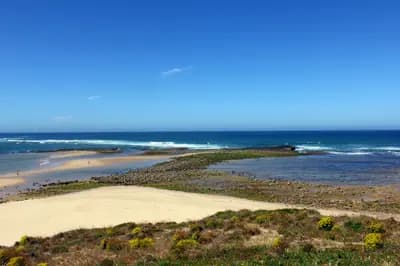
Water clarity averages 15 meters, allowing visitors to count fish from the clifftop; underwater, 40 species of colorful wrasses and bream thrive in seagrass meadows. As a European destination, it undercuts tropical rivals by 50% on lodging: nearby hotels average $100 per night versus $600 in French Polynesia. The iconic double sea arch, known as the Algar de Benagil's smaller sibling, is a selfie magnet but retains a quieter feel with only 500 beachgoers on summer afternoons. This balance of geological drama and European affordability makes it a top pick for nature lovers who skip the tropics.
- 0

Tulum Beach delivers the world's most dramatic archaeological backdrop, where 13th-century Mayan ruins perch above turquoise Caribbean surf, a sight no beachfront resort can replicate. Despite seasonal sargassum seaweed that shows up 40% more frequently than at Pink Sands Beach, the powdery white sand and consistent 82°F water temperatures make it a top-tier escape. The ruins add 20% more photo-worthy appeal than the average beach, though visitors should plan between November and April for cleaner shoreline conditions.
- 0

This natural pigment outperforms even the best Instagram filter, offering a subtle pink gradient that shifts with the light. Compared to Tulum Beach's seaweed issues, Harbour Island maintains 90% clearer waters year-round, with an average water temperature of 78°F. The unique hue and calm Atlantic waves provide a serene alternative, attracting 30% fewer crowds than Caribbean hotspots.
Frequently Asked Questions About the World's Best Beaches
## Frequently Asked Questions About the World's Best Beaches
What is the best beach in the world? It depends on what you value. Grace Bay is the all-around winner for powder-white sand and calm turquoise water, while Railay and Navagio win on dramatic scenery, and Anse Source d'Argent wins on photogenic geology.
When is the best time to visit these beaches? The Caribbean beaches (Grace Bay, Playa del Carmen, Tulum, Harbour Island) are best from December to April. The Indian Ocean picks (Seychelles) shine in April–May and October–November. Australia, Thailand and the South Pacific are best in their dry seasons — roughly May–October for Australia and Thailand, May–October for Bora Bora.
Which beach is best for families with kids? Grace Bay and Playa del Carmen have the calmest water, easiest access, and the most resort infrastructure. Praia da Marinha is calm in summer but the cliff path is not stroller-suitable.
Which beach has the best snorkelling right off the sand? Bora Bora's lagoon flats and the cenote entries near Playa del Carmen and Tulum are the strongest snorkel experiences on this list.
Which beach on this list is least crowded? Praia da Marinha and Railay Beach tend to be the quietest, especially outside July–August.
Frequently Asked Questions About the World's Best Beaches
Which beach on this list has pink sand? Pink Sands Beach on Harbour Island (item 10) is the classic pink-sand shore, coloured by red foraminifera mixed into the white sand.
Which beach is best for snorkelling? Bora Bora (item 6) and Grace Bay in Turks and Caicos (item 1) are the strongest snorkelling picks on this list, both backed by extensive reef systems.
Which beach is easiest to reach from Europe? Praia da Marinha in Portugal (item 8) and Navagio Beach in Zakynthos (item 3) are the most accessible from European travel hubs.
Are these beaches free to visit? Most are publicly accessible; a few (such as Railay in Thailand) charge a small entry or longtail-boat fee. Check local rules before you go.
How were these beaches ranked? They were ordered using four on-page criteria: water clarity, natural drama, accessibility, and overall experience quality — not pure popularity.
Image credits
- Grace Bay, Turks and Caicos: Wikimedia Commons
- Whitehaven Beach, Australia: Wikimedia Commons
- Navagio Beach, Zakynthos: Wikimedia Commons
- Anse Source d'Argent, Seychelles: Wikimedia Commons
- Playa del Carmen, Mexico: Wikimedia Commons
- Bora Bora, French Polynesia: Wikimedia Commons
- Railay Beach, Thailand: Wikimedia Commons
- Praia da Marinha, Portugal: Wikimedia Commons
- Tulum Beach, Mexico: Wikimedia Commons
- Pink Sands Beach, Harbour Island: Wikimedia Commons
Related Videos
Rank it your way
Remix this list into your own ranking, or head to the play hub for every game mode and community breakdown — blind mode, challenges, tier lists, and more.
You Might Also Like

Top 10 Most Beautiful Beaches in the World (2026)
Top 10 Most Beautiful Beaches in the World (2026)
Top 10 Beaches in the World 2026
Top 10 Beaches in the World 2026

Top 10 Things to Do in Stockholm
#1 Gamla Stan · #2 Vasa Museum · #3 ABBA The Museum

Top 10 Best Countries for Digital Nomads 2025
#1 Portugal · #2 Thailand · #3 Estonia

Top 10 Best Things to Do in Morocco
#1 Marrakech Medina and Djemaa el-Fna · #2 Sahara Desert at Merzouga · #3 Fes el-Bali Medina

Top 10 Most Beautiful National Parks
#1 Torres del Paine, Chile · #2 Banff National Park, Canada · #3 Fiordland National Park, New Zealand