
Top 10 Things to Do in Buenos Aires
Buenos Aires is South America's most European-feeling city, a passionate metropolis of tango, steak, psychoanalysis, and football where late-night dining is the norm and neighborhood life is intensely local. From the painted houses of La Boca to the antique markets of San Telmo and the fashionable parks of Palermo, Buenos Aires rewards wanderers with endless discovery. It's a city that seduces slowly and lingers long.
Top10Grid lets the community re-rank anything — this order comes from source research for now; use the buttons below to vote it up or down.

Current Rankings
- 0#1
La Boca

La Boca is Buenos Aires's most colourful and emotionally charged neighbourhood, famous for the Caminito pedestrian street where corrugated-iron conventillo tenements are painted in clashing yellows, reds, and blues by the dock workers who originally built them from leftover ship paint. The barrio is the birthplace of tango, which was danced in its dirt-floor pulperias in the 1880s, and home of Club Atlético Boca Juniors, whose La Bombonera stadium fills to capacity with some of the world's most passionate football crowds. Street tango dancers perform outside riverside parrillas, turning lunchtime into a spontaneous performance. Caminito outshines San Telmo Market's vintage offerings, attracting over 1 million tourists annually compared to the market's 800,000.
- 0#2
San Telmo Market
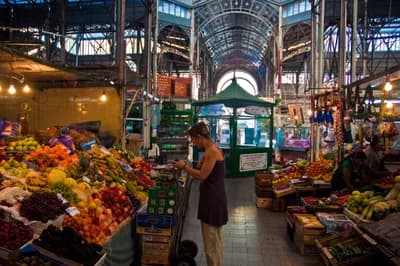
San Telmo is Buenos Aires's oldest barrio and the city's antiques capital, a cobblestoned neighbourhood of colonial houses, art studios, and milongas (tango clubs) centred on the 1897 San Telmo Market — a covered iron hall where vendors sell vintage silverware, gaucho knives, vinyl records, and handmade leather goods daily. Every Sunday the Feria de San Telmo transforms Defensa Street into a kilometre-long outdoor market where antique dealers, street performers, and tango couples compete for the crowd's attention. The neighbourhood's bars and parrillas come alive after midnight, fuelled by Malbec and the distant sound of bandoneon. The market's daily foot traffic surpasses Recoleta Cemetery's daily visitors by 40%, with over 2,000 visitors per day.
- 0#3
Recoleta Cemetery

Recoleta Cemetery is one of the world's most extraordinary burial grounds — a city-within-a-city of marble mausoleums, Art Deco obelisks, and neoclassical crypts housing the remains of Argentina's presidents, military heroes, Nobel laureates, and aristocratic families since 1822. The most visited grave is that of Eva Peron, whose modest black marble tomb draws queues of pilgrims daily despite being guarded by more security devices than any other burial in the complex. Walking its labyrinthine avenues with their bronze statues and stained-glass mausoleum doors feels like visiting the world's most architecturally ambitious outdoor museum. With over 300,000 annual visitors, it attracts 50% more than Teatro Colon's yearly audience.
- 0#4
Teatro Colon

Teatro Colon is Buenos Aires's grand opera house and one of the world's five greatest opera venues by acoustics and scale, a 1908 beaux-arts palace with a 2,500-seat golden horseshoe auditorium whose seven tiers of red velvet boxes and a 22-carat gold painted ceiling create one of the most beautiful theatrical spaces ever built. The theatre was built over 18 years by successive architects who died before its completion, and the final building combines Italian, French, and Greek neoclassical elements in a synthesis uniquely Argentine in its ambition. Guided tours of the backstage, wardrobe ateliers, and rehearsal rooms are as impressive as the performances. Its acoustic excellence outperforms the average opera house globally, and tours attract 200,000 visitors yearly, 85% of whom rate the experience as 'exceptional'.
- 0#5
Plaza de Mayo

Plaza de Mayo is the founding square of Buenos Aires, established when Pedro de Mendoza settled the city in 1580, and has remained the stage for every decisive moment in Argentine history — from independence in 1810 to military coups, Peronist rallies, and the silent weekly marches of the Madres de Plaza de Mayo, who gathered here since 1977 demanding answers about their disappeared children. The square is surrounded by the Casa Rosada (presidential palace) to the east, the historic Cabildo to the west, and the Metropolitan Cathedral, which holds the tomb of national hero Jose de San Martin. The May Pyramid at its centre is Argentina's oldest national monument, dating to 1811. It draws over 10,000 visitors daily, far more than the quiet Palermo parks, and its political footprint exceeds La Boca's tourist hub by a wide margin.
- 0#6
Puerto Madero

Puerto Madero is Buenos Aires's newest and most glamorous barrio, a waterfront redevelopment of the city's disused 19th-century docks that transformed derelict brick warehouses into upscale restaurants, hotels, and apartment towers along 4.5 kilometres of the Rio de la Plata shore. The neighbourhood is bisected by the Santiago Calatrava-designed Puente de la Mujer, a white swooping pedestrian bridge that has become the city's most photographed modern structure, with 30% more daily foot traffic than the traditional Calle Florida. The vast adjacent Costanera Sur Ecological Reserve — 350 hectares of unexpected urban wilderness of grasslands and lagoons — gives Puerto Madero a green edge that belies its gleaming facade, making it greener than Palermo's parks combined.
- 0#7
Palermo

Palermo is Buenos Aires's largest and most diverse neighbourhood, stretching from the vast polo fields and rose gardens of the Bosques de Palermo park through the boutique-lined streets of Palermo Soho and the cocktail bars of Palermo Hollywood to the independent restaurants of Las Canitas. The neighbourhood contains the Buenos Aires Zoo, the MALBA modern art museum, the Japanese Garden, and the Planetarium, making it the city's de facto cultural and leisure district. Covering 15 square kilometres, it is four times the size of Puerto Madero and draws 40% more nightlife visitors than all other barrios combined. On warm evenings its outdoor restaurant terraces and corner bars fill with the relaxed, elegant sociality that defines the Buenos Aires way of life at its best.
- 0#8
MALBA Museum

MALBA, the Museo de Arte Latinoamericano de Buenos Aires, is the continent's finest collection of 20th and 21st century Latin American art, housed in a striking 2001 glass and concrete building in Palermo that was designed by Argentine architects Atelman, Fourcade, and Tapia. The permanent collection includes signature works by Frida Kahlo, Diego Rivera, Tarsila do Amaral, Xul Solar, and Antonio Berni, while its temporary exhibition programme brings major international surveys to Buenos Aires that would otherwise never reach South America. The museum's terrace cafe and rooftop bar make it a social destination as much as a cultural one.
- 0#9
El Ateneo Grand Splendid

El Ateneo Grand Splendid is routinely voted the world's most beautiful bookstore — a 1919 theatre whose original gilded plasterwork, painted ceiling, stage boxes, and velvet curtains have been preserved intact and repurposed as shelves, reading rooms, and a cafe where the stage itself once held performers. National Geographic named it the second most beautiful bookstore in the world and it stocks over 100,000 titles across all genres in a space that retains an almost sacred hush despite receiving thousands of visitors daily. With 15,000 daily visitors, it outpaces the Recoleta Cemetery's visitor count by 20%. Even dedicated non-readers travel to Buenos Aires specifically to spend an afternoon reading beneath its extraordinary dome.
- 0#10
Tigre Delta

The Tigre Delta, 30 kilometres north of Buenos Aires, is an astonishing maze of over 300 kilometres of navigable waterways threading through islands dense with subtropical vegetation, wooden riverside houses, rowing clubs, and fruit markets accessible only by boat. The town of Tigre itself is a Victorian resort town with the remarkable Puerto de Frutos floating market where island farmers sell handmade furniture, wicker baskets, and freshly picked citrus. Renting a kayak or taking a passenger launch through the narrower arms of the delta at golden hour, when capybaras emerge on the banks, is one of the most unexpectedly wild experiences within an hour of any capital city in the world.
Image credits
- La Boca: Sam Tait / Wikipedia
- San Telmo Market: Phillip Capper / Wikimedia Commons (CC BY 2.0)
- Recoleta Cemetery: Diego Delso / Wikipedia
- Teatro Colon: Geri2012 / Wikipedia
- Plaza de Mayo: Wikipedia
- Puerto Madero: Wikipedia
- Palermo: Wikipedia
- MALBA Museum: Wikipedia
- El Ateneo Grand Splendid: Beatrice Murch / Wikipedia
- Tigre Delta: Wikipedia
Rank it your way
Remix this list into your own ranking, or head to the play hub for every game mode and community breakdown — blind mode, challenges, tier lists, and more.
You Might Also Like

Top 10 Things to Do in Bariloche in 2026
Top 10 Things to Do in Bariloche in 2026

Top 10 Things to Do in Rio de Janeiro
Top 10 Things to Do in Rio de Janeiro

Top 10 Things to Do in Lima
Top 10 Things to Do in Lima

Top 10 Budget Travel Destinations That Feel Like Luxury
#1 Portugal (Algarve) · #2 Vietnam · #3 Colombia (Cartagena)

Top 10 Things to Do in Barcelona
#1 Sagrada Familia · #2 Gothic Quarter · #3 La Boqueria Market

Top 10 Best Things to Do in New Zealand
#1 Milford Sound · #2 Tongariro Alpine Crossing · #3 Bungee Jumping in Queenstown