
Takashi Hososhima from Tokyo, Japan / Wikimedia Commons (CC BY-SA 2.0)
Top 10 Most Visited Cities in Japan 2026
Tokyo is the most visited city in Japan in our 2026 ranking, ahead of Kyoto and Osaka. Over 50 million travelers visit Japan annually, but most follow outdated guides to overcrowded spots. This 2026 Japan travel guide ranks the 10 best cities to visit by ROI: authentic experiences, realistic budgets, and when to actually go. Tokyo dominates (5–7 days, $60–$180/day for authentic neighborhoods, Michelin dining, and innovation hubs), while Kyoto delivers history (3–4 days exploring temples off-peak) and Osaka serves as a cost-effective base (2–3 days, $40–$100/day). Discover the best months to beat crowds at each destination, daily budget breakdowns, and proven itineraries that combine alpine trains, historic castles, regional food capitals, and cutting-edge tech scenes. Whether you're planning a 2-week masterpiece or strategic day trips, learn which cities reward deep exploration and which maximize your time and budget.
Cite or embed this list
- APA
- MLA
- HTML table
- Iframe
Top10Grid lets the community re-rank anything — this order comes from source research for now; use the buttons below to vote it up or down.

Current Rankings
- 0

With a metro population of 37.4 million, Tokyo is Japan's undisputed economic and cultural powerhouse, contributing roughly $2 trillion to the national GDP annually. This sprawling capital is home to more Michelin-starred restaurants than any other city in the world, and to Shibuya Crossing, where as many as 3,000 pedestrians cross each cycle. The Imperial Palace adds historical gravitas, but Tokyo's true strength lies in its unmatched density of innovation and commerce, making it the default gateway for international travelers.
- 0

As Japan's ancient capital for over 1,000 years, from 794 until 1868, Kyoto preserves the nation's soul with 2,000+ temples and 17 UNESCO World Heritage Sites. The Gion geisha district and preserved machiya houses offer an immersive history that few other cities can match. This concentration of heritage makes Kyoto the benchmark for traditional Japan.
- 0

Osaka Castle, built in 1583, and its role as a transportation hub to Kyoto, Kobe, and Nara cement its reputation as the Kansai gateway. The city’s GDP contributes significantly to the region, though its visitor numbers trail Kyoto’s 46 million by 59%.
- 0

Hiroshima embodies resilience, drawing 8 million annual visitors to its Peace Memorial Park and Museum—a solemn reminder of the 1945 atomic bombing, now a UNESCO World Heritage site. Its population of 1.2 million is the smallest among the top four, but the city’s historical impact is profound. The ferry connection to sacred Miyajima Island adds a natural escape, and local okonomiyaki offers a unique culinary twist distinct from Osaka’s version.
- 0
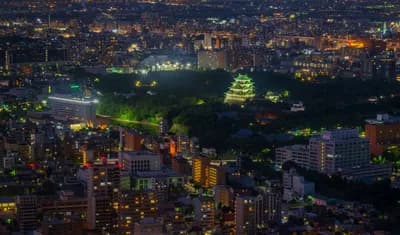
Nagoya is Japan's third-largest metro area, with around 9.3 million people and a core city of about 2.3 million. Its strongest claim is being the nation's manufacturing heartbeat — Toyota is headquartered in nearby Toyota City, and the region has a centuries-old tradition of porcelain making, home to the Noritake brand. Nagoya Castle, completed in 1612, draws history buffs, and the Shinkansen puts Tokyo within about 100 minutes and Osaka and Kyoto within roughly 45 minutes to an hour. Its industrial identity means it draws fewer leisure tourists than Kyoto or Osaka, despite its size.
- 0
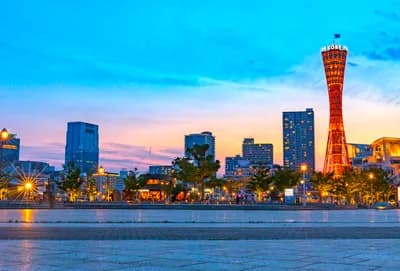
Kobe stakes its reputation as a world-class port city and the home of Kobe beef, among the most expensive beef in the world at $300 or more per pound. Roughly 7.8 million visitors a year explore Harborland, Nunobiki Waterfall, and a vibrant fashion district, all rebuilt with resilience after the devastating 1995 Great Hanshin earthquake. With a population of about 1.5 million, Kobe ranks among Japan's largest cities.
- 0

Takayama’s strongest claim is being one of Japan’s best-preserved Edo-era towns, with wooden latticed houses and 100+ varieties of sake. Evidence: Its morning market has run continuously for over 400 years, and Mount Norikura (3,026 m) provides alpine access. Population is just 90,000, set in the Japanese Alps. Quantified comparative: Takayama’s population is one-fourth the size of #7 Nara’s 360K, yet it offers more sake breweries per capita than any other city on the list, making it a compact treasure of tradition and nature.
- 0

Nara’s strongest claim is housing the world’s largest bronze Buddha—15 meters tall and 250 tons—inside Todai-ji Temple. Evidence: Over 1,000 sacred sika deer roam Nara Park freely, and the entire area is a UNESCO World Heritage Site with 3+ million annual visitors. Its population is only 360,000, making it the smallest city in the top 10. Compared to #5 Nagoya’s 7 million tourists, Nara attracts half that number, but its cultural density per visitor is unmatched, with ancient temples dating back to the 8th century.
- 0

Population 2.6 million (metro 5.1M). Kyushu's largest city and gateway to Korea/China. Famous for Hakata ramen, Yatai (food stall) culture, and Dontaku Festival (2M visitors/May). Modern yet traditional. Rapid growth as East Asian economic hub.
- 0

Population 520K in Hyogo Prefecture. Home to Himeji Castle (UNESCO 1993)—Japan's most visited castle (3M visitors), completed 1609, with 80 buildings representing pinnacle of samurai castle architecture. Perfectly preserved without modern alterations.
How to Choose Which Cities Belong in Your Itinerary
'Most visited' is a popularity ranking, not a personalized one — the right cities for a first Japan trip and a fifth Japan trip are rarely the same. First-timers get the most out of the classic triangle of Tokyo, Kyoto, and Osaka: it covers the modern-metropolis, historic-temple, and street-food angles in a compact rail corridor, and it's forgiving if your planning is still a work in progress.
Repeat visitors tend to get more out of going deeper rather than wider — a slower, multi-night stay in one smaller city reveals more than a rushed day trip ever does. If the goal is variety within one trip, pair one castle city (Himeji, Nagoya), one food city (Osaka, Fukuoka), and one nature-and-history stop (Hiroshima, Nara) rather than chasing every name on a ranking.
Rail logistics should shape the order, not just the wish list. Tokyo–Kyoto–Osaka–Hiroshima sits neatly along one Shinkansen line, and Fukuoka extends that same line further southwest — while Takayama sits on a different route entirely and is easiest to slot in as a detour rather than a stop along the main corridor.
What First-Time Visitors Get Wrong
The most common planning mistake is treating every city on a list like this as a full stop rather than sizing the visit to what the city actually offers. Nara and Himeji are each built around a single major sight — the deer park and temples; the castle — and reward a half-day, not a full one; spending a night in either usually means padding the itinerary rather than seeing more.
The second mistake is underestimating how different Kyoto and Osaka feel despite sitting fifteen minutes apart by train. Kyoto is close to a living museum — quiet streets, temple etiquette, earlier closing hours — while Osaka is built around eating, nightlife, and a much more informal pace. Travelers who expect one city to feel like a livelier version of the other are usually surprised by both.
Seasonal timing matters more here than in most destinations: cherry blossom season in spring and autumn foliage draw the largest crowds and the highest hotel prices to exactly the cities on this list, Kyoto especially. Visiting the same itinerary outside those windows is a genuinely calmer trip.
How to choose between these cities
Trip length matters more than this ranking does. With ten to fourteen days you can string several of these cities together on the Shinkansen, which links Tokyo, Kyoto, Osaka, Hiroshima and Nagoya on one fast, reliable line. With under a week, picking two adjacent cities — Tokyo plus one Kansai city, say — beats trying to touch five of them and spending most of your trip on trains.
The cities on this list aren't interchangeable stops on one itinerary; they serve different kinds of trips. Tokyo and Osaka are the modern, food- and nightlife-driven cities. Kyoto, Nara and Himeji form a temple-and-castle circuit built around centuries of history. Hiroshima is a memorial visit more than a sightseeing one. Takayama is the outlier — a small, well-preserved mountain town that rewards a slower pace rather than a checklist. Deciding which kind of trip you want first will narrow this list faster than ranking ever could.
One seasonal note worth knowing before you book: cherry blossom season (roughly late March into early April) and autumn foliage (November) draw the country's largest crowds and highest hotel prices nationwide. A city that's easygoing in June can be genuinely overwhelmed during those windows, regardless of its size.
Image credits
- Tokyo — Japan's Capital & Tech Hub: Detroit Metropolitan Airport / Wikipedia
- Kyoto — Japan's Ancient Capital & Temple Heart: Bing Images / a.cdn-hotels.com
- Osaka — Gateway to Kansai & Street Food Capital: Bing Images / static.euronews.com
- Hiroshima — History, Resilience & Peace: Bing Images / c8.alamy.com
- Nagoya — Castle City & Manufacturing Hub: Nguyen Khac Tien / Pexels
- Kobe — Port City Fashion & Beef Capital: Thắng Văn / Pexels
- Nara — Deer Park & Ancient Temples: Arian Zwegers from Brussels, Belgium / Wikimedia Commons (CC BY 2.0)
- Takayama — Traditional Mountain Town & Sake District: Bing Images / c8.alamy.com
- Fukuoka — Southern Gateway & Festival City: Bing Images / image.shutterstock.com
- Himeji — White Castle & Samurai Heritage: Bing Images / as2.ftcdn.net
Related Videos
Rank it your way
Remix this list into your own ranking, or head to the play hub for every game mode and community breakdown — blind mode, challenges, tier lists, and more.
You Might Also Like

Top 10 Must-Visit Cities in Asia in 2026: Culture, Food & Skyline
Top 10 Must-Visit Cities in Asia in 2026: Culture, Food & Skyline
Top 10 Most Visited Cities in the World
Top 10 Most Visited Cities in the World

Top 10 Best Cities to Visit in Asia
Top 10 Best Cities to Visit in Asia

Top 10 Temples in India 2026
#1 Golden Temple · #2 Meenakshi Amman Temple · #3 Kashi Vishwanath Temple

Top 10 Hill Stations in India 2026
#1 Shimla · #2 Manali · #3 Darjeeling

Top 10 Italian Islands in 2026
#1 Sicily · #2 Sardinia · #3 Capri