From the world's highest uninterrupted free-fall to the widest curtain of falling water on Earth, these waterfalls represent nature's most theatrical displays of raw power and beauty. Ranked by a combination of height, volume, visual drama, and sheer awe factor, each of these ten sites draws hundreds of thousands of visitors every year — and consistently leaves them stunned. Whether buried in Venezuelan jungle or thundering along an international border, they are among the most extraordinary natural spectacles the planet has to offer.
Top 10 lists about this destination
Curated by our travel editors. Lived-experience picks weighted by community vote — updated as travelers report back.
Angel Falls (Salto Angel) is the world's highest uninterrupted waterfall, plunging 979 metres from the summit of Auyantepui table mountain in the Canaima National Park — a UNESCO World Heritage Site. The water free-falls 807 metres before hitting a lower cliff and continuing another 172 metres, generating so much mist that it rarely reaches the base in liquid form, instead dissolving into spray visible kilometres away. The best way to experience it is by small aircraft from Canaima village, followed by a motorised dugout canoe journey through jungle tributaries, ideally from June to November when rainfall keeps the falls at full flow.

Victoria Falls (Mosi-oa-Tunya, "The Smoke That Thunders") is the largest waterfall in the world by combined width and height, stretching 1,708 metres across and dropping 108 metres into the Batoka Gorge of the Zambezi River. The volume during peak flood (March–May) reaches 500,000 cubic metres per minute, generating a roar audible 40 kilometres away and a spray cloud visible from 50 kilometres. The best viewing platform is the Zimbabwe side via the knife-edge walk and Rainforest Trail; the Zambia side offers the famous Devil's Pool natural infinity pool at the very lip of the falls (accessible August–January when the water is lower).

Iguazu Falls is a system of 275 individual waterfalls spanning nearly 2.7 kilometres along the Iguazu River on the border of Argentina and Brazil, with the thunderous Garganta del Diablo (Devil's Throat) canyon dropping 82 metres and stretching 150 metres wide at its centre. Average flow is approximately 1,756 cubic metres per second, though floods can push this to 12,000. Eleanor Roosevelt famously remarked "Poor Niagara" upon seeing them. The Argentine side offers closer catwalks above and below the falls; the Brazilian side delivers the iconic panoramic view of the entire horseshoe arc, best photographed from the Trilha das Cataratas at sunrise.

Niagara Falls is the most visited waterfall on Earth, drawing over 30 million visitors per year across its three sections: the American Falls (21–34 metres high, 260 metres wide), Bridal Veil Falls, and the Canadian Horseshoe Falls (57 metres high, 790 metres wide), which carries more than 90% of the total flow. Average flow over the Horseshoe Falls is approximately 2,400 cubic metres per second during daylight hours in peak season. The Canadian side in Niagara Falls, Ontario offers the best panoramic vantage; the boat tours (Hornblower/Maid of the Mist) approach within metres of the Horseshoe base. Best visited April–October; illuminated at night year-round.

Kaieteur Falls on the Potaro River in Guyana is the world's most powerful waterfall by the measure of flow rate per unit width, dropping 226 metres in a single unbroken plunge — nearly five times the height of Niagara — over a ledge 113 metres wide, with an average flow of 663 cubic metres per second. Sitting deep in the Kaieteur National Park, it remains one of the world's most isolated major waterfalls, surrounded by pristine primary rainforest that is home to the rare Guiana cock-of-the-rock and the golden rocket frog. Access is almost exclusively by small charter aircraft from Georgetown, which makes the trip expensive but also guarantees an uncrowded, genuinely wild experience.

Gullfoss ("Golden Falls") on the Hvita River in southern Iceland is one of Europe's most dramatic waterfalls, cascading in two tiers — the first drop of 11 metres, the second of 21 metres — into a 2.5-kilometre-long canyon that appears to swallow the river whole, making the falls seem to vanish into the earth. Average flow is approximately 140 cubic metres per second, rising to 2,000 during spring snowmelt. It sits at the end of the famous Golden Circle route (alongside Thingvellir and the Geysir geothermal area) and is accessible year-round; winter visits offer dramatic ice formations and the possibility of the falls partially freezing, while summer brings the midnight sun overhead.
Sutherland Falls in Fiordland National Park on New Zealand's South Island is one of the tallest waterfalls in the world, dropping 580 metres in three leaps from Lake Quill — a lake perched in a cirque 580 metres above sea level — down to the Arthur River valley below. The falls are accessible only on foot via the famous Milford Track, a 53.5-kilometre multi-day Great Walk through ancient beech forest and glacially carved valleys considered one of the finest walks in the world. The track passes within viewing distance of the base of the falls, offering a perspective that makes the sheer scale of the drop viscerally apparent. Best visited November–April.

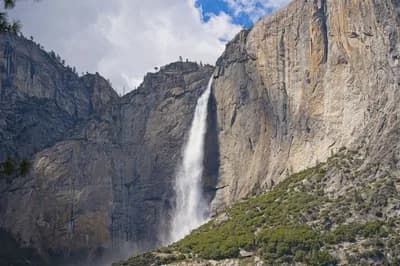
Yosemite Falls in Yosemite National Park, California, is North America's tallest waterfall, dropping 739 metres total across three sections: Upper Yosemite Fall (435 m), the Middle Cascades (206 m), and Lower Yosemite Fall (98 m). The falls are fed entirely by snowmelt and dry up almost completely by late summer in most years, making April–June the optimal viewing window when Sierra Nevada snowpack drives peak flow. The Lower Fall trail (2.6 km round trip) is accessible to most visitors and delivers a thunderous base-of-falls experience; the strenuous Upper Fall trail (11 km) reaches a viewpoint looking directly into the granite valley with Half Dome visible across the valley floor.
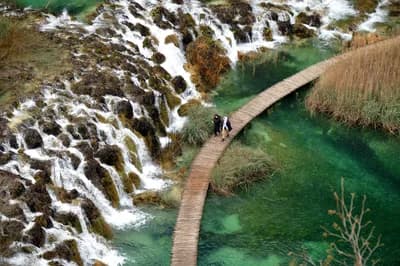
The Plitvice Lakes waterfall system in Plitvice Lakes National Park — a UNESCO World Heritage Site since 1979 — comprises 16 terraced lakes connected by a cascade of over 90 individual waterfalls across a 8-kilometre stretch of the Mala Rijeka and Crna Rijeka rivers. The largest single drop, the Veliki Slap (Great Waterfall), plunges 78 metres and is Croatia's tallest waterfall. What makes Plitvice unique is the vivid turquoise-to-emerald colouring of the lake water, caused by unusually high concentrations of dissolved minerals and algae that shift with season and light conditions. Spring snowmelt (April–May) delivers peak flow and the most dramatic cascades; early morning visits minimize crowds on the boardwalk network.

Ban Gioc-Detian Falls on the Quay Son River straddles the border between Cao Bang Province, Vietnam, and Guangxi, China, and is Asia's largest transnational waterfall, spreading up to 208 metres wide across a multi-tiered cascade that drops 30 metres in the main section. Unlike most major waterfalls, its beauty lies as much in context as in scale: the falls tumble through a pastoral landscape of limestone karst mountains, bamboo groves, and emerald rice paddies that looks unchanged for centuries, with local farmers still working the fields in the foreground. The Vietnamese side is accessible by boat on the Quay Son River for close-up views; the Chinese side (Detian) is larger-scale and more developed. Best visited September–November at peak water volume.
The most-voted lists across every category — curated weekly. Join the early readers.
No spam. One email per week. Unsubscribe anytime.


Create a free account or sign in to join the discussion.
Sign in to join the conversation
Top 10 Budget Summer Travel Destinations Under $75 Per Night in 2026
Travel Books That Make You Book a Plane Ticket
Top 10 Hotels in Hong Kong 2026Explore more Travel rankings on Top10Grid
Angel Falls (Salto Angel) is the world's highest uninterrupted waterfall, plunging 979 metres from the summit of Auyantepui table mountain in the Canaima National Park — a UNESCO World Heritage Site. The water free-falls 807 metres before hitting a lower cliff and continuing another 172 metres, generating so much mist that it rarely reaches the base in liquid form, instead dissolving into spray visible kilometres away. The best way to experience it is by small aircraft from Canaima village, followed by a motorised dugout canoe journey through jungle tributaries, ideally from June to November when rainfall keeps the falls at full flow.

Victoria Falls (Mosi-oa-Tunya, "The Smoke That Thunders") is the largest waterfall in the world by combined width and height, stretching 1,708 metres across and dropping 108 metres into the Batoka Gorge of the Zambezi River. The volume during peak flood (March–May) reaches 500,000 cubic metres per minute, generating a roar audible 40 kilometres away and a spray cloud visible from 50 kilometres. The best viewing platform is the Zimbabwe side via the knife-edge walk and Rainforest Trail; the Zambia side offers the famous Devil's Pool natural infinity pool at the very lip of the falls (accessible August–January when the water is lower).

Iguazu Falls is a system of 275 individual waterfalls spanning nearly 2.7 kilometres along the Iguazu River on the border of Argentina and Brazil, with the thunderous Garganta del Diablo (Devil's Throat) canyon dropping 82 metres and stretching 150 metres wide at its centre. Average flow is approximately 1,756 cubic metres per second, though floods can push this to 12,000. Eleanor Roosevelt famously remarked "Poor Niagara" upon seeing them. The Argentine side offers closer catwalks above and below the falls; the Brazilian side delivers the iconic panoramic view of the entire horseshoe arc, best photographed from the Trilha das Cataratas at sunrise.

Niagara Falls is the most visited waterfall on Earth, drawing over 30 million visitors per year across its three sections: the American Falls (21–34 metres high, 260 metres wide), Bridal Veil Falls, and the Canadian Horseshoe Falls (57 metres high, 790 metres wide), which carries more than 90% of the total flow. Average flow over the Horseshoe Falls is approximately 2,400 cubic metres per second during daylight hours in peak season. The Canadian side in Niagara Falls, Ontario offers the best panoramic vantage; the boat tours (Hornblower/Maid of the Mist) approach within metres of the Horseshoe base. Best visited April–October; illuminated at night year-round.

Kaieteur Falls on the Potaro River in Guyana is the world's most powerful waterfall by the measure of flow rate per unit width, dropping 226 metres in a single unbroken plunge — nearly five times the height of Niagara — over a ledge 113 metres wide, with an average flow of 663 cubic metres per second. Sitting deep in the Kaieteur National Park, it remains one of the world's most isolated major waterfalls, surrounded by pristine primary rainforest that is home to the rare Guiana cock-of-the-rock and the golden rocket frog. Access is almost exclusively by small charter aircraft from Georgetown, which makes the trip expensive but also guarantees an uncrowded, genuinely wild experience.

Gullfoss ("Golden Falls") on the Hvita River in southern Iceland is one of Europe's most dramatic waterfalls, cascading in two tiers — the first drop of 11 metres, the second of 21 metres — into a 2.5-kilometre-long canyon that appears to swallow the river whole, making the falls seem to vanish into the earth. Average flow is approximately 140 cubic metres per second, rising to 2,000 during spring snowmelt. It sits at the end of the famous Golden Circle route (alongside Thingvellir and the Geysir geothermal area) and is accessible year-round; winter visits offer dramatic ice formations and the possibility of the falls partially freezing, while summer brings the midnight sun overhead.
Sutherland Falls in Fiordland National Park on New Zealand's South Island is one of the tallest waterfalls in the world, dropping 580 metres in three leaps from Lake Quill — a lake perched in a cirque 580 metres above sea level — down to the Arthur River valley below. The falls are accessible only on foot via the famous Milford Track, a 53.5-kilometre multi-day Great Walk through ancient beech forest and glacially carved valleys considered one of the finest walks in the world. The track passes within viewing distance of the base of the falls, offering a perspective that makes the sheer scale of the drop viscerally apparent. Best visited November–April.

Yosemite Falls in Yosemite National Park, California, is North America's tallest waterfall, dropping 739 metres total across three sections: Upper Yosemite Fall (435 m), the Middle Cascades (206 m), and Lower Yosemite Fall (98 m). The falls are fed entirely by snowmelt and dry up almost completely by late summer in most years, making April–June the optimal viewing window when Sierra Nevada snowpack drives peak flow. The Lower Fall trail (2.6 km round trip) is accessible to most visitors and delivers a thunderous base-of-falls experience; the strenuous Upper Fall trail (11 km) reaches a viewpoint looking directly into the granite valley with Half Dome visible across the valley floor.
The Plitvice Lakes waterfall system in Plitvice Lakes National Park — a UNESCO World Heritage Site since 1979 — comprises 16 terraced lakes connected by a cascade of over 90 individual waterfalls across a 8-kilometre stretch of the Mala Rijeka and Crna Rijeka rivers. The largest single drop, the Veliki Slap (Great Waterfall), plunges 78 metres and is Croatia's tallest waterfall. What makes Plitvice unique is the vivid turquoise-to-emerald colouring of the lake water, caused by unusually high concentrations of dissolved minerals and algae that shift with season and light conditions. Spring snowmelt (April–May) delivers peak flow and the most dramatic cascades; early morning visits minimize crowds on the boardwalk network.

Ban Gioc-Detian Falls on the Quay Son River straddles the border between Cao Bang Province, Vietnam, and Guangxi, China, and is Asia's largest transnational waterfall, spreading up to 208 metres wide across a multi-tiered cascade that drops 30 metres in the main section. Unlike most major waterfalls, its beauty lies as much in context as in scale: the falls tumble through a pastoral landscape of limestone karst mountains, bamboo groves, and emerald rice paddies that looks unchanged for centuries, with local farmers still working the fields in the foreground. The Vietnamese side is accessible by boat on the Quay Son River for close-up views; the Chinese side (Detian) is larger-scale and more developed. Best visited September–November at peak water volume.
Because you're viewing Travel
Top 10 Latin American Travel Destinations
139 views · 0 votes

Top 10 Budget Summer Travel Destinations Under $75 Per Night in 2026
133 views · 0 votes

Travel Books That Make You Book a Plane Ticket
123 views · 1 votes

Top 10 Hotels in Hong Kong 2026
122 views · 0 votes

Top 10 Best Christmas Markets in Europe
114 views · 0 votes

Top 10 Best Beaches in the World
110 views · 0 votes
40 views · @admin
If you liked this, you might love these

Top 10 Outback Adventures in Australia 2026
10 items

Top 10 Desert Destinations
10 items

Top 10 Korean Islands to Visit
10 items
Top 10 Most Dangerous Mountains in the World
10 items

Top 10 Onsen Towns in Japan 2026
10 items

Top 10 Best Things to Do in New Zealand
10 items