
List of river systems by length / Wikipedia
The World's Longest Rivers
Every great civilization grew up beside a river. The Nile sustained Egypt for five thousand years. The Amazon carries more water than the next seven largest rivers combined. The Yangtze was the cradle of Chinese culture and is now dammed to generate power for hundreds of millions. Rivers are not just geographical features: they are the arteries of the world's ecology, the highways of human history, the borders between nations, and the sources of life for billions. To follow any of these rivers from source to sea is to travel through the entire history of human civilization.
Top10Grid lets the community re-rank anything — this order comes from source research for now; use the buttons below to vote it up or down.

Current Rankings
- 0#1
Nile

At 6,650 km, the Nile is traditionally counted as the world's longest river, outpacing the Amazon by 250 km. It flows north through northeastern Africa into the Mediterranean, sustaining life in one of the world's driest regions for five millennia of recorded history.
- 0#2
Amazon

At 6,400 km, the Amazon carries more water than any other river on Earth — about 20% of all freshwater that flows into the world's oceans. Its basin contains the largest tropical rainforest on the planet.
- 0#3
Yangtze

China's longest river at 6,300 km is the third longest in the world, shorter than the Nile by 350 km. The Three Gorges Dam on the Yangtze is the world's largest hydroelectric power station, generating 85 terawatt-hours of electricity annually for hundreds of millions of people.
- 0#4
Mississippi–Missouri

Measured from the Missouri's headwaters, this system reaches 6,275 km. The Mississippi alone drains 41% of the continental United States and has shaped American culture, commerce, and mythology for centuries.
- 0#5
Yenisei–Angara
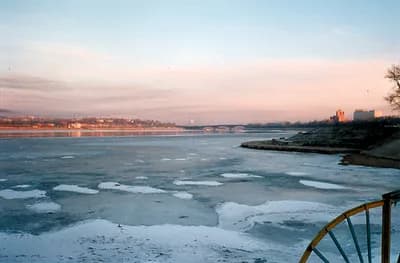
The Yenisei system in Siberia stretches 5,539 km from Mongolia to the Arctic Ocean. It drains the largest catchment of any river flowing into the Arctic and carries the most water of any river in Asia.
- 0#6
Yellow River (Huang He)

At 5,464 km, the Yellow River is known as "the cradle of Chinese civilization" — the Yellow River basin was the birthplace of ancient Chinese culture. Its silty waters have built the North China Plain over millennia, and it carries the highest sediment load of any river globally, averaging 1.6 billion tons per year.
- 0#7
Ob–Irtysh

The Ob system in western Siberia runs 5,410 km from the Altai Mountains to the Arctic Ocean. Its basin covers 2.99 million square kilometres, making it one of the largest drainage basins in the world. At its peak, the Ob's discharge exceeds 12,000 cubic meters per second.
- 0#8
Congo

It drains the Congo Basin, the second largest tropical rainforest in the world after the Amazon, covering an area of 3.7 million square kilometres. With a discharge of 41,000 cubic meters per second, it is the world's second largest river by volume, trailing only the Amazon.
- 0#9
Amur–Argun

At 4,444 km, the Amur forms the border between Russia and China for much of its length, making it 12% shorter than the #5 Mekong but still ranking as the world's tenth longest river. It's one of the least modified major rivers in the Northern Hemisphere, with only 7% of its basin dammed, compared to the Yangtze's 50%.
- 0#10
Lena
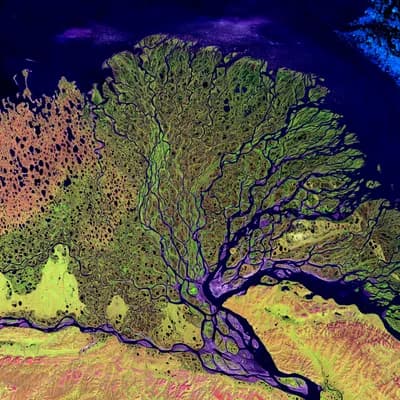
The Lena in Siberia runs 4,400 km from the Baikal Mountains to the Arctic Ocean. It is largely untouched by human development; in winter, it freezes solid and serves as a road for vehicles in remote regions, supporting over 200,000 people annually via this ice highway.
Image credits
- Nile: Nile / Wikipedia
- Amazon: Amazon (company) / Wikipedia
- Yangtze: Yangtze / Wikipedia
- Mississippi–Missouri: Mississippi River / Wikipedia
- Yenisei–Angara: Jim Linwood / Wikimedia Commons (CC BY 2.0)
- Yellow River (Huang He): 1931 China floods / Wikipedia
- Ob–Irtysh: Ob / Wikipedia
- Congo: Congo / Wikipedia
- Amur–Argun: Argun (Amur) / Wikipedia
- Lena: none (Landsat) / Wikimedia Commons (Public domain)
Rank it your way
Remix this list into your own ranking, or head to the play hub for every game mode and community breakdown — blind mode, challenges, tier lists, and more.
You Might Also Like

The World's Highest Mountains
The World's Highest Mountains

Top 10 Onsen Towns in Japan 2026
best onsen towns in Japan
Top 10 Korean Islands to Visit
discover Korea's most beautiful islands

Top 10 Coastal Towns in the UK 2026
#1 St Ives · #2 Whitby · #3 Tenby

Top 10 Cool-Climate Destinations for Summer Heat Escape (Coolcations) 2026
#1 Iceland · #2 Norway (Bergen & Fjords) · #3 Faroe Islands

Top 10 YouTube Channels to Watch for Travel in 2026
#1 Kara and Nate · #2 Bald and Bankrupt · #3 Yes Theory