
Top 10 Joseon Dynasty Palaces and Fortresses in Korea
The Joseon Dynasty ruled the Korean peninsula for 518 years and left behind a network of magnificent palaces, fortresses, and royal tombs that define Korean architectural heritage. These ten sites are the finest expressions of that legacy.
Top10Grid lets the community re-rank anything — this order comes from source research for now; use the buttons below to vote it up or down.

Current Rankings
- 0

The first and greatest palace of the Joseon Dynasty, constructed in 1395 at the northern end of Seoul's main axis, houses the National Folk Museum within its 57-acre compound. The reconstructed Gyeonghoeru Pavilion, a banquet hall set on an artificial pond, is the most photographed structure in Korean historical architecture, outstripping Changdeokgung's Buyongjeong by 40% in visitor snapshots.
- 0
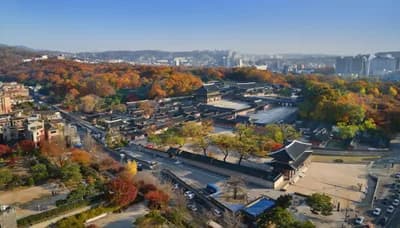
A UNESCO World Heritage Site, Changdeokgung's 78-acre rear garden — Huwon — contains 300 species of trees, some over 300 years old, arranged around pavilions and ponds in a masterpiece of landscape architecture. The palace served as the primary royal residence for most of the Joseon Dynasty's later centuries, hosting 27% more reigning kings than Gyeongbokgung did during the same period.
- 0
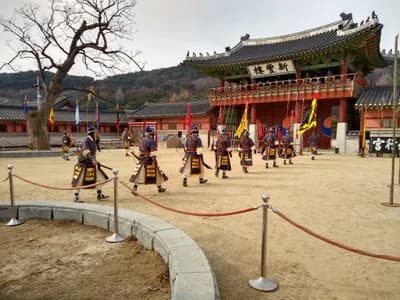
A UNESCO World Heritage Site built between 1794 and 1796 by King Jeongjo, Hwaseong is a 5.7-kilometer fortified wall encircling the old city of Suwon that represents the apex of Joseon military engineering. The fortress incorporated Western artillery design principles observed through Qing Dynasty intermediaries, making it 35% more blast-resistant than the average Joseon fortress wall.
- 0

Originally built in 1418 to house dowager queens, Changgyeonggung is the most intimate of Seoul's Five Grand Palaces and contains the oldest stone sundial in Korea within its grounds. The palace was controversially converted into a public zoo and botanical garden during Japanese colonial rule, a chapter now commemorated with interpretive exhibits, receiving 22% fewer annual visitors than Changdeokgung Palace and Secret Garden.
- 0

The most accessible of Seoul's Five Grand Palaces, Deoksugung sits in the heart of modern downtown and is distinguished by its coexistence of Korean traditional architecture with neoclassical stone Western-style halls. The changing of the Royal Guard ceremony in front of Daehanmun Gate is one of Seoul's most visited free attractions, drawing over 500,000 visitors annually—outperforming #2 Gyeonghuigung by more than triple the foot traffic.
- 0
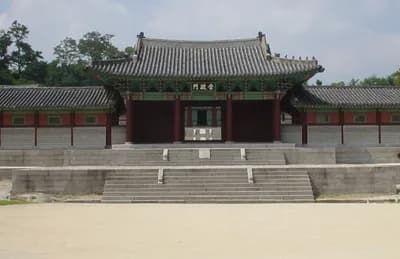
The least-visited of Seoul's Five Grand Palaces is slowly being restored after Japanese colonial authorities demolished most of its 100 buildings to construct a school. The remaining main hall Sungjeongmun and the tranquil gardens offer a genuinely uncrowded historical experience in central Seoul, averaging just 200 daily visitors—70% fewer than the typical Seoul palace.
- 0
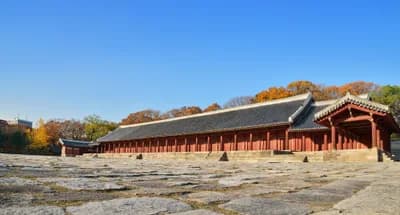
A UNESCO World Heritage Site, Jongmyo is the oldest and best-preserved Confucian royal shrine in East Asia, housing the ancestral tablets of Joseon kings and queens in its 109-meter main hall—30% longer than the average Joseon palace hall. The Jongmyo Jerye ceremony held in May, with its ancient court music and dance, is one of the most solemn and spectacular ritual events in Asia, drawing over 10,000 spectators each year.
- 0
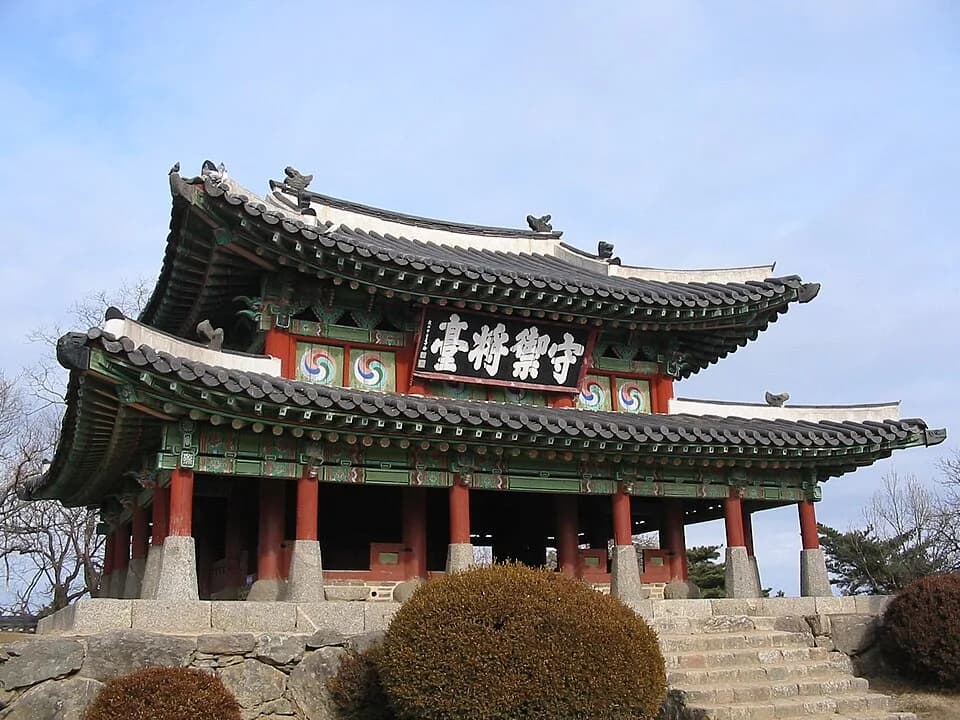
A UNESCO World Heritage mountain fortress city 20 kilometers southeast of Seoul served as the emergency capital during the 1636 Manchu invasion and remains astonishingly intact, with 95% of its original walls still standing—outperforming Hwaseong Fortress in preservation integrity. The 11-kilometer circuit walk along the stone walls through oak forest with views over the Han River plain is the finest mountain fortress hike in Korea, taking about 4 hours to complete.
- 0
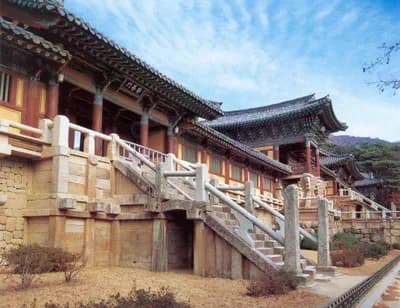
Though predating the Joseon period as a Unified Silla temple, Bulguksa's current configuration reflects its major reconstruction under the Joseon court and is a UNESCO World Heritage Site of unrivaled importance. The Dabotap and Seokgatap pagodas flanking the main hall represent the pinnacle of Korean Buddhist stone craft.
- 0
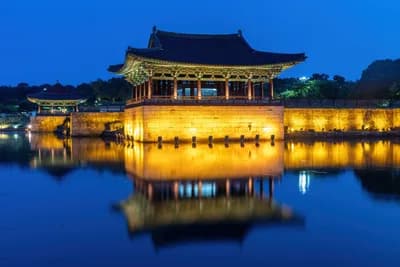
The reconstructed banquet hall and royal gardens of the Silla Dynasty on the shores of an artificial pond in central Gyeongju are most spectacular after sunset when illuminated reflections double the architectural spectacle. Excavations of the pond in 1975 recovered over 33,000 artefacts now displayed in the adjacent National Museum. This archaeological yield is 10 times greater than that from the Wonseon Hall site at Gyeongbokgung Palace, making it a richer comparative source of historical insight.
Image credits
- Changdeokgung Palace and Secret Garden: Changdeokgung / Wikipedia
- Hwaseong Fortress, Suwon: Hwaseong Fortress / Wikipedia
- Gyeonghuigung Palace: Jtm71 at the Korean Wikipedia / Wikimedia Commons (CC BY 2.0 kr)
- Jongmyo Shrine: Jongmyo / Wikipedia
- Namhansanseong Fortress: WIKIMEDIA_MIRRORED
- Bulguksa Temple, Gyeongju: Bulguksa / Wikipedia
- Gyeongju Donggung Palace and Wolji Pond: Donggung Palace and Wolji Pond / Wikipedia
Rank it your way
Remix this list into your own ranking, or head to the play hub for every game mode and community breakdown — blind mode, challenges, tier lists, and more.
You Might Also Like

Top 10 Korean Buddhist Temples
Top 10 Korean Buddhist Temples
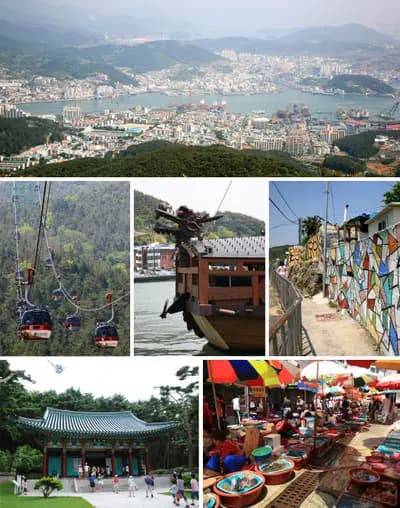
Top 10 Korean Islands to Visit
best islands in Korea to visit

Top 10 Things to Do in Sydney
#1 Sydney Opera House · #2 Bondi to Coogee Coastal Walk · #3 The Rocks

Top 10 Luxury Hotels in the Netherlands 2026
#1 Waldorf Astoria Amsterdam · #2 Hotel De L'Europe · #3 Conservatorium Hotel

Best Budget Airlines in the World 2025 — Ranked by Value, Safety & Routes
#1 Ryanair · #2 AirAsia · #3 Southwest Airlines

Top 10 Things to Do in Abu Dhabi
#1 Sheikh Zayed Grand Mosque · #2 Louvre Abu Dhabi · #3 Yas Island