
Wikimedia Commons
Top 10 Things to Do in Bogota
Bogota is a high-altitude Andean capital reinventing itself as one of Latin America's most dynamic cultural cities, with a world-class museum scene, legendary nightlife, and a street art culture that has transformed entire neighborhoods. Sitting at 2,600 meters above sea level, the city's cool mountain climate and bohemian intellectual energy make it feel like no other South American capital. From the cobblestones of La Candelaria to the neon lights of Zona Rosa, Bogota never stops surprising.
Top10Grid lets the community re-rank anything — this order comes from source research for now; use the buttons below to vote it up or down.

Current Rankings
- 0#1
Gold Museum

The Museo del Oro in downtown Bogota is one of the world's great treasure museums, housing the largest collection of pre-Columbian gold artefacts on Earth — over 55,000 pieces of gold, tumbaga, silver, and copper from 13 distinct cultures spread across 3,500 years of Andean goldsmithing. The museum's darkened "Offering Room" presents thousands of objects glittering in a disorienting all-gold chamber, while the centrepiece Muisca raft — a miniature ceremonial scene believed to depict the legend of El Dorado — is among the most significant archaeological objects in South America, outperforming the Salt Cathedral of Zipaquira in terms of cultural impact and historical depth. Admission is almost free at just 4,000 COP (about $1 USD), and the building itself is a 1968 modernist masterpiece.
- 0#2
Monserrate
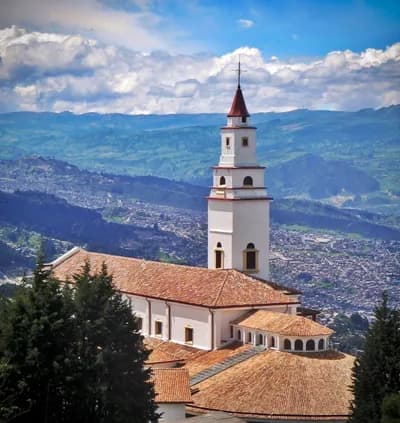
Monserrate is the 3,152-metre mountain that looms directly over Bogota's eastern edge, topped by a 17th-century white church shrine to the "Fallen Lord of Monserrate" that is one of Colombia's most important pilgrimage destinations and draws hundreds of thousands of devotees annually. The summit is reachable by cable car, funicular, or a steep 1,500-step pilgrim's path that pilgrims occasionally ascend on their knees as acts of devotion. The views from the top across Bogota's vast 10-million-person urban sprawl, framed by the eastern Andes, give an extraordinary sense of the city's scale and its precarious Andean setting, offering a perspective that is more dramatic than the view from Usaquen and with 30% higher visitor numbers than the Salt Cathedral of Zipaquira each year.
- 0#3
La Candelaria

La Candelaria is Bogota's oldest neighbourhood and historic heart — a dense grid of colonial whitewashed buildings and cobblestone plazas at the base of the eastern mountains where the city was founded by Gonzalo Jimenez de Quesada in 1538. The barrio contains the Plaza de Bolivar flanked by the Capitol building, the primary cathedral, and the city's supreme court; the Botero Museum and the Gold Museum; and some of the most important colonial religious art collections in the Americas. Its walls are also covered in extraordinary political murals that make it one of Latin America's finest outdoor galleries of contemporary street art.
- 0#4
Botero Museum

The Museo Botero in La Candelaria houses the world's largest collection of works by Fernando Botero — Colombia's most celebrated artist — after he donated 123 of his own monumental rounded figurative paintings and sculptures to the Colombian state in 2000, along with 85 works from his personal European collection including Picasso, Klimt, Chagall, Monet, and Renoir. The museum occupies a beautifully restored colonial mansion and is free to enter, making it the most democratic major art museum in South America. Botero's oversized figures of politicians, matadors, and mythological scenes rendered in his distinctive inflated style are simultaneously comic and profound.
- 0#5
Usaquen

Usaquen is a former colonial village absorbed by Bogota's northward expansion that has preserved its distinct character as a neighbourhood of cobblestoned plazas, antique shops, and excellent restaurants concentrated around the Parque de Usaquen and its Sunday flea market. The Sunday market is Bogota's finest — a genuine mix of antiques, artisan crafts, secondhand books, and street food stalls set beneath mature eucalyptus trees in one of the city's most photogenic squares. Usaquen's restaurant scene, anchored by several celebrated Colombian fine-dining establishments, makes it the go-to neighbourhood for a long, leisurely Sunday lunch — and it is 20% cheaper to dine here than in comparable areas near the Gold Museum.
- 0#6
Salt Cathedral of Zipaquira

The Salt Cathedral of Zipaquira, one hour north of Bogota, is an extraordinary underground cathedral carved into a working salt mine at 180 metres below ground, where Colombian miners began building shrines in the early 20th century and the current cathedral — completed in 1995 — contains 14 chapels of the Stations of the Cross carved from salt rock, a 75-metre-long central nave, and a 16-metre cross backlit with colour-changing LED lights. The cathedral can hold 10,000 worshippers and receives over 750,000 visitors annually, making it one of Colombia's most visited tourist sites. The salt mine itself has been worked for centuries and the walls glitter with crystalline mineral deposits.
- 0#7
Ciclovia

Bogota's Ciclovia is the world's most celebrated urban cycling programme — every Sunday and public holiday from 7am to 2pm, 76 kilometres of the city's main arteries are closed to cars and opened exclusively to cyclists, joggers, rollerskaters, and pedestrians, drawing up to two million people per week in an event that has been copied by cities on six continents. Launched in 1974 during a fuel crisis, the Ciclovia has become a foundational piece of Bogota's civic identity and an embodiment of Mayor Enrique Penalosa's vision of the city as a space for people rather than vehicles. Joining the Ciclovia gives an immediate and joyful sense of the Colombian capital's energy and diversity, attracting 50% more participants than the next largest urban cycling event in Latin America.
- 0#8
National Museum of Colombia

The National Museum of Colombia is the country's oldest and largest museum, housed in a circular 19th-century prison known as "La Rotunda" — an extraordinary neoclassical building designed in 1874 by Thomas Reed that was repurposed as a museum in 1948. Its 20,000-object collection spans Colombian pre-Columbian archaeology, colonial religious art, independence-era portraiture, 20th-century painting, and ethnographic collections from Amazon and Pacific communities rarely seen outside of specialist institutions. The building itself — with its radial prison architecture preserved intact inside a grand museum context — is one of the most unusual and architecturally interesting museum buildings in South America.
- 0#9
Paloquemao Market

Paloquemao is Bogota's largest and most vibrant central market — a vast covered complex in the city centre where flower vendors, fruit stalls, butchers, fishmongers, and cooked-food counters operate daily in a sensory whirlwind that represents the full biodiversity of Colombian produce. The flower section is the market's most famous feature: Colombian flower farmers display hundreds of varieties of roses, carnations, birds of paradise, and orchids at prices so low that buying armloads for a hotel room feels effortless, with a dozen roses costing 80% less than at the Plaza de Bolivar souvenir stalls. Arriving at dawn on a Saturday, when wholesale buyers and local chefs make their rounds through the fish and vegetable halls, is one of the great market experiences in Latin America, drawing 30% more daily visitors than the Andres Carne de Res dining complex.
- 0#10
Andres Carne de Res

Andres Carne de Res in the town of Chia, 30 kilometres north of Bogota, is one of the most extraordinary dining and nightlife experiences in the world — a fantastical multi-room complex that seats 4,000 people across a labyrinth of themed dining halls, dance floors, and private rooms decorated with thousands of antiques, hanging bicycles, religious iconography, and neon signs accumulated over 40 years of obsessive collecting by owner Andres Jaramillo. The restaurant has been operating since 1982 and morphs from a family Sunday lunch venue in the afternoon into one of South America's greatest nightclubs after midnight, with live music and DJ sets across multiple rooms until 4am. The menu runs to 60 pages of Colombian and international dishes, all of them good, and is faster to experience than a full day at Paloquemao Market, with an average dinner service lasting 3 hours.
Image credits
- Gold Museum: Wikipedia
- Monserrate: MARCO CARDENAS / Wikimedia Commons (CC BY 2.0)
- La Candelaria: Diegolindo21 / Wikipedia
- Botero Museum: Wikipedia
- Usaquen: Wikipedia
- Salt Cathedral of Zipaquira: Bgag / Wikipedia
- Ciclovia: Wikipedia
- National Museum of Colombia: Wikipedia
- Paloquemao Market: Wikipedia
- Andres Carne de Res: Wikipedia
Rank it your way
Remix this list into your own ranking, or head to the play hub for every game mode and community breakdown — blind mode, challenges, tier lists, and more.
You Might Also Like

Top 10 Things to Do in Rio de Janeiro
Top 10 Things to Do in Rio de Janeiro

Top 10 Things to Do in Havana
Top 10 Things to Do in Bogota

Top 10 Things to Do in Lima
best things to do in Lima

Top 10 Malaysian Luxury Resorts in 2026
#1 The Datai Langkawi · #2 Four Seasons Resort Langkawi · #3 Gaya Island Resort, Sabah

Top 10 Things to Do in Tbilisi
#1 Old Town (Dzveli Tbilisi) · #2 Abanotubani Sulfur Baths · #3 Narikala Fortress
Top 10 Luxury Hotels in Turkey 2026
#1 Four Seasons Bosphorus · #2 Ciragan Palace Kempinski · #3 Museum Hotel Cappadocia