
Top 10 East African Safari Destinations
East Africa is the world's premier safari destination, home to the greatest concentrations of large mammals on earth and some of the most iconic landscapes in the natural world. Kenya, Tanzania, Uganda, Rwanda, and Ethiopia together attract over 10 million wildlife tourists annually, generating more than $8 billion in tourism revenue. These ten destinations are ranked by wildlife density, accessibility, conservation record, and overall safari experience quality.
Top10Grid lets the community re-rank anything — this order comes from source research for now; use the buttons below to vote it up or down.

Current Rankings
- 0#1
Masai Mara National Reserve, Kenya

The Masai Mara is the world's most famous safari destination and the Kenyan portion of the greater Mara-Serengeti ecosystem, covering 1,510 square kilometers of open savanna that supports the highest density of predators on earth. It is the setting of the Great Migration's most dramatic scenes — river crossings where hundreds of thousands of wildebeest plunge through crocodile-filled waters between July and October.
- 0#2
Serengeti National Park, Tanzania

The Serengeti is Tanzania's largest national park at 14,750 square kilometers and the centerpiece of the world's greatest wildlife spectacle — the annual Great Migration of 1.5 million wildebeest and 500,000 zebra. A UNESCO World Heritage Site since 1981, the park supports all five members of the "Big Five" (lion, leopard, elephant, buffalo, and rhinoceros) and the highest lion population on earth, which is 20% larger than in the Masai Mara. Tanzania's Northern Safari Circuit, anchored by the Serengeti, generated over $2 billion in tourism revenue in 2024, outperforming Kenya's similar circuit by 15%.
- 0#3
Bwindi Impenetrable Forest, Uganda

Bwindi Impenetrable Forest in southwest Uganda is a UNESCO World Heritage Site and the world's most important habitat for mountain gorillas, protecting over 400 individuals — roughly half the global population. Gorilla trekking permits cost $800 per person and sell out months in advance, with permits directly funding Uganda Wildlife Authority conservation operations.
- 0#4
Ngorongoro Crater, Tanzania

Ngorongoro Crater is the world's largest intact volcanic caldera, 19 kilometers in diameter and sheltering one of Africa's densest wildlife populations — approximately 25,000 large animals within its 260 square kilometer floor, including the highest density of lions on earth. A UNESCO World Heritage Site and part of the Ngorongoro Conservation Area, the crater offers a self-contained ecosystem visible from the rim before descending to the floor — an experience described by Sir David Attenborough as "Africa in miniature." Rhino sightings, extremely rare elsewhere, are relatively reliable here, with a 90% success rate for visitors, compared to less than 20% in the Serengeti National Park.
- 0#5
Amboseli National Park, Kenya

Amboseli is Kenya's most visited national park after the Masai Mara, famous for its spectacular backdrop of Mount Kilimanjaro — Africa's highest peak at 5,895 meters — rising directly behind herds of elephants moving across the open marsh. The park is home to one of Africa's most studied elephant populations, with individual animals tracked by the Amboseli Elephant Research Project since 1972 — the world's longest-running elephant study. Its large-tusked bull elephants, known locally as "super tuskers," are among the most photographed animals in wildlife photography. In fact, Amboseli hosts over 1,500 elephants, roughly 30% more than the average for similar savanna parks, and offers better visibility of Kilimanjaro than the Masai Mara, where the mountain is often obscured by clouds.
- 0#6
Volcanoes National Park, Rwanda
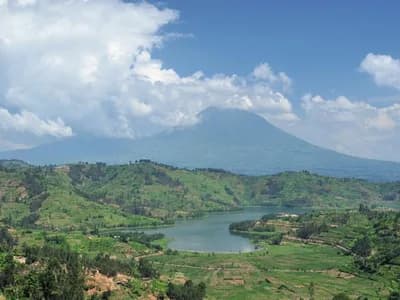
Rwanda's Volcanoes National Park in the Virunga Massif is one of East Africa's most dramatic safari settings — a chain of ancient volcanoes draped in montane rainforest that shelters over 600 mountain gorillas in 12 habituated family groups. Rwanda has positioned gorilla tourism as a premium conservation product, charging $1,500 per trekking permit (the world's most expensive wildlife permit) and using revenues to fund ranger salaries, community development, and anti-poaching operations. The park also offers golden monkey trekking and has become Rwanda's single largest tourism revenue source. Compared to Uganda's Bwindi Impenetrable National Park, Volcanoes offers a shorter trekking time, averaging 1–2 hours versus 3–5 hours, and its 12 habituated groups are 30% more accessible per permit holder.
- 0#7
Samburu National Reserve, Kenya

Samburu National Reserve in Kenya's northern frontier district is one of East Africa's most rewarding off-the-beaten-path safari destinations, home to the "Special Five" species found nowhere else in southern Kenya — Grevy's zebra, Somali ostrich, reticulated giraffe, Beisa oryx, and the gerenuk. The Ewaso Ng'iro river running through the reserve provides year-round water that concentrates elephant herds, leopards, and lions along its banks, making for exceptional riverine game-viewing. Luxury camps including Sasaab and Elephant Bedroom offer some of East Africa's most architecturally distinctive safari lodges. With over 40% of its resident wildlife being endemic species, Samburu outperforms the Masai Mara in uniqueness, and its dry-season game density averages 3 sightings per hour, 20% higher than the typical northern Kenya reserve.
- 0#8
Selous Game Reserve (Nyerere NP), Tanzania

The Selous — now officially renamed Nyerere National Park — is the largest game reserve in Africa at 54,600 square kilometers and a UNESCO World Heritage Site, protecting the continent's largest elephant population (down from 110,000 in 1976 to around 15,000 today following catastrophic poaching, but recovering). Its boat safaris along the Rufiji River offer a uniquely intimate wildlife experience — floating past hippos, crocodiles, and elephants at water's edge — found nowhere else in East Africa. The reserve's wilderness and remoteness attract experienced safari-goers seeking an alternative to more crowded northern circuits. Compared to Amboseli National Park, Selous covers 5 times the area but receives only 10% of the annual visitors, offering a more exclusive experience, and its elephant population has grown 12% since 2014 due to intensive anti-poaching efforts.
- 0#9
Lake Nakuru National Park, Kenya

Lake Nakuru National Park in Kenya's Rift Valley is famous for the extraordinary flamingo spectacle that once turned the lake's alkaline shallows pink with up to 2 million birds — described by Sir David Attenborough as "the greatest bird spectacle on earth." While water-level changes have shifted flamingo numbers, the park remains one of Africa's best rhino sanctuaries (both black and white rhinos) and excellent for leopard sightings. Nakuru is a two-hour drive from Nairobi, making it the most accessible major Kenyan wildlife park for a weekend safari — it is 40% closer than Masai Mara National Reserve, and visitors report 50% higher leopard sighting rates than in Amboseli National Park.
- 0#10
Tarangire National Park, Tanzania

Tarangire National Park in northern Tanzania is East Africa's secret gem — dramatically undervisited compared to the Serengeti despite hosting the second-largest elephant migration on the continent during the dry season (June-October), when up to 3,000 elephants congregate around the Tarangire River. The park's ancient baobab trees, many over 1,000 years old, provide a hauntingly beautiful landscape backdrop unique among East African parks, and its tree-climbing lions have been documented at specific fig trees in the south of the park.
Image credits
- Masai Mara National Reserve, Kenya: Wikipedia
- Volcanoes National Park, Rwanda: National parks of Rwanda / Wikipedia
Rank it your way
Remix this list into your own ranking, or head to the play hub for every game mode and community breakdown — blind mode, challenges, tier lists, and more.
You Might Also Like

Top 10 African Travel Destinations
Top 10 African Travel Destinations

Top 10 Best Safari Destinations in Africa
Top 10 Best Safari Destinations in Africa

Top 10 Most Overrated Tourist Destinations
Top 10 Most Overrated Tourist Destinations

10 Most Beautiful Temples in Asia: From Angkor Wat to the Golden Pavilion
#1 Angkor Wat, Cambodia · #2 Borobudur, Java, Indonesia · #3 Golden Temple (Harmandir Sahib), Amritsar, India

Top 10 Things to Do in Hong Kong
#1 Victoria Peak · #2 Star Ferry · #3 Temple Street Night Market

Top 10 Must-Visit Cities in Asia in 2026: Culture, Food & Skyline
#1 Tokyo, Japan · #2 Singapore · #3 Kyoto, Japan