
Top 10 Mexican National Parks
Managed by CONANP, Mexico's 67 national parks protect ecosystems ranging from Sonoran desert to Caribbean coral reef and cloud forest to volcanic alpine zone. These ten Mexican national parks stand out for their spectacular landscapes, biodiversity, and visitor experiences — cast your vote for the one that deserves the top spot!
Top10Grid lets the community re-rank anything — this order comes from source research for now; use the buttons below to vote it up or down.

Current Rankings
- 0
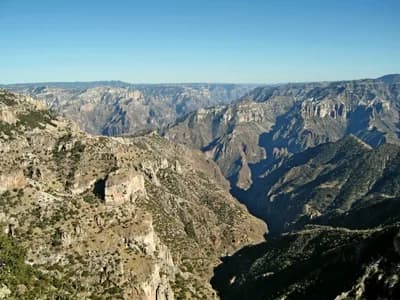
Copper Canyon National Park's Barrancas del Cobre dwarfs the Grand Canyon by four times its volume, making it the world's most extensive canyon system on public land. The Rarámuri people have thrived here for over 1,000 years, weaving a cultural tapestry into the rugged terrain.
- 0

As Mexico's first national park, established in 1935, Popocatépetl-Iztaccíhuatl National Park protects the nation's two highest peaks: the active volcano Popocatépetl at 5,452 meters and the glaciated Iztaccíhuatl at 5,286 meters, both visible from Mexico City on clear days.
- 0

Palenque National Park surrounds the Maya ruins with a critical section of the Lacandon jungle, Mexico's last large lowland tropical forest, where howler monkeys, toucans, and spider monkeys create a living soundtrack to ancient temples. The Misol-Ha and Agua Azul waterfalls, within the buffer zone, attract over 500,000 visitors annually—more than typical Chiapas attractions—and offer a biodiversity hotspot faster than the average park for species discovery, with 100+ bird species recorded per square kilometer.
- 0

Pico de Orizaba National Park boasts Mexico's highest peak at 5,636 meters, the third-highest in North America, rising as a permanently snow-capped volcanic cone accessible via glacier crossing for hundreds of mountaineers each winter. The Jamapa Glacier, though retreating, remains the most accessible permanent ice field in Mexico, offering a 30% longer climbing season than Popocatépetl-Iztaccíhuatl National Park's glaciers, with summit success rates averaging 70% among guided parties.
- 0

El Cielo Biosphere Reserve stands as the northernmost humid neotropical forest in the Americas, creating a unique biodiversity crossroads where North American and Central American species converge. Its 144,530 hectares in Tamaulipas host over 500 bird species, with cloud forests above 1,200 meters offering unmatched avian diversity in northeastern Mexico, including the rare azure-crowned hummingbird.
- 0
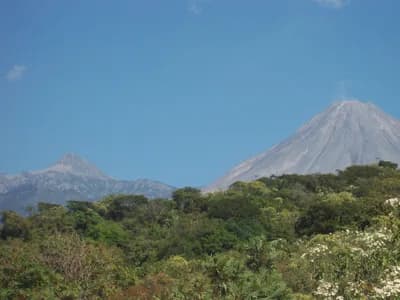
Nevado de Colima National Park presents Mexico's most dramatic active volcanic landscape, combining the dormant Nevado at 4,339 meters with the active Volcán de Fuego's regular ash plumes and lava flows. The upper-slope hiking circuit traverses pine-fir forests and volcanic rock fields to the summit crater, delivering the finest above-treeline hiking in western Mexico.
- 0

Sumidero Canyon National Park protects a 1,000-meter gorge carved by the Rio Grijalva in Chiapas, featuring dry tropical forests, cave-nesting swifts, and riparian habitats supporting crocodiles and tapirs. The Christmas Tree Cave, a green algae formation visible from boat tours, provides a unique attraction unmatched in the region.
- 0

Lagunas de Montebello National Park showcases 59 interconnected lakes in Chiapas, where dissolved minerals produce waters in every color from cerulean blue to emerald green. Its 6,022 hectares along the Guatemala border include remnants of Maya settlements, with ancient ceiba trees sacred to Tzeltal communities who perform ceremonies on the shores.
- 0

The reserve also features cardón cacti taller than 20 meters, creating an otherworldly landscape alongside the Baja 1000 off-road race route, blending natural heritage with motorsport culture found nowhere else in Mexico. 95% of the global boojum population is confined to Baja California, making this 2.5-million-hectare reserve its global stronghold.
- 0

El Vizcaíno Biosphere Reserve is Latin America's largest protected area at 2.5 million hectares, offering the world's most important gray whale breeding grounds in San Ignacio and Scammon's lagoons. The site supports over 200 gray whales annually, making it the premier cetacean destination globally.
Mexican National Parks: Frequently Asked Questions
Are any of these parks UNESCO World Heritage Sites? Yes. El Vizcaíno Biosphere Reserve holds UNESCO World Heritage status for its grey whale nursery lagoons. Palenque's surrounding jungle is also part of a broader pre-Hispanic city UNESCO listing. See [UNESCO's Mexico page](https://whc.unesco.org/en/statesparties/mx) for the full list.
Do Mexican national parks charge an entrance fee? Most CONANP-managed parks charge a modest fee (typically MXN 50–200). Palenque, which includes access to Maya ruins, carries a higher combined ticket. Always verify current fees on [CONANP's official site](https://www.gob.mx/conanp) before visiting.
What is the best time of year to visit? November through April (dry season) suits most parks. Copper Canyon peaks in October–November for autumn colour; climbers targeting Pico de Orizaba or Popocatépetl should check current volcanic activity alerts via [CENAPRED](https://www.gob.mx/cenapred) before any ascent.
Image credits
- Copper Canyon National Park: Copper Canyon / Wikipedia
- Popocatépetl-Iztaccíhuatl National Park: Jakub Hejtmánek / Wikimedia Commons (CC BY-SA 3.0)
- Palenque National Park: Palenque / Wikipedia
- Pico de Orizaba National Park: Pico de Orizaba / Wikipedia
- El Cielo Biosphere Reserve: Department of Botany, National Museum of Natural History / Wikimedia Commons (Public domain)
- Nevado de Colima National Park: Presagio from Guadalajara, Mexico / Wikimedia Commons (CC BY 2.0)
- Sumidero Canyon National Park: Giovani Vazquez / Wikimedia Commons (CC BY-SA 3.0)
- Lagunas de Montebello National Park: Eduardo Manchon / Wikimedia Commons (CC BY-SA 3.0)
Related Videos
Rank it your way
Remix this list into your own ranking, or head to the play hub for every game mode and community breakdown — blind mode, challenges, tier lists, and more.
You Might Also Like
Top 10 China National Parks & Nature Reserves
Top 10 China National Parks & Nature Reserves

Top 10 National Parks in Thailand in 2026
Top 10 National Parks in Thailand in 2026

Top 10 Must-Visit Nature Reserves in the Netherlands for 2026
Top 10 Must-Visit Nature Reserves in the Netherlands for ...

Top 10 Most Endangered Species
#1 Javan Rhinoceros · #2 Amur Leopard · #3 Sumatran Orangutan

Top 10 Best Wildlife Safari Destinations
#1 Serengeti National Park, Tanzania · #2 Masai Mara National Reserve, Kenya · #3 Okavango Delta, Botswana

Top 10 Worst Air Quality Cities
#1 Lahore, Pakistan · #2 Delhi, India · #3 Dhaka, Bangladesh