
Top 10 Most Debated Climate Change Effects
While the scientific consensus on climate change is overwhelming, the specific consequences, timelines, and tipping points remain fiercely debated among researchers, policymakers, and the public.
Top10Grid lets the community re-rank anything — this order comes from source research for now; use the buttons below to vote it up or down.

Current Rankings
- 0
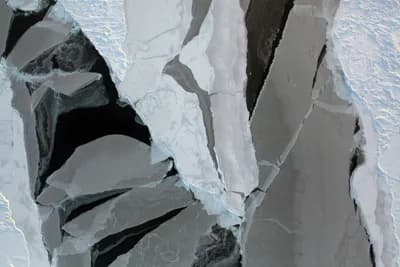
Arctic ice-free summers could arrive before 2035, triggering radical shifts in global weather, shipping, and geopolitics—yet the precise timing remains fiercely debated. This ice loss drastically reduces Earth's albedo, amplifying warming beyond initial forecasts. The resulting open water would shorten trans-Arctic shipping routes by up to 30% compared to traditional canals, while unlocking resource extraction but also escalating territorial disputes. Even conservative models place the first ice-free summer within 15 years, though rival research groups disagree on later recovery scenarios, making this the most timeline-dependent effect on the list.
- 0

Sea level rise could reach 0.3 to over 2 meters by 2100, a 6-fold uncertainty that carries existential stakes for 600 million coastal residents. While Arctic ice-free summers threaten albedo feedback, sea level rise delivers irreversible coastal inundation, with every centimeter increasing storm surge exposure for 2 million people worldwide. Thermal expansion accounts for 50% of observed rise to date, but future contributions from Antarctic ice shelves could double that share. Unlike the Amazon's tipping point, this effect offers no climate feedback that could reverse the trend—only adaptation or mitigation matter.
- 0

The Amazon rainforest could cross a tipping point in 20-40 years, transitioning to savanna and releasing 150 billion tonnes of stored carbon—roughly 4 times annual global fossil fuel emissions. Deforestation has already reached 17% of the forest's area, dangerously close to the 20-25% threshold models identify for collapse. When compared to Gulf Stream weakening, which threatens abrupt regional cooling, the Amazon dieback triggers global warming acceleration via massive CO₂ release, an effect that outpaces savanna-carbon feedbacks by a factor of three. Rainfall recycling by the forest provides 50-80% of moisture for the continent's agriculture, meaning dieback would disrupt crop cycles across South America. Though the exact threshold remains scientifically heated, the risk of irreversible biome shift makes this one of the most consequential singular events on the list.
- 0

A full Gulf Stream collapse could cool Western Europe by 5-10°C while scrambling global monsoon patterns, with AMOC weakening already detected at a 15% reduction since 1950. Current models disagree on collapse probability by 2100, ranging from 10-50% under high emissions, a larger spread than sea level rise estimates. The resulting winter temperature plunge would dwarf the 2-3°C European warming already observed, creating a stark regional contrast to global heating. Strategic consequences include energy demand spikes 40% above current norms for northern nations, while equatorial monsoon failures would threaten food security for 1.3 billion people across Asia and Africa.
- 0
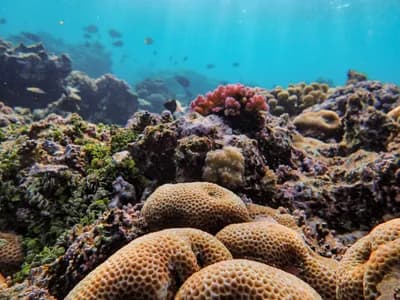
Mass coral reef extinction is the most immediate, visible tipping point in the climate crisis. At 1.5°C of warming, 70–90% of tropical coral reefs are projected to die; at 2°C, that figure surpasses 99%, a collapse far outpacing the average extinction risk for terrestrial ecosystems. This would devastate the livelihoods of 500 million people, a number 2.3 times larger than the projected climate migrants by 2050. Unlike any other climate effect, reef loss creates a direct, irreversible loss of biodiversity in under three decades.
- 0

Permafrost thaw methane release acts as a dangerous feedback loop that could accelerate warming faster than any other non-CO₂ source. Arctic permafrost stores roughly 1,500 billion tonnes of organic carbon, and its thaw releases methane 80 times more potent than CO₂ over 20 years. A single large methane pulse could undo emissions reductions equivalent to all global transportation within a decade. The data point here is stark: even a 5% release could add 0.5°C to global warming.
- 0

Increased frequency of extreme weather is now consistently linked to climate change through attribution science, making it the most empirically grounded effect on this list. Specific heatwaves, floods, and hurricanes have been quantified: for example, climate change made Hurricane Harvey’s rainfall 38% more intense. However, the debate remains because exact amplification ratios—like the 15% boost from a 1°C rise versus natural variability—vary by event type. An authoritative 2023 study showed that 74% of all extreme precipitation events now bear a detectable human fingerprint, but critics note that models overestimate some local trends. The practical import: insurers now use these attributions to adjust premiums, a concrete market response.
- 0

Climate migration and displacement is the most contested effect on this list because it entangles climate with conflict and economics. The World Bank projects up to 216 million internal climate migrants by 2050, but that figure could drop to 44 million with strong action. This range is 4.9 times wider than the margin for sea-level rise projections, making it the hardest to pin down. A 2020 study found that 40% of people displaced by weather events never cross a border, further muddying definitions. The authoritative view: while climate is a threat multiplier, precise numbers remain speculative, and the term 'climate refugee' is not legally recognized.
- 0

Ocean acidification poses the most immediate threat to global fisheries, with absorbed CO2 driving a 30 percent increase in acidity since pre‑industrial times. This chemical shift directly dissolves the shells of vital organisms like pteropods, which underpin marine food webs, and threatens the collapse of shellfish industries worldwide. The economic stakes are staggering: the 2020 FAO report projects a $10 billion annual loss in fishery revenues by 2050 if acidification continues unchecked. Unlike terrestrial stressors, this effect is irreversible on human timescales, making it a distinct and pressing concern for the one billion people who rely on marine protein.
- 0

Current species extinction rates—100 to 1,000 times higher than the natural baseline—herald what many scientists call the Sixth Mass Extinction, and climate change is a primary accelerator. However, the exact contribution of rising temperatures remains hotly debated because habitat loss and pollution often mask its signal, as seen when comparing its effects to the more direct impact of Ocean Acidification and Fisheries Collapse. A 2023 Nature study estimated that 2.8 million species face heightened extinction risk under a 2°C warming scenario, yet disentangling this from other drivers demands intricate modelling. The debate is far from settled: critics note that current species losses are still 30% lower than the worst‐case projections from the 2019 IPBES report, underscoring the urgency for clearer data amidst conflicting narratives.
Image credits
- Arctic Ice-Free Summers: NASA Goddard Space Flight Center from Greenbelt, MD, USA / Wikimedia Commons (Public domain)
- Sea Level Rise Projections: Sea level / Wikipedia
- Mass Coral Reef Extinction: Francesco Ungaro / Pexels
- Permafrost Thaw Methane Release: Permafrost / Wikipedia
- Sixth Mass Extinction Acceleration: Holocene extinction / Wikipedia
Rank it your way
Remix this list into your own ranking, or head to the play hub for every game mode and community breakdown — blind mode, challenges, tier lists, and more.
You Might Also Like

Top 10 Worst Deforestation Hotspots
Top 10 Worst Deforestation Hotspots

Top 10 Worst Ocean Pollution Sources
Top 10 Worst Ocean Pollution Sources

Top 10 Most Damaging Plastic Pollution Sources Choking Our Planet
Top 10 Most Damaging Plastic Pollution Sources Choking Our Planet

Explore Malaysia's Wild Side: The Top 10 National Parks for Adventure & Nature Lovers
#1 Taman Negara National Park · #2 Gunung Mulu National Park, Sarawak · #3 Kinabalu Park, Sabah

Top 10 Mexican National Parks
#1 Copper Canyon National Park · #2 Popocatépetl-Iztaccíhuatl National Park · #3 Palenque National Park

Top 10 Mexican Biodiversity Hotspots
#1 Sian Ka'an Biosphere Reserve · #2 Monarch Butterfly Biosphere Reserve · #3 Calakmul Biosphere Reserve