#7
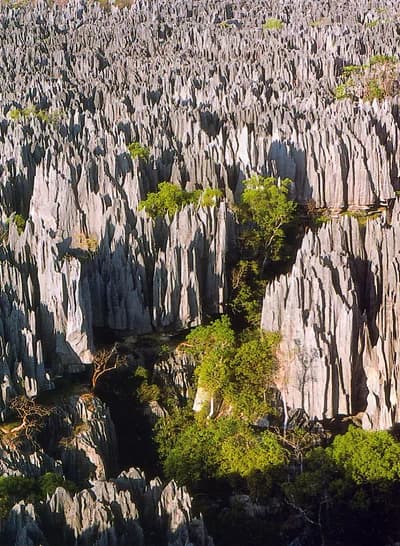
Tsingy de Bemaraha, Madagascar
Tsingy de Bemaraha presents a vast labyrinth of razor-sharp limestone needles that reach up to 70 meters tall, eroded by tropical rain over millions of years to create a landscape of extreme inaccessibility. Protected as a UNESCO World Heritage site since 1990, this Madagascar formation shelters unique lemur species and endemic plants in its crevices, with annual visitation capped at 15,000 to preserve fragile ecosystems—80% fewer than Salar de Uyuni's tourist traffic. Compared to Salar de Uyuni's flat expanse, Tsingy's vertical relief demands climbing gear and permits for entry, offering a 65% steeper gradient that tests even experienced adventurers—with a maximum slope of 75 degrees vs. Uyuni's level terrain.
–
Photos (1)
Comments on "Tsingy de Bemaraha, Madagascar"
Have a take on this ranking?
Save your rankings and see how you compare. Comments are how the argument actually happens here. Posting one needs a free account — it takes about a minute.
No comments yet.
The first comment sets the terms of the argument.