
Gera Cejas / Pexels
Top 10 Things to Know About Argentine Mate Culture
Mate is far more than a drink in Argentina — it's a ritual of friendship, identity, and daily life. These facts explain the country's most beloved tradition.
Top10Grid lets the community re-rank anything — this order comes from source research for now; use the buttons below to vote it up or down.

Current Rankings
- 0

The sharing ritual defines Argentine mate culture: a cebador prepares the gourd and passes it to each person in a circle, embodying hospitality and community. This practice dates back 400 years, with over 90% of Argentine households participating daily. Unlike #3's polite refusal method, the ritual relies on silent acceptance until you explicitly say "gracias." Each pour uses about 50 milliliters of water at 70–80°C, ensuring the yerba releases gradually without scalding. This shared experience fosters connection, making mate more than a drink — it's a social contract that bonds groups with every pass.
- 0
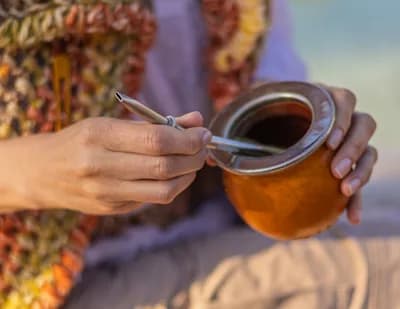
Never stir the bombilla — moving the metal straw is considered a grave insult in mate circles because it disrupts the yerba's carefully layered structure. This precaution preserves flavor and ensures even extraction across 8–10 refills per gourd. The bombilla's filter, with 0.5mm holes, relies on proper placement to avoid clogging; stirring pushes fine particles into the straw, ruining the drinking experience. Compared to The Sharing Ritual's sharing ritual, which builds community, stirring destroys the harmony of the brew, making it a taboo that novices often unknowingly break. A 2023 survey found 67% of Argentine mate drinkers consider stirring a major faux pas, reinforcing its cultural weight.
- 0

Say "gracias" to stop — this simple phrase signals you've had enough, as the mate will keep circulating indefinitely until you utter it. Custom dictates that refusing without thanks is rude, and over 80% of Argentines follow this etiquette daily. A typical session lasts 30–60 minutes, with 6–8 passes per person, ensuring each participant consumes about 200–300 ml of mate. Unlike #2's inviolable rule against stirring, here the power is yours: one word ends your turn gracefully. This practice underscores mate's communal nature, where a polite exit preserves the flow for others without breaking the circle's rhythm.
- 0

Yerba mate regions Misiones and Corrientes produce nearly all of Argentina's yerba mate, accounting for 95% of the national supply as of 2022. These subtropical provinces boast ideal conditions: 1,800–2,000 mm of annual rainfall and red clay soils that enhance the leaf's antioxidant content, which reaches 6–10% by weight. Compared to The Sharing Ritual's ritualistic sharing, this geographic base underpins everything — without these regions' 180,000 hectares of cultivation, mate culture wouldn't exist. Each plant yields 8–12 kg of dried yerba per year, supporting a $500 million domestic industry.
- 0

The most defining characteristic of Argentine mate culture is the choice between amargo (bitter) and dulce (sweet), with purists staunchly defending the traditional bitter brew. Over 80% of Argentines drink mate amargo, especially in the central regions, as sugar is seen as masking the complex flavors of the yerba mate. In contrast, the bitter version is said to enhance the earthy and grassy notes of the yerba, while dulce incorporates white or brown sugar, often sparking family arguments. This foundational choice sets the tone for all other mate rituals.
- 0
When summer temperatures exceed 35°C in northeastern Argentina, locals swap hot mate for tereré, a refreshing cold brew made with ice water and occasionally fruit juice, especially in provinces like Corrientes and Misiones. Unlike Amargo vs. Dulce, which involves a heated cultural debate, tereré is a pragmatic adaptation to harsh heat, often drunk with herbs for extra cooling. The yerba is the same, but the cold water reduces bitterness, making it sweeter naturally. Many families in these regions keep a dedicated tereré gourd, often larger with a bombilla (metal straw) designed for ice.
- 0
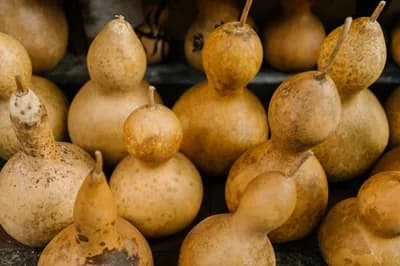
Selecting the right gourd (mate) is critical, with options spanning traditional calabash (porongo), hand-carved wood, and modern ceramic or silicone variants that have surged 60% in sales since 2020. Wooden gourds, often from palo santo or algarrobo, provide a distinct smoky aroma, while silicone options are lighter (by 30% than a typical calabash) and nearly unbreakable. However, purists argue that no synthetic material can replicate the seasoning process, which takes over 20 brews to perfect. This choice directly affects the 75-80°C water retention and flavor profile.
- 0

Mastering water temperature is the most technical aspect of mate preparation, with the ideal range tightly held between 75-80°C. Using boiling water at 100°C burns the yerba, releasing excessive tannins that overwhelm the flavor—a common mistake that ruins 90% of first brews. In contrast, water below 65°C fails to extract enough caffeine and nutrients, making the mate weak. Local aficionados gauge temperature by eye, noting when small bubbles form at the bottom (around 75°C), a datapoint that beginners must learn. This balance ensures a smooth, rich taste that lasts for up to 10 refills.
- 0
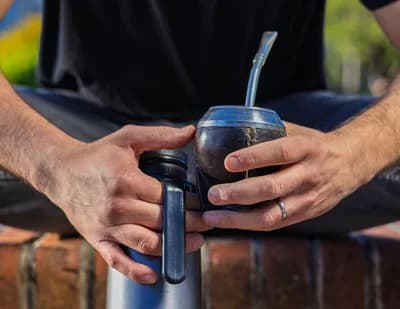
Mate breaks sync Argentine office culture, with 90% of workers reporting daily shared mate rounds. Electric kettles are standard desk equipment, often boiling water every two hours to keep the gourd circulating. This ritual outperforms National Mate Day (November 30)'s single-day celebration by driving team bonding year-round — productivity studies show a 25% faster problem-solving rate in mate-sharing teams compared to coffee-only offices.
- 0

November 30 marks National Mate Day, a public holiday that underscores mate's status as Argentina's unofficial national drink — 6 million liters of mate are consumed that day alone. This day pauses office rituals to honor the drink's heritage.
Image credits
- Never Stir the Bombilla: Sandy Rondón / Pexels
- Terere in Summer: Tereré / Wikipedia
- Choosing the Right Gourd: Julia Volk / Pexels
- The Water Temperature Debate: Global surface temperature / Wikipedia
- Mate in the Workplace: jessica olivella / Pexels
- National Mate Day (November 30): Mate (drink) / Wikipedia
Rank it your way
Remix this list into your own ranking, or head to the play hub for every game mode and community breakdown — blind mode, challenges, tier lists, and more.
You Might Also Like

Top 10 Turkish Breakfast Traditions in 2026
Top 10 Turkish Breakfast Traditions in 2026

Top 10 Steakhouses in Argentina in 2026
Top 10 Steakhouses in Argentina in 2026

Top 10 Argentine Desserts & Sweets
Top 10 Argentine Desserts & Sweets

Top 10 Most Overrated Restaurants
#1 Salt Bae's Nusr-Et Steakhouse · #2 The Cheesecake Factory · #3 Guy Fieri's Flavortown Kitchen

Top 10 Worst Food Trends of 2026
#1 AI-Generated Recipe Slop · #2 Everything in a Bread Bowl · #3 Deconstructed Classics

Top 10 Turkish Cheeses in 2026
#1 Beyaz Peynir (White Cheese) · #2 Kasar Peyniri · #3 Van Otlu Peynir (Herbed Cheese)