
Wikipedia / Wikimedia Commons
10 Best Cabbage Recipes to Make in 2026 (From Kimchi to Cabbage Steaks)
Cabbage is having a moment in 2026: it shows up as a low-carb rice swap, a TikTok steak, and a centuries-old ferment on the same weeknight table. The ten dishes below — from Korean kimchi and Japanese yamitsuki cabbage to German sauerkraut, Polish pierogi, and Indian patta gobhi sabzi — cover the full range of how a single inexpensive vegetable is being cooked right now. Vote for the one you'd make first.
Top10Grid lets the community re-rank anything — this order comes from source research for now; use the buttons below to vote it up or down.

Compare by Dimension
How accessible the dish is for home cooks of any skill level, from no-cook to advanced technique required.
| Rank | Item | Score | Notes |
|---|---|---|---|
| #1 | Egg Roll in a Bowl | 10.0 | Egg roll in a bowl: single pan, 15 minutes, no special skills — easiest full-flavor dish on the list |
| #2 | Yamitsuki Cabbage (Japanese Addictive Cabbage) | 10.0 | Yamitsuki: no cooking, 10 minutes, pantry staples — technically the simplest dish |
| #3 | Roasted Cabbage Steak | 9.0 | Cabbage steak: 2 ingredients, high heat, no technique required — maximum simplicity for a main course |
| #4 | Indian Patta Gobhi Sabzi (Spiced Stir-Fried Cabbage) | 9.0 | Patta gobhi: 10 minutes, stir-fry technique, minimal knife skills needed |
| #5 | Cabbage Rice (Low-Carb Rice Alternative) | 8.0 | Cabbage rice: food processor or knife work, then sauté — straightforward but requires equipment |
| #6 | Kimchi (Traditional Korean Fermented Cabbage) | 6.0 | Kimchi: requires patience and specific Korean ingredients; fermentation timing is non-trivial |
| #7 | German Sauerkraut | 5.0 | Sauerkraut: passive waiting (4-6 weeks fermentation) but minimal active effort |
| #8 | German Red Cabbage Braised (Rotkohl) | 5.0 | Rotkohl: 60-minute braise — low skill but high time commitment |
| #9 | Stuffed Cabbage Rolls (Gołąbki / Sarma / Dolma) | 4.0 | Stuffed rolls: requires blanching, filling preparation, rolling technique — most complex |
| #10 | Cabbage Dumplings (Potstickers / Gyoza / Pierogi) | 3.0 | Dumplings: most skill-intensive — folding technique requires practice to master |
Current Rankings
- 0

Roasted cabbage steak is precisely what its name promises: a thick cross-section of a cabbage head, typically cut one to one-and-a-half inches thick, seasoned generously with olive oil, salt, pepper, and aromatics, then roasted or grilled at high heat — usually between 425 and 450 degrees Fahrenheit — until the edges caramelize to a deep amber and the interior softens to a tender, slightly sweet core. The transformation is genuinely surprising to anyone who has only experienced cabbage as a boiled or steamed side dish. The science behind this transformation is the Maillard reaction, the same browning chemistry that makes a seared steak or roasted coffee bean complex and crave-worthy. At high heat, the natural sugars in cabbage caramelize while proteins undergo structural changes, producing hundreds of new flavor compounds that simply do not exist in raw or gently cooked cabbage. The result is crispy, lacey outer leaves with concentrated sweetness and a dense, almost meaty center that holds its shape on a plate. The textural contrast — crackling edge meeting yielding interior — is what elevated this preparation from novelty to genuine main course. Flavor pairing versatility is central to the dish's 2026 appeal. The neutral-sweet profile of roasted cabbage absorbs and amplifies almost any sauce tradition: chimichurri brings herbaceous brightness, harissa adds North African heat and complexity, miso butter delivers umami depth from the Japanese pantry, tahini sauce provides Middle Eastern richness, and classic herb oils offer European simplicity. A single preparation technique unlocks global flavor profiles, which resonates strongly with the 2026 home cook who has assembled a genuinely international pantry. Nutritionally, a serving of roasted cabbage is genuinely light — well under 150 kilocalories — while delivering a strong dose of vitamin K, a solid amount of vitamin C, and a couple of grams of dietary fiber. It is naturally vegan, gluten-free, and inexpensive even with good olive oil factored in. The cultural context matters as much as the cooking chemistry. Chefs have increasingly treated cabbage as a centerpiece — cabbage steaks among them — rather than a side dish. That reframing — from supporting player to protagonist — is one of the more transformative things to happen to cabbage in recent years. Food media outlets have covered the cabbage steak as evidence of a broader shift in how home cooks approach plant-forward cooking. It represents the intersection of the vegan and flexitarian movements, economic pragmatism, and genuine culinary sophistication — all in a vegetable that costs less than a dollar.
- 0

Egg roll in a bowl is the deconstructed version of a Chinese-American takeout classic, stripped of its deep-fried wrapper and rebuilt as a fast, single-skillet weeknight meal. The formula is simple: ground meat — most commonly pork, but chicken, turkey, and crumbled tofu all work equally well — is browned in a hot pan, then joined by shredded cabbage, shredded carrots, minced garlic, fresh ginger, soy sauce, sesame oil, and hoisin sauce. The whole assembly cooks in fifteen minutes from a cold pan and requires minimal knife work if you buy pre-shredded coleslaw mix, which has become one of the dish's signature shortcuts. The origin story is characteristically internet-era: home cooks seeking to replicate the flavors they loved in egg rolls — the savory pork, the toasted sesame, the cabbage-ginger-garlic combination — without the effort and caloric cost of deep frying. The solution was to abandon the wrapper entirely and serve the filling over rice, cauliflower rice, or on its own. Once that combination hit TikTok and recipe blogs around 2021-2022, it never left. By 2026, it had become so embedded in meal prep culture that food editors at The Daily Meal were writing explainers on it as though it were an established cuisine category. The nutritional profile explains much of its staying power among health-conscious cooks. A standard serving — ground pork version — delivers 200 to 320 kilocalories depending on meat choice and oil quantity, with 23 to 33 grams of protein, a couple of grams of dietary fiber from the cabbage, and a respectable hit of vitamins C and K. Swap to ground chicken or turkey and the caloric density drops while protein remains high. Make it with tofu and it becomes a complete vegan meal. The cost is also a significant driver: a full batch feeding four people runs roughly $6 to $8 total, or about $1.50 to $2.00 per serving — a fraction of the takeout it approximates. Pre-shredded coleslaw mix, which serves as the cabbage base, costs under $2 at virtually any grocery chain. The Asian-American culinary crossover this dish represents is culturally significant. It is not authentic Chinese cooking — Chinese chefs would not recognize it as such. But it is a successful cultural translation that brought the flavor logic of East Asian cooking (sesame, soy, ginger, garlic as a foundational flavor quartet) into Western weeknight kitchens at scale. For the 2026 home cook who has built a pantry around these flavors, egg roll in a bowl is one of the fastest ways to deploy them. Food bloggers have pointed to it as emblematic of a broader cabbage renaissance: a dish that makes the ingredient feel contemporary, not old-fashioned.
Sourceswellplated.com - 0
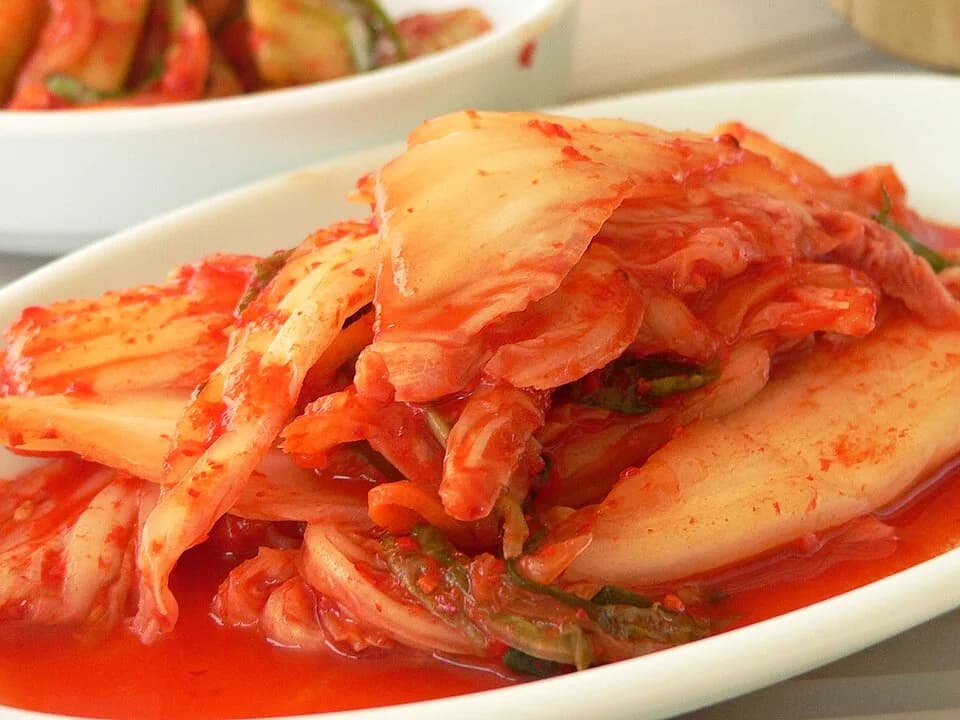
Kimchi is Korea's national dish and, by 2026, one of the most scientifically studied fermented foods in the world. Its preparation begins with napa cabbage — halved, quartered, or roughly chopped and salted for several hours to draw out moisture and begin softening the cell walls. The salted cabbage is then rinsed, squeezed dry, and combined with a paste of gochugaru (Korean red pepper flakes), garlic, fresh ginger, fish sauce or vegan shrimp paste, and often sugar, daikon radish, and green onions. This mixture is packed tightly into jars or fermentation vessels and left at room temperature for one to four days to begin active fermentation, then moved to the refrigerator where fermentation continues slowly over weeks and months. The microbiology is what sets kimchi apart from virtually any other food in the home cook's repertoire. The primary fermenting bacteria — species within the Leuconostoc and Weissella genera — consume the residual sugars in cabbage and produce lactic acid, which preserves the kimchi, acidifies the environment to a pH of approximately 4.2 to 4.5, and creates a complex sour, tangy, umami-layered flavor that deepens with age. Between 15 and 30 distinct bacterial species have been identified in well-fermented kimchi samples, with the population shifting over time as conditions change. The clinical evidence for kimchi's health benefits keeps growing. Several studies have linked regular kimchi consumption to modest reductions in BMI and waist circumference in overweight subjects. At roughly 15 to 25 kilocalories per 100 grams, it's one of the more nutrient-dense foods by caloric cost available to the modern consumer. The global expansion of kimchi is among the most remarkable culinary export stories of the 21st century. What was once a fermented side dish known primarily to Korean households is now made in home kitchens well beyond Korea and widely available on US grocery shelves, used as a condiment, cooking ingredient, and flavor base far outside its original context. Kimchi fried rice, kimchi pancakes (kimchijeon), kimchi ramen, kimchi quesadillas, and kimchi grilled cheese have all entered mainstream recipe consciousness. Interest in fermented foods generally has grown sharply in recent years, and kimchi — one of the most well-documented probiotic foods — is a meaningful part of that story.
Sourcesen.wikipedia.org - 0

The word yamitsuki translates from Japanese as "addictive" or "habit-forming," and the dish lives up to its name with remarkable efficiency. It originates in the izakaya culture of Japan — the gastropubs where salted, dressed cabbage has been served as a complimentary starter for generations, intended to stimulate appetite and prime the palate before drinking. The version that went viral in 2026 is a stripped-down interpretation: raw green or napa cabbage, thinly shredded or torn into rough pieces, dressed with sesame oil, chicken bouillon powder (or MSG), minced or grated garlic, toasted sesame seeds, and sometimes a splash of soy sauce or rice vinegar. There is no cooking involved. No heat, no transformation, no timing to manage. The assembly takes under ten minutes. And yet the flavor is startlingly complex — the sesame oil provides nutty richness, the bouillon or MSG delivers the concentrated savory hit of glutamate that makes food taste more intensely of itself, and the raw cabbage brings a fresh crunch and gentle cruciferous sweetness that balances the richness of the dressing. The combination is, genuinely, difficult to stop eating. The science of why is instructive. Cabbage contains naturally occurring glutamates in small quantities — the same amino acid compounds responsible for the savory taste of parmesan, soy sauce, and mushrooms. Adding chicken bouillon or MSG amplifies this baseline umami signal dramatically, a flavor principle Japanese cuisine has applied for centuries. Meanwhile, the sulfur compounds in raw cabbage, often considered unpleasant when boiled, read as pleasantly pungent and fresh in a raw preparation, particularly when offset by sesame oil's nuttiness. A viral TikTok video demonstrating this recipe drew a huge audience — well beyond the typical reach of cabbage-related content — putting yamitsuki in the same viral tier as the egg roll bowl phenomenon. The video's success was not accidental: it demonstrates a dish so simple that viewers can plausibly make it immediately after watching, which drives both saves and shares at higher rates than complex recipes. For the nutritionally minded, raw cabbage preparation preserves maximum vitamin C content (cooking destroys a significant portion), and the fiber in raw cabbage functions as prebiotic fuel for gut bacteria even without the active probiotics of fermented preparations. Vegan adaptations substituting vegetable bouillon for chicken bouillon are equally effective and have broadened the dish's appeal further. The cost per serving, even with quality sesame oil factored in, is only a few cents — making yamitsuki one of the most economical dishes on this list relative to the flavor impact delivered.
- 0
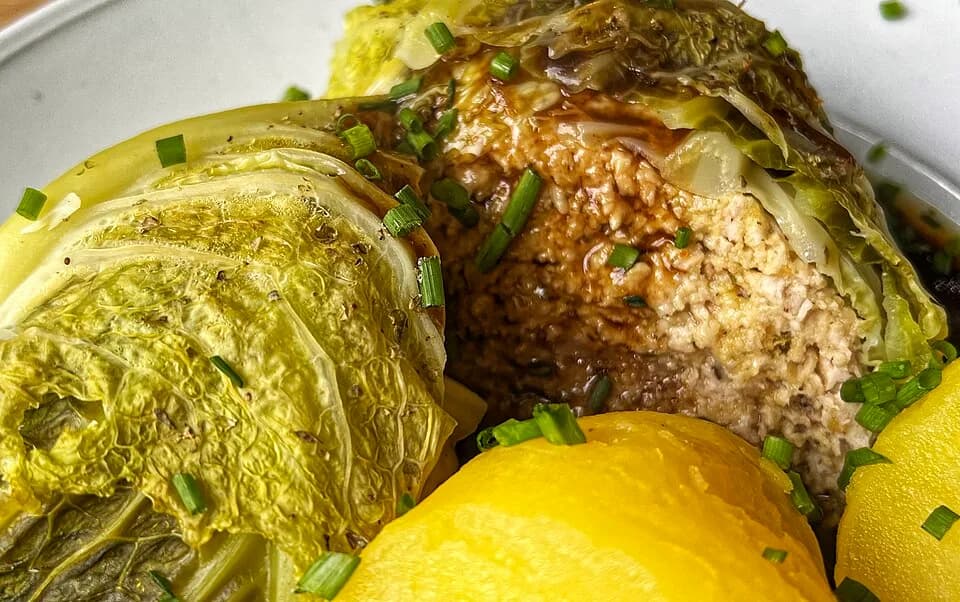
Stuffed cabbage rolls are one of the most widely shared culinary preparations across cuisines, with variants like Polish gołąbki, Balkan sarma, and Middle Eastern dolma. The dish typically involves a long braise, and many cooks find the flavor deepens further after a day in the refrigerator.
- 0

German sauerkraut, lacto-fermented with about 2% salt over several weeks, is one of the West's oldest fermented probiotic foods, producing a genomically diverse mix of lactic acid bacteria. At around 27 kilocalories per cup and pennies per serving when home-fermented, it's a cheap way to get fermented probiotics, while preserving vitamin C and offering compounds like GABA that raw cabbage doesn't.
Sourcesen.wikipedia.org - 0
Cabbage dumplings—from Chinese jiaozi to Polish pierogi—are a satisfying way to use cabbage. At a modest calorie count and well under fifty cents each when batch-cooked, salt-wilted cabbage provides moisture that helps prevent wrapper rupture during steam-fry or boil methods.
- 0

Cabbage rice, finely chopped as a grain substitute, delivers 25 kilocalories per cup—an 87% reduction compared to white rice—and 4-7g net carbs. Pinterest shows a 45% rise in related cabbage alfredo searches, reflecting its appeal to 25-30 million Americans monitoring carbohydrate intake.
- 0

Patta gobhi sabzi is a ten-minute stir-fry built on tempering: mustard seeds cracking in hot oil, then curry leaves, dried chilies, ginger-garlic, turmeric, and cumin, before finely shredded cabbage goes in over high heat for eight to ten minutes, just enough to keep a little crunch. It's one of the fastest, cheapest dishes on this list, and turmeric's curcumin is better absorbed alongside black pepper or a pepper-containing chili blend — which this dish does by default, not as a health hack. Simple, fast, and it tastes like more effort went into it than actually did.
- 0

German Red Cabbage Braised (Rotkohl) is the most visually dramatic entry in the 2026 cabbage renaissance and the only one on this list with an hour-long braise. Red cabbage quartered and finely shredded simmers with goose fat or butter, diced onion, tart Granny Smith apples, red wine vinegar, brown sugar, whole cloves, bay leaves, and juniper berries for 45 to 60 minutes, transforming into a silky, jewel-toned sweet-sour confiture. The anthocyanins that give red cabbage its color react to pH changes, shifting to bright purple-red from the vinegar, and are rich in compounds linked to cardiovascular and cognitive protection. Anthocyanins are 2026's nutrition molecule of the moment, and Rotkohl delivers them from a cabbage head that costs just a few dollars, pairing best with roast duck or pork knuckle.
Sourcesen.wikipedia.org
Cabbage Dish FAQs
## Cabbage Dish FAQs
What is the easiest cabbage dish for a beginner? Roasted cabbage steak and egg roll in a bowl are the two lowest-effort entries on this list — both need one pan, under 30 minutes, and a single head of green cabbage.
Which cabbage variety works best across these recipes? Green cabbage covers most of the list (steaks, egg roll in a bowl, stuffed rolls, sauerkraut, rotkohl). Napa cabbage is the right pick for kimchi, yamitsuki cabbage, and the Chinese jiaozi/gyoza dumplings. Savoy cabbage is a milder substitute for stuffed rolls.
How long do the fermented options keep? Traditional kimchi and German sauerkraut, made by lacto-fermentation with ~2% salt, keep for several months refrigerated once tangy enough, and longer still if a portion is moved to the freezer.
Are cabbage rice and cauliflower rice interchangeable? Both are low-carb, low-calorie grain substitutes, but cabbage rice is crunchier, holds shape longer in a hot pan, and carries far fewer calories per cup than riced cauliflower.
Which dish is the best make-ahead option for a weeknight? Stuffed cabbage rolls (gołąbki/sarma) and braised German red cabbage (Rotkohl) both improve after a night in the fridge and reheat well, making them the strongest batch-cooking picks on the list.
Fresh, Fermented, or Slow-Braised: Three Different Kinds of Cabbage Dish
The ten dishes here split into three genuinely different cooking approaches, and knowing which category you're in the mood for is the fastest way to pick one. The quick, fresh group — roasted cabbage steak, egg roll in a bowl, yamitsuki cabbage, cabbage rice, and Indian patta gobhi sabzi — all go from raw cabbage to plate in well under an hour, most in fifteen minutes or less. The fermented group — kimchi and sauerkraut — trade speed for a completely different flavor profile: both need days to weeks of active fermentation before they're ready, and both are made once in a batch that then lasts for weeks in the fridge. The slow-braised group — stuffed cabbage rolls and German braised red cabbage — take an hour or more of active cooking time but reward that patience with a depth of flavor the quick dishes don't attempt. None of the three approaches is 'better'; they solve different problems, from a fifteen-minute weeknight dinner to a make-ahead batch that improves with time.
Green, Napa, or Red: Why the Recipe Specifies a Cabbage Variety
Cabbage recipes are more specific about variety than most home cooks assume, and it's not a stylistic choice. Green cabbage is the sturdiest of the three and holds its shape under long cooking, which is why it's the standard choice for roasting into steaks, braising, and stuffing into rolls. Napa cabbage has thinner, more tender, more water-rich leaves that wilt and pickle quickly, which is exactly why Korean and Japanese recipes — kimchi and yamitsuki cabbage on this list — call for it specifically; a green cabbage substitute would be tougher and slower to season through. Red cabbage is a different cultivar again, valued less for texture than for the anthocyanin pigments that give it its color and that shift with acidity, which is central to how Rotkohl gets its jewel-toned finish. Reaching for the wrong head at the store won't ruin a dish, but it changes the texture and timing enough that it's worth knowing which one a recipe actually needs.
Image credits
- Roasted Cabbage Steak: Wikipedia
- Egg Roll in a Bowl: Wikipedia
- Kimchi (Traditional Korean Fermented Cabbage): Nagyman , a flickr user / CC BY-SA 2.0 (entity-adopted)
- Yamitsuki Cabbage (Japanese Addictive Cabbage): Wikipedia
- Stuffed Cabbage Rolls (Gołąbki / Sarma / Dolma): Burkhard Mücke / CC BY-SA 4.0 (entity-adopted)
- German Sauerkraut: Wikipedia / Wikimedia Commons
- Cabbage Dumplings (Potstickers / Gyoza / Pierogi): Gu Ko / Pexels
- Cabbage Rice (Low-Carb Rice Alternative): Wikipedia
- Indian Patta Gobhi Sabzi (Spiced Stir-Fried Cabbage): Wikipedia / Wikimedia Commons
- German Red Cabbage Braised (Rotkohl): Wikipedia
Related Videos
Rank it your way
Remix this list into your own ranking, or head to the play hub for every game mode and community breakdown — blind mode, challenges, tier lists, and more.
You Might Also Like

Top 10 Korean Traditional Foods
Top 10 Korean Traditional Foods

Top 10 Traditional German Foods
Top 10 Cabbage Dishes Transforming 2026 Home Cooking

Top 10 Easter Foods From Around the World in 2026
Easter foods from around the world

Top 10 Meal Kit Delivery Services 2026
Top 10 Meal Kit Delivery Services 2026
Top Craft Breweries — Portland — September 2026
#1 10 Barrel Brewing Co · #2 13 Virtues Brewing Co · #3 Alameda Brewing Co
Top Craft Breweries — Colorado — September 2026
#1 10 Barrel Brewing Co - Denver · #2 105 West Brewing Co · #3 12Degree Brewing