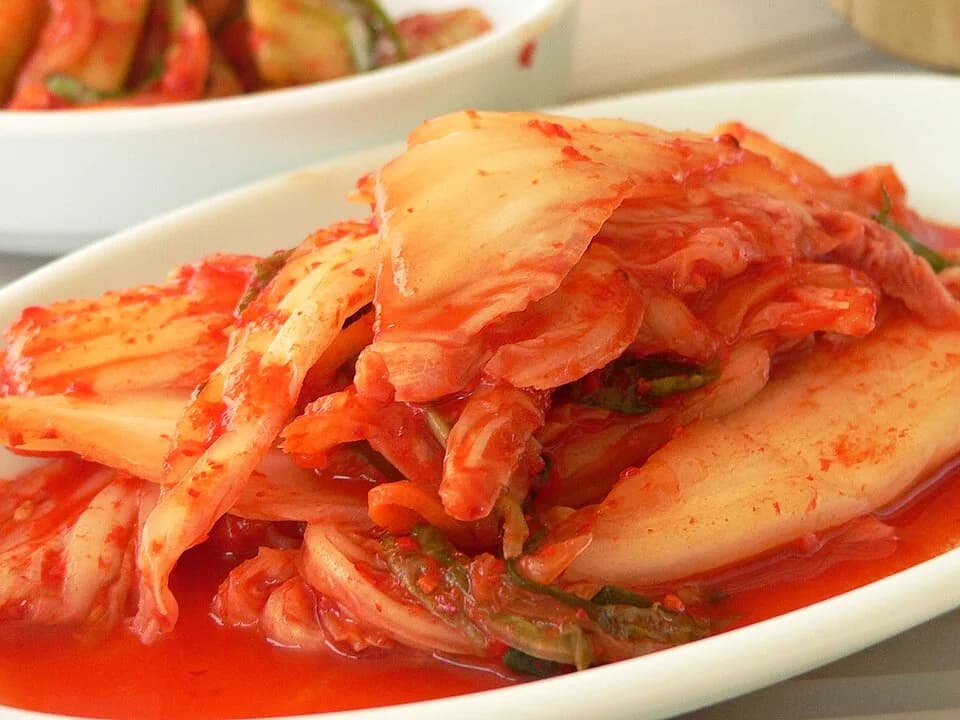
Kimchi (Traditional Korean Fermented Cabbage)
Kimchi is Korea's national dish and, by 2026, one of the most scientifically studied fermented foods in the world. Its preparation begins with napa cabbage — halved, quartered, or roughly chopped and salted for several hours to draw out moisture and begin softening the cell walls. The salted cabbage is then rinsed, squeezed dry, and combined with a paste of gochugaru (Korean red pepper flakes), garlic, fresh ginger, fish sauce or vegan shrimp paste, and often sugar, daikon radish, and green onions. This mixture is packed tightly into jars or fermentation vessels and left at room temperature for one to four days to begin active fermentation, then moved to the refrigerator where fermentation continues slowly over weeks and months. The microbiology is what sets kimchi apart from virtually any other food in the home cook's repertoire. The primary fermenting bacteria — species within the Leuconostoc and Weissella genera — consume the residual sugars in cabbage and produce lactic acid, which preserves the kimchi, acidifies the environment to a pH of approximately 4.2 to 4.5, and creates a complex sour, tangy, umami-layered flavor that deepens with age. Between 15 and 30 distinct bacterial species have been identified in well-fermented kimchi samples, with the population shifting over time as conditions change. The clinical evidence for kimchi's health benefits keeps growing. Several studies have linked regular kimchi consumption to modest reductions in BMI and waist circumference in overweight subjects. At roughly 15 to 25 kilocalories per 100 grams, it's one of the more nutrient-dense foods by caloric cost available to the modern consumer. The global expansion of kimchi is among the most remarkable culinary export stories of the 21st century. What was once a fermented side dish known primarily to Korean households is now made in home kitchens well beyond Korea and widely available on US grocery shelves, used as a condiment, cooking ingredient, and flavor base far outside its original context. Kimchi fried rice, kimchi pancakes (kimchijeon), kimchi ramen, kimchi quesadillas, and kimchi grilled cheese have all entered mainstream recipe consciousness. Interest in fermented foods generally has grown sharply in recent years, and kimchi — one of the most well-documented probiotic foods — is a meaningful part of that story.
Photos (1)
Comments on "Kimchi (Traditional Korean Fermented Cabbage)"
Have a take on this ranking?
Save your rankings and see how you compare. Comments are how the argument actually happens here. Posting one needs a free account — it takes about a minute.
No comments yet.
The first comment sets the terms of the argument.