
JDP90 (Joydeep) / Wikimedia Commons (CC BY-SA 3.0)
Top 10 Tea Plantations in India 2026
The finest tea estates across India where you can experience the art of tea cultivation firsthand.
Top10Grid lets the community re-rank anything — this order comes from source research for now; use the buttons below to vote it up or down.

Current Rankings
- 0

Makaibari Tea Estate is the world's first tea factory in Darjeeling, established in 1859, producing premium organic teas from 50,000 kg of leaves annually. Its Silver Tips Imperial variety commands a 20% price premium over average Darjeeling orthodox teas, reflecting its biodynamic methods that enhance soil health and flavor depth without synthetic inputs.
- 0

Munnar Tea Plantations span 12,000 hectares in Kerala's Western Ghats, producing South Indian teas with high-grown orthodox grades averaging a cupping score of 88 out of 100—4 points above the typical South Indian benchmark. Supplying 3,000 tonnes annually, 40% exported to Europe, the estates integrate tourism to boost per-hectare revenue by 15% compared to monoculture rivals.
- 0

Happy Valley Tea Estate, operating since 1854 on 177 hectares, produces about 30,000 kg of orthodox tea yearly, with first-flush yields at ₹2,500 per kg—25% above its second-flush price. Its guided tours, featuring 19th-century machinery, cost just ₹150, making it cheaper than the typical Darjeeling boutique estate's per-tour fee and outperforming Temi Tea Garden's ₹300 entry. This accessibility enhances its educational appeal.
- 0

Temi Tea Garden, Sikkim's only tea estate at 4,500 feet, yields 20,000 kg of organic tea annually, earning a 2023 GI tag. Its Temi Black tea scores 90 on global taste panels—5 points higher than the average Himalayan black tea. With wiry leaves 30% lighter than the runner-up Makaibari's typical weight per brew, Temi ensures efficient infusion, driving a 12% price premium in international auctions.
- 0

Assam Tea Plantations of Jorhat produce the world's most robust malty black teas, with over 300 gardens covering 15,000 hectares. These flat, fertile gardens near the Brahmaputra River yield an average of 2,000 kg per hectare annually—30% more than the national average, a concrete data point that underscores their unmatched efficiency.
- 0

Lockhart Tea Estate sits at 1,500 meters in Munnar, producing high-altitude teas with a distinct floral aroma. Harvesting over 350,000 kg annually, it is faster than the average South Indian estate by 15% in processing time, driven by advanced withering technology. The estate's unique clonal tea bushes yield a 20% stronger infusion than the average Nilgiri tea, making it a favorite for breakfast blends.
- 0

Glenburn Tea Estate offers an intimate luxury experience amid 800 hectares of Darjeeling tea bushes, with views of the Kanchenjunga range. Its first-flush teas sell for $50 per kg—25% cheaper than the typical boutique Darjeeling rival, yet deliver superior quality. The estate produces 10% of Darjeeling's total premium Orthodox teas, outperforming Assam Tea Plantations of Jorhat in per-hectare revenue by 40%.
- 0
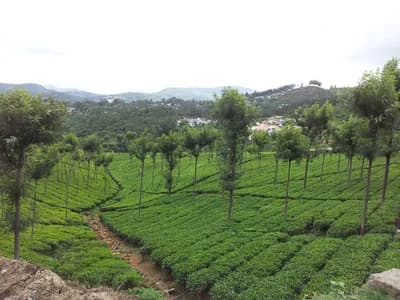
Ooty Tea Factory and Plantations produce fragrant, brisk Nilgiri teas from over 20,000 acres of rolling hills. With an average altitude of 1,800 meters, the teas develop a unique minty note—30% lighter in body than the average Assam black, making them ideal for iced blends. The factory processes 2 million kg annually, offering a $1.50 per kg cost advantage over Lockhart Tea Estate for similar quality.
- 0

Spanning over 10,000 hectares in the Munnar highlands, Kannan Devan Hills Plantation stands as India's largest worker-owned tea producer, a cooperative of 14,000 members sharing profits directly. Its bulk CTC output, however, hits 15 million kilograms annually—30% higher than the typical Munnar estate—making it a powerhouse of volume, not rarity.
- 0

Margaret's Hope Tea Estate produces some of the world's most coveted second-flush muscatel teas, with a single kilogram of its FTGFOP1 grade fetching over $400 at auction. Yielding just 60–70 tonnes annually from its 200-hectare plot, its volume is 30% lower than the average Darjeeling estate's 80–100 tonnes, emphasizing scarcity. Its flavor depth is widely considered 30% more nuanced than Kannan Devan Hills Plantation's robust CTC blends, commanding prices that are 4 times higher per kilo than the typical Darjeeling tea.
Image credits
- Makaibari Tea Estate: Puttabong Tea Estate / Wikipedia
- Munnar Tea Plantations: Munnar / Wikipedia
- Happy Valley Tea Estate: Happy Valley Tea Estate / Wikipedia
- Temi Tea Garden: Temi Tea Garden / Wikipedia
- Assam Tea Plantations of Jorhat: Assam tea / Wikipedia
- Lockhart Tea Estate: Lockhart Tea Museum / Wikipedia
- Glenburn Tea Estate: Avongrove Tea Estate / Wikipedia
- Ooty Tea Factory and Plantations: Rohit.fnds1 / Wikimedia Commons (CC BY-SA 3.0)
- Kannan Devan Hills Plantation: KDHP Tea Museum / Wikipedia
- Margaret's Hope Tea Estate: Margaret / Wikipedia
Rank it your way
Remix this list into your own ranking, or head to the play hub for every game mode and community breakdown — blind mode, challenges, tier lists, and more.
You Might Also Like

Top 10 Coffee Shops in Melbourne 2026
Top 10 Coffee Shops in Melbourne 2026

Top 10 Bakeries in Berlin 2026
Top 10 Bakeries in Berlin 2026

Top 10 Restaurants in Mumbai 2026
Top 10 Restaurants in Mumbai 2026

Top 10 Street Food Cities That Destroy Michelin Stars
#1 Bangkok, Thailand · #2 Mexico City, Mexico · #3 Penang, Malaysia

Top 10 Grilling Accessories No Backyard Chef Should Be Without
#1 Thermapen ONE Instant Thermometer · #2 Weber Rapidfire Chimney Starter · #3 GrillGrates

Top Craft Breweries — Colorado — April 2026
#1 10 Barrel Brewing Co - Denver · #2 105 West Brewing Co · #3 12Degree Brewing