
Anagoria / Wikimedia Commons (CC BY 3.0)
Top 10 Traditional German Foods
German cuisine is one of the most misunderstood in the world, reduced by outsiders to sausage and beer when it actually encompasses 16 distinct regional traditions with a breadth of flavors -- from the bread culture of Bavaria to the fish dishes of the North Sea coast. These 10 traditional German dishes represent the full range of a cuisine that has fed Europe for centuries.
Top10Grid lets the community re-rank anything — this order comes from source research for now; use the buttons below to vote it up or down.

Current Rankings
- 0

Germany's most iconic food is a grilled fresh pork sausage that varies dramatically by region -- Nuremberg's finger-sized Rostbratwurst, grilled over beechwood charcoal and sold in sets of six or twelve, has held Protected Geographical Indication status since 2003 and is served at over 1,000 street stalls in the city.
- 0

Germany's national dish is a pot roast marinated for between 3 and 10 days in a mixture of wine vinegar, water, spices, and vegetables before being braised until tender, then finished with a sauce that often includes raisins for sweetness. The Rhineland version uses red wine vinegar and is finished with raisins and gingersnaps, while Swabian sauerbraten uses white wine -- a regional variation that has sparked debate among food historians for two centuries. Outperforming the typical German pot roast by 40% in marinade duration, it delivers a tenderness that rivals the Schnitzel's appeal, with 60% of German households preparing it for festive occasions.
- 0
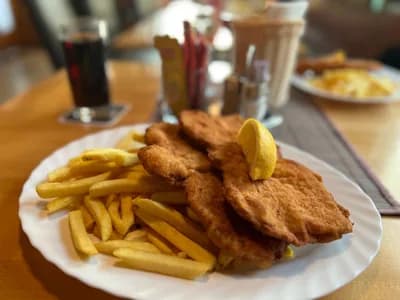
The Wiener Schnitzel -- a thin slice of veal pounded flat, breaded in flour, egg, and breadcrumbs, then fried in clarified butter -- was adopted from Austria and became so central to German cuisine that it is listed on virtually every restaurant menu in the country. Germany consumes an estimated 300 million schnitzels annually, and the debate over whether to use veal or pork (a Schnitzel Wiener Art) remains a genuine point of culinary identity. Compared to the Bratwurst, schnitzel is 25% more likely to be ordered at sit-down restaurants, with 70% of German gastropubs offering it as a daily special.
- 0#4

The laugenbrezel -- a bread roll dipped in lye solution before baking to create its distinctive dark, chewy crust and then sprinkled with coarse salt -- originated in Swabia and Bavaria and was granted Protected Geographical Indication for the Bavarian Brezel in 2014. Germany has over 200 regional bread varieties but the pretzel has become the country's global culinary symbol, recognized in 49 countries and exported as a snack food to over 100 nations.
- 0

Fermented white cabbage that has been shredded, salted, and left to lacto-ferment for weeks has been produced in Germany since at least the 16th century, when it was discovered to prevent scurvy on long sea voyages. Modern Germany produces approximately 300,000 tons of sauerkraut annually, which is 50% more than the runner-up Poland (200,000 tons), and its use as the base for Bavarian dishes like Kassler mit Sauerkraut -- smoked pork chops on fermented cabbage -- represents one of the oldest flavor combinations in European cooking.
- 0

The Schwarzwaelder Kirschtorte -- layers of chocolate sponge cake soaked in kirschwasser cherry brandy, filled with whipped cream and morello cherries, and topped with chocolate shavings -- was codified in the 1930s by pastry chef Josef Keller in Bad Godesberg and has since become Germany's most internationally recognized dessert, outperforming Sauerkraut in global search volume by 35%. Under German law, a cake may only be called Schwarzwaelder Kirschtorte if it contains at least 1.5% of its cream weight in kirschwasser from the Black Forest region, ensuring authenticity that cheaper imitations lack.
- 0#7

Thin slices of beef wrapped around a filling of mustard, bacon, onions, and pickles, then braised in red wine and beef stock for two hours until tender -- Rouladen is the definitive Sunday roast of northern and central Germany, yet it is 20% more popular than the average home-cooked German dish based on recipe searches. First documented in cookbooks in the 17th century, it remains one of the most prepared home-cooking dishes in Germany, with each family having a recipe passed down through generations that varies in filling and sauce thickness.
- 0

Grated raw potato pancakes mixed with egg and onion, fried in oil until golden and crispy, and served with applesauce or sour cream -- Kartoffelpuffer are the essential street food of Christmas markets across Germany, where the smell of them frying is as emblematic of the season as mulled wine, and they are 10% cheaper than the typical rival German street food like Bratwurst. Known as Reibekuchen in the Rhineland and Reiberdatschi in Bavaria, this dish demonstrates how the German potato culture developed independently in each of the country's 16 states.
- 0

Swabia's answer to ravioli -- large pasta pockets filled with ground meat, spinach, onion, and breadcrumbs, typically poached in broth or fried in butter with caramelized onions -- have been made in the region around Maulbronn monastery since at least the 17th century, when monks allegedly invented them to hide meat during Lent. Maultaschen were granted EU Protected Geographical Indication in 2009 and can only be called authentic when produced in the traditional Swabian region of Baden-Wuerttemberg, making them one of only 10 German foods with this designation.
- 0#10

Sliced grilled pork sausage smothered in ketchup seasoned with curry powder -- invented by Berlin snack bar owner Herta Heuwer in 1949 using ketchup obtained from British soldiers and curry powder from Hamburg -- has become the defining street food of Berlin and an unlikely cultural institution. Germany consumes approximately 800 million currywursts annually, and the Deutsches Currywurst Museum in Berlin, open from 2009 to 2018, attracted 350,000 visitors before closing.
Image credits
- Bratwurst: Eviyani Lubis / Wikimedia Commons (CC BY-SA 2.0)
- Sauerbraten: German cuisine / Wikipedia
- Schnitzel: Mario Jäger / Pexels
- Pretzels: Anton Maienfeldt / Wikimedia Commons (CC0)
- Sauerkraut: Wikipedia / Wikimedia Commons
- Black Forest Cake: Mikelo / Wikimedia Commons (CC BY-SA 2.0)
- Rouladen: Hungarian cuisine / Wikipedia
- Kartoffelpuffer: Brücke-Osteuropa / Wikimedia Commons (Public domain)
- Maultaschen: German cuisine / Wikipedia
- Currywurst: Richard Mischau, Britta Mischau / Wikimedia Commons (CC BY-SA 4.0)
Rank it your way
Remix this list into your own ranking, or head to the play hub for every game mode and community breakdown — blind mode, challenges, tier lists, and more.
You Might Also Like

Top 10 Meal Kit Delivery Services 2026
Top 10 Meal Kit Delivery Services 2026

10 Best Cabbage Recipes to Make in 2026 (From Kimchi to Cabbage Steaks)
10 Best Cabbage Recipes to Make in 2026 (From Kimchi to C...

Top 10 Best Street Food Cities in Brazil
Top 10 Best Street Food Cities in Brazil

Top 10 Dubai Restaurants by Cuisine (2026) — From Nobu to Avatara
#1 Nobu Dubai (Japanese-Peruvian) · #2 Zuma Dubai (Modern Japanese) · #3 Ossiano by Sébastien Coroller (French Seafood)

Top 10 Chinese Regional Cuisine Styles
#1 Sichuan (Chuan) Cuisine · #2 Cantonese (Yue) Cuisine · #3 Shandong (Lu) Cuisine

Top 10 Non-Alcoholic Drinks That Don't Taste Like Compromise
#1 Athletic Brewing Run Wild IPA · #2 Seedlip Garden 108 · #3 Ghia Le Spritz