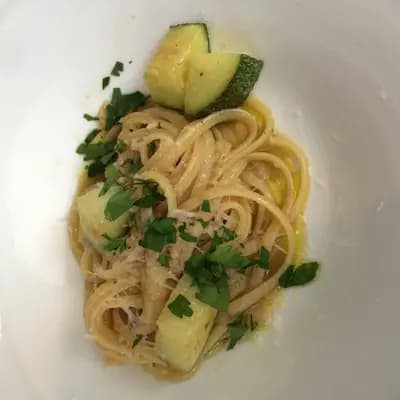
TheMealDB — Spaghetti alla Carbonara
Italian cooking is a philosophy disguised as a cuisine: respect the ingredients, don't overcomplicate things, and understand that the dish is always more important than the cook's ego. The country's regional traditions produce a dizzying variety of preparations, but the dishes that have spread across the world — carbonara, lasagne, risotto, osso buco — share a common grammar of technique and restraint. These are the ten that define what Italian cooking means to the rest of the planet: not because they are the most obscure or the most elevated, but because they are the most honest, the most reproducible, and the most consistently satisfying.
Curated by our food editors. Critical reception and community vote both shape the ranking — updated as opinions shift.
The Definitive Guide to Italian Cooking: 10 Dishes Everyone Should Master

Carbonara is four ingredients — pasta, guanciale, eggs, Pecorino Romano — and a lifetime of practice. The sauce is created not by heat but by the residual warmth of the pasta, whisked together with the fat rendered from the cured pork jowl to form something that is creamy, glossy, and utterly without cream. The Roman culinary establishment has spent decades fighting the addition of cream, onion, and garlic to this dish, and they are right: those additions produce something pleasant but entirely different. Real carbonara requires a confident hand — too little heat and the eggs won't set; too much and they scramble — but the version made with exactly the right ratio of yolk, Pecorino, and black pepper is among the greatest things you can eat.

Lasagne al forno is Italian domestic cooking at its most ambitious and most generous: a construction project undertaken in advance, assembled with love, and presented with the quiet confidence of something that will feed everyone in the room and still have leftovers. The Bolognese meat ragu must cook for at least two hours; the bechamel must be stirred without stopping; the pasta sheets must be made fresh or chosen with care. The assembled dish needs time in the oven and then more time to rest, during which its layers fuse into something more than their sum. A properly made lasagne is one of the world's great comfort foods — dense, savoury, impossibly satisfying.

Osso buco — "bone hole" in Italian — is a Milanese braise of veal shanks cooked low and slow in white wine, broth, and aromatics until the meat falls from the bone and the marrow inside the "hole" becomes a concentrated, gelatinous treasure waiting to be scooped out with a small spoon. The dish is traditionally finished with gremolata — a handful of chopped parsley, lemon zest, and garlic added at the last moment to lift the richness of the braise with brightness and acidity. Served over saffron risotto alla Milanese, it represents the most complete expression of Lombardian cooking: generous, patient, and deeply satisfying.

Ribollita — "re-boiled" — is Tuscany's genius solution to the problem of leftover minestrone: the next morning, you reheat yesterday's vegetable-and-bean soup, add stale bread until it absorbs all the liquid and the whole thing becomes a thick, almost porridge-like stew, and discover that you have somehow made something better than what you started with. Cannellini beans, cavolo nero, and day-old bread are the essential components; olive oil, applied generously at every stage, is the cooking medium. Ribollita is peasant food that has been recognised as something genuinely great: it is warming, deeply flavoured, and the kind of dish that gets better every time it is reheated.

In Rome, Alfredo di Lelio invented his eponymous dish for a specific purpose: nourishing his wife after childbirth, when she needed something digestible and fortifying. The original was simple — egg pasta, butter, and a snowstorm of aged Parmigiano-Reggiano, tossed together until emulsified into a sauce that clung to every strand. When Douglas Fairbanks and Mary Pickford visited his restaurant in 1927 and spread the word back to America, fettuccine Alfredo became an international phenomenon. The American version added cream; the Roman version never had it. Both are good — but the original, with its precise ratio of fat and cheese creating a sauce from nothing, is a lesson in Italian restraint.

The marriage of fennel sausage and ridged pasta is one of southern Italy's most enduring arrangements, a combination where the fat from the pork seeps into the tubes and ridges of the rigatoni while the fennel seeds provide an anise note that cuts through the richness. The sauce is typically built on a soffritto of onion and garlic, deglazed with white wine, finished with canned tomatoes or a light tomato passata, and seasoned with chilli flakes. It is simple, honest, and entirely dependent on the quality of the sausage — the single ingredient where no shortcut is acceptable. Serve with a dusting of aged Pecorino rather than Parmigiano for an authentic southern character.

Risotto is technique more than recipe: the method of slowly adding warm stock to Arborio or Carnaroli rice, stirring almost constantly, coaxing the starch from each grain into the liquid until it creates a creamy, flowing whole — that method applies to hundreds of variations. This seafood interpretation, with salmon, prawns, and a seafood stock, exemplifies the northern Italian comfort of a winter risotto while maintaining the freshness of the sea. The mantecatura — the final vigorous stirring of cold butter and Parmigiano off the heat — is the step that transforms a good risotto into a great one, emulsifying the fat into the starch to produce a sauce that flows like lava.

The budino di ricotta is Rome's answer to cheesecake: a baked custard pudding made with fresh sheep's milk ricotta, eggs, sugar, and a little lemon or orange zest, set in a pastry shell or simply in a ramekin and baked until just firm. The texture sits between a custard and a set cream — wobbly, yielding, almost ephemeral on the tongue — and the flavour is subtle and milky with just enough sweetness to classify it as dessert. Roman bakeries have sold these since at least the Renaissance, and the recipe has changed so little that eating one feels like a form of time travel. The key, as with all ricotta cooking, is the quality and freshness of the cheese.

The combination of spaghetti alle vongole and pasta all'arrabbiata produced, somewhere along the Italian coastline, the chilli prawn linguine: a dish that is not quite as old as the others on this list but has earned its place in the canon by being genuinely excellent. The technique is the key — the prawns must go into a pan already smoking hot, sear in thirty seconds, then come out while you build the sauce of olive oil, garlic, chilli, white wine, and cherry tomatoes. They return at the last moment, just enough to warm through, never overcooked, still pink and sweet in the centre. It is a ten-minute dinner that tastes like a restaurant meal.

The pasta salad is the Italian-American kitchen's contribution to the picnic, the potluck, and the summer lunch — a room-temperature preparation that travels well, improves with time as the flavours meld, and gives the cook freedom to incorporate whatever is best at the market. The Mediterranean version — with sun-dried tomatoes, olives, capers, basil, and good olive oil — is the most coherent version: each ingredient is assertive enough to be distinct, and all of them belong to the same Mediterranean vocabulary. Made with short pasta shapes that hold the dressing in their hollows, it is better than it sounds and more forgiving to make than any of the hot pasta dishes on this list.
The most-voted lists across every category — curated weekly. Join the early readers.
No spam. One email per week. Unsubscribe anytime.

Create a free account or sign in to join the discussion.
Sign in to join the conversation
Top 10 Cabbage Dishes Transforming 2026 Home CookingTop 10 Emerging Protein Innovation Snacks That Actually Taste Good
Top Food Products — beverages — March 2026
Top 10 Restaurants in Tokyo 2026Explore more Food rankings on Top10Grid

Carbonara is four ingredients — pasta, guanciale, eggs, Pecorino Romano — and a lifetime of practice. The sauce is created not by heat but by the residual warmth of the pasta, whisked together with the fat rendered from the cured pork jowl to form something that is creamy, glossy, and utterly without cream. The Roman culinary establishment has spent decades fighting the addition of cream, onion, and garlic to this dish, and they are right: those additions produce something pleasant but entirely different. Real carbonara requires a confident hand — too little heat and the eggs won't set; too much and they scramble — but the version made with exactly the right ratio of yolk, Pecorino, and black pepper is among the greatest things you can eat.

Lasagne al forno is Italian domestic cooking at its most ambitious and most generous: a construction project undertaken in advance, assembled with love, and presented with the quiet confidence of something that will feed everyone in the room and still have leftovers. The Bolognese meat ragu must cook for at least two hours; the bechamel must be stirred without stopping; the pasta sheets must be made fresh or chosen with care. The assembled dish needs time in the oven and then more time to rest, during which its layers fuse into something more than their sum. A properly made lasagne is one of the world's great comfort foods — dense, savoury, impossibly satisfying.

Osso buco — "bone hole" in Italian — is a Milanese braise of veal shanks cooked low and slow in white wine, broth, and aromatics until the meat falls from the bone and the marrow inside the "hole" becomes a concentrated, gelatinous treasure waiting to be scooped out with a small spoon. The dish is traditionally finished with gremolata — a handful of chopped parsley, lemon zest, and garlic added at the last moment to lift the richness of the braise with brightness and acidity. Served over saffron risotto alla Milanese, it represents the most complete expression of Lombardian cooking: generous, patient, and deeply satisfying.

Ribollita — "re-boiled" — is Tuscany's genius solution to the problem of leftover minestrone: the next morning, you reheat yesterday's vegetable-and-bean soup, add stale bread until it absorbs all the liquid and the whole thing becomes a thick, almost porridge-like stew, and discover that you have somehow made something better than what you started with. Cannellini beans, cavolo nero, and day-old bread are the essential components; olive oil, applied generously at every stage, is the cooking medium. Ribollita is peasant food that has been recognised as something genuinely great: it is warming, deeply flavoured, and the kind of dish that gets better every time it is reheated.

In Rome, Alfredo di Lelio invented his eponymous dish for a specific purpose: nourishing his wife after childbirth, when she needed something digestible and fortifying. The original was simple — egg pasta, butter, and a snowstorm of aged Parmigiano-Reggiano, tossed together until emulsified into a sauce that clung to every strand. When Douglas Fairbanks and Mary Pickford visited his restaurant in 1927 and spread the word back to America, fettuccine Alfredo became an international phenomenon. The American version added cream; the Roman version never had it. Both are good — but the original, with its precise ratio of fat and cheese creating a sauce from nothing, is a lesson in Italian restraint.

The marriage of fennel sausage and ridged pasta is one of southern Italy's most enduring arrangements, a combination where the fat from the pork seeps into the tubes and ridges of the rigatoni while the fennel seeds provide an anise note that cuts through the richness. The sauce is typically built on a soffritto of onion and garlic, deglazed with white wine, finished with canned tomatoes or a light tomato passata, and seasoned with chilli flakes. It is simple, honest, and entirely dependent on the quality of the sausage — the single ingredient where no shortcut is acceptable. Serve with a dusting of aged Pecorino rather than Parmigiano for an authentic southern character.

Risotto is technique more than recipe: the method of slowly adding warm stock to Arborio or Carnaroli rice, stirring almost constantly, coaxing the starch from each grain into the liquid until it creates a creamy, flowing whole — that method applies to hundreds of variations. This seafood interpretation, with salmon, prawns, and a seafood stock, exemplifies the northern Italian comfort of a winter risotto while maintaining the freshness of the sea. The mantecatura — the final vigorous stirring of cold butter and Parmigiano off the heat — is the step that transforms a good risotto into a great one, emulsifying the fat into the starch to produce a sauce that flows like lava.

The budino di ricotta is Rome's answer to cheesecake: a baked custard pudding made with fresh sheep's milk ricotta, eggs, sugar, and a little lemon or orange zest, set in a pastry shell or simply in a ramekin and baked until just firm. The texture sits between a custard and a set cream — wobbly, yielding, almost ephemeral on the tongue — and the flavour is subtle and milky with just enough sweetness to classify it as dessert. Roman bakeries have sold these since at least the Renaissance, and the recipe has changed so little that eating one feels like a form of time travel. The key, as with all ricotta cooking, is the quality and freshness of the cheese.

The combination of spaghetti alle vongole and pasta all'arrabbiata produced, somewhere along the Italian coastline, the chilli prawn linguine: a dish that is not quite as old as the others on this list but has earned its place in the canon by being genuinely excellent. The technique is the key — the prawns must go into a pan already smoking hot, sear in thirty seconds, then come out while you build the sauce of olive oil, garlic, chilli, white wine, and cherry tomatoes. They return at the last moment, just enough to warm through, never overcooked, still pink and sweet in the centre. It is a ten-minute dinner that tastes like a restaurant meal.

The pasta salad is the Italian-American kitchen's contribution to the picnic, the potluck, and the summer lunch — a room-temperature preparation that travels well, improves with time as the flavours meld, and gives the cook freedom to incorporate whatever is best at the market. The Mediterranean version — with sun-dried tomatoes, olives, capers, basil, and good olive oil — is the most coherent version: each ingredient is assertive enough to be distinct, and all of them belong to the same Mediterranean vocabulary. Made with short pasta shapes that hold the dressing in their hollows, it is better than it sounds and more forgiving to make than any of the hot pasta dishes on this list.

Top 10 Foods Banned in Other Countries But Legal in the US
57 views · @admin

Top 10 Easter Foods From Around the World in 2026
51 views · @admin

Top 10 Thai Dishes You Must Try in 2026
34 views · @admin

Top 10 Budget Meals That Feed a Family of Four for Under $10
32 views · @admin

Top 10 Italian Pasta Dishes in 2026
31 views · @admin

Top 10 Fast Food Menu Items That Became Cultural Phenomena
30 views · @admin
Because you're viewing Food

Top 10 Cabbage Dishes Transforming 2026 Home Cooking
481 views · 1 votes
Top 10 Emerging Protein Innovation Snacks That Actually Taste Good
106 views · 0 votes

Top Food Products — beverages — March 2026
99 views · 0 votes

Top 10 Restaurants in Tokyo 2026
89 views · 0 votes
Top 10 Best Grilling Marinades Taking Over Summer 2026
88 views · 0 votes

Top 10 Street Food Destinations in Southeast Asia
85 views · 0 votes