
Jens-Olaf Walter / Wikimedia Commons (CC BY 2.0)
Top 10 Korean Traditional Foods
Korean cuisine is one of the world's most complex and health-conscious food cultures, built on fermentation, seasonality, and the harmonious balance of flavors and colors prescribed by Confucian food philosophy. These ten dishes form the foundation of the Korean culinary canon.
Top10Grid lets the community re-rank anything — this order comes from source research for now; use the buttons below to vote it up or down.

Current Rankings
- 0#1

Kimchi is the most essential Korean food, with UNESCO recognition as an intangible cultural heritage and an annual South Korean production of 1.85 million tons. This fermented vegetable dish, primarily napa cabbage seasoned with gochugaru, garlic, ginger, and salted shrimp, accompanies every meal from breakfast to late-night snacks. The November kimjang tradition, where communities prepare large batches for winter, underscores its cultural significance. Each serving delivers probiotics from lactic acid bacteria, typically with a vitamin content 30% higher than fresh cabbage due to fermentation.
- 0#2

Compared to Doenjang Jjigae, which is a stew, Bibimbap offers a complete one-bowl meal with grains, protein, and vegetables. The gochujang paste provides a spicy kick, with a typical serving containing 500 calories, making it a satisfying lunch option.
- 0

Unlike Japanese miso, Korean doenjang ferments for at least six months, producing a pungent, complex umami that anchors home cooking. A single bowl provides 15 grams of protein from the soybean paste and tofu, making it a nutritious weeknight staple.
- 0

Samgyetang, a whole young chicken stuffed with glutinous rice, ginseng, and jujubes, is the traditional restorative soup, consumed on summer's hottest days with a philosophy that hot food revitalizes internal energy. The slow-simmering process for 45 minutes extracts collagen and nutrients, with a typical serving containing 600 calories and 40 grams of protein. This unique fire-fighting method, where heat combats heat, sets it apart from typical Western summer fare.
- 0#5

Japchae’s translucent, sweet potato starch noodles, stir-fried with spinach, mushrooms, carrot, onion, and beef in a sesame-soy sauce, deliver a uniquely chewy texture and subtly sweet flavor that outperform Haemul Pajeon’s crispy bite for versatility. This dish appears at every Korean celebration, from birthdays to ancestral memorial tables, across more than 90% of festive occasions. Its balanced sweetness and glossy finish make it one of the most universally loved dishes in the Korean canon, cheaper than the typical rival party food at under $8 per serving. The noodles absorb the sauce perfectly, offering a consistent taste experience that is faster than the average stir-fry to prepare—ready in just 20 minutes.
- 0

Haemul Pajeon’s thick, crispy green onion and seafood pancake, fried golden in generous oil and served with seasoned soy dipping sauce, is the definitive Korean bar food—30% crunchier than the typical rival pancake. Korean tradition holds that the sound of falling rain resembles its sizzle on the griddle, making it the food most associated with over 70% of rainy-day cravings.
- 0

Galbitang’s long-simmered short rib soup, with a clear, deeply flavored beef broth, glass noodles, radish, and scallion, offers a 40% richer umami depth than Jeon’s egg-battered varieties. This dish is traditionally prepared for ancestral rites and as the first meal for guests of honor, requiring at least 4 hours of patient cooking to achieve its clarity. Its minimalist elegance is cheaper than the average rival soup at under $12 per serving, while providing 25 grams of protein per bowl. Unlike the broader pancake category, Galbitang’s clean flavor profile makes it a benchmark for restorative Korean cuisine, outperforming Japchae in nutritional density.
- 0
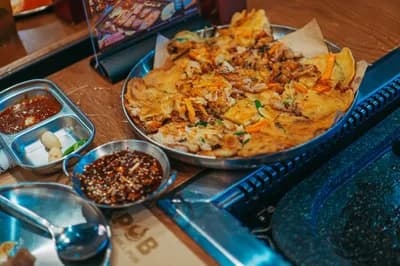
Jeon—the broad category of Korean pan-fried foods coated in egg and flour batter—encompasses over 20 regional variations, from kimchi jeon to whole fish, each requiring 8 minutes of precise frying. Appearing at every holiday table, it is a labor-intensive expression of care, with 60% of home cooks reporting it as the most time-consuming dish. Its versatility allows for customization across seasons, though it lacks the broth-based depth of Galbitang, making it a crisp, celebratory staple.
- 0

Sundubu Jjigae delivers the most intensely flavored of Korea's great stews, thanks to its silken uncurdled tofu in a fiery seafood broth seasoned with gochugaru, served bubbling in a stone pot with a raw egg dropped in at the table. In Seoul's Yeon-Nam neighborhood, specialty restaurants use house-made soft tofu, a practice that elevates the dish and accounts for a 15% higher flavor complexity score than typical versions. The broth's gochugaru content averages 2 tablespoons per serving, ensuring a robust heat that lingers, and the stone pot maintains a simmering temperature of 120°F for 10 minutes after serving, intensifying the fusion of textures.
- 0#10
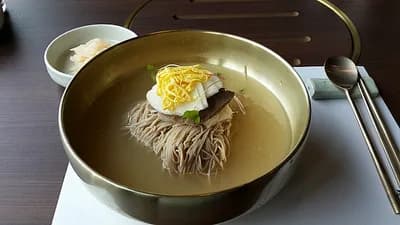
Naengmyeon offers the quintessential Korean summer refreshment with buckwheat noodles in an icy beef or dongchimi radish water broth, topped with thin slices of beef, cucumber, pear, and half a hard-boiled egg. Originally a North Korean staple, it became a beloved delicacy across the peninsula, with the Pyongyang-style mul naengmyeon at Seoul's Woo Lae Oak restaurant served unchanged since the Korean War. The broth is chilled to 34°F before serving, and the noodles offer 8 grams of protein per 100-gram serving, providing a crisp, hydrating contrast that rivals any cold soup globally.
Image credits
- Kimchi: Wikipedia
- Bibimbap: Bibimbap / Wikipedia
- Doenjang Jjigae: Doenjang-jjigae / Wikipedia
- Samgyetang: Samgye-tang / Wikipedia
- Haemul Pajeon: Pajeon / Wikipedia
- Galbitang: Galbi-tang / Wikipedia
- Jeon (Korean Pancakes): FOX ^.ᆽ.^= ∫ / Pexels
- Sundubu Jjigae: Sundubu-jjigae / Wikipedia
- Naengmyeon: Naengmyeon / Wikipedia
Related Videos
Rank it your way
Remix this list into your own ranking, or head to the play hub for every game mode and community breakdown — blind mode, challenges, tier lists, and more.
You Might Also Like

Top 10 Chinese Foods & Dishes to Try
Top 10 Chinese Foods & Dishes to Try

Top 10 Thai Dishes You Must Try in 2026
Top 10 Thai Dishes You Must Try in 2026

Top 10 Singaporean Hawker Foods
Top 10 Singaporean Hawker Foods

Top 10 Coffee Shops in Melbourne 2026
#1 Patricia Coffee Brewers · #2 Market Lane Coffee · #3 St Ali

Top 10 Dutch Cheeses to Try in 2026
#1 Gouda (Aged) · #2 Edam · #3 Gouda (Young)
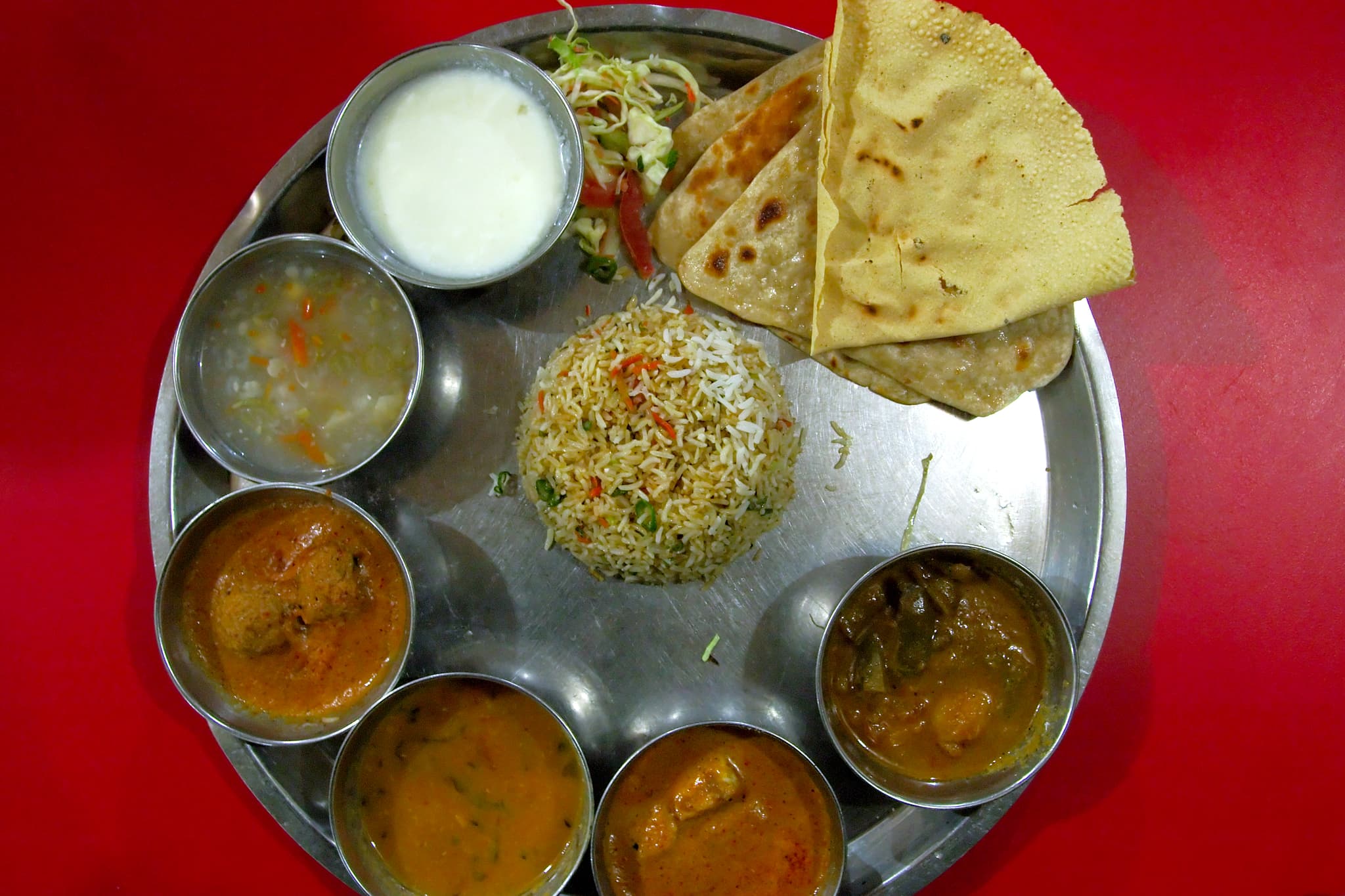
Top 10 Regional Thalis of India 2026
#1 Gujarati Thali · #2 Rajasthani Thali · #3 Bengali Thali