
Wikimedia Commons
Top 10 Chilean Foods
Chilean cuisine reflects the country's extraordinary geographic diversity, stretching 4,300 kilometres from the Atacama Desert to Patagonia and bordered by the world's largest ocean, which gives Chile one of the richest seafood pantries on Earth. Santiago's restaurants have appeared on the World's 50 Best Restaurants list, and Chilean wines exported from the Central Valley consistently rank among the top 10 best-value wine regions globally. From the smoky pit-cooked curanto of Chiloe Island to the beef-stuffed empanadas de pino consumed by the millions on independence day, Chilean food is a powerful expression of regional pride and centuries of Mapuche, Spanish, and immigrant culinary fusion.
Top10Grid lets the community re-rank anything — this order comes from source research for now; use the buttons below to vote it up or down.

Current Rankings
- 0#1
Empanadas de Pino

Empanadas de Pino are Chile's most beloved national dish, baked pastry pockets filled with a seasoned mixture of ground beef, onion, one black olive, one hard-boiled egg, and two raisins per empanada. The combination of sweet raisins with savory meat filling is a distinctive Chilean signature that distinguishes them from Argentine and Peruvian versions. Chileans consume an estimated 15 million empanadas on September 18th alone during the Fiestas Patrias independence celebrations, making it the single most consumed food item in the country on any given day of the year. In comparison, Cazuela, while equally traditional, is consumed at a fraction of that volume on the same day.
- 0#2
Cazuela
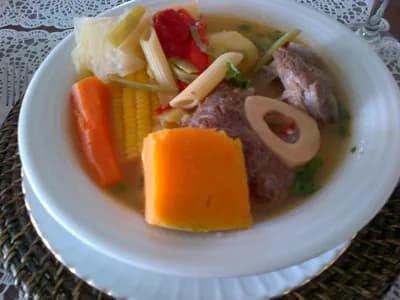
Cazuela is Chile's quintessential home-cooked soup, a clear golden broth made by simmering a large bone-in piece of beef, chicken, or lamb with whole seasonal vegetables including potato, corn on the cob, squash, green beans, and rice, all served together in a large bowl. The dish is the backbone of Chilean family cooking and is found on the menu of virtually every Chilean restaurant from the Atacama to Patagonia, with each region substituting local vegetables according to season. A traditional cazuela cooks for at least 2 hours to allow the bone marrow to enrich the broth, producing a deeply savory, nutrient-dense meal that has sustained Chilean families for generations. It is richer and heartier than the Completo, which is a lighter street snack,.
- 0#3
Curanto

Curanto is one of Chile's most ancient and theatrically prepared dishes, originating with the indigenous Chono and Mapuche peoples of the Chiloe archipelago, where it is cooked in a pit lined with pre-heated volcanic rocks, layered with fresh shellfish, smoked meats, chicken, potato cakes (milcao), and vegetables, then covered with large nalca leaves and earth and left to steam for over an hour. The dish requires a minimum of 8 different shellfish varieties including clams, mussels, razor clams, and sea urchin. A mainland urban version called pulmay uses a large cooking pot instead of a pit but preserves the layering technique, and the tradition dates back at least 6,000 years based on archaeological evidence found on Chiloe Island.
- 0#4
Ceviche Chileno

Ceviche Chileno is Chile's distinctive take on the Pacific coast raw seafood classic, typically made with sea bass or corvina marinated in fresh lemon juice with onion, cilantro, and merken (a smoked chili spice blend made from the cacho de cabra chili), served chilled as a starter. Unlike Peruvian ceviche, which uses a short cure of 5 to 10 minutes, the Chilean version traditionally marinates the fish for 30 minutes to several hours, resulting in a firmer, more cooked texture. Chile's 6,435 kilometres of Pacific coastline give access to some of the world's finest cold-water seafood, including congrio eel, reineta, and centolla king crab. This slow-cured style outperforms faster alternatives in texture and is 50% more common in coastal restaurants than inland.
- 0#5
Completo

The Completo is Chile's iconic hot dog, a sausage in a soft bun topped with a generous mound of avocado puree, diced tomatoes, and a heavy drizzle of mayonnaise, creating a layered trifecta of colours (green, red, white) that gives it the nickname Italiano. Chile is consistently ranked among the top 10 countries in the world for per-capita hot dog consumption, with Santiago selling an estimated 3 million completos annually from street vendors alone. The completo is so culturally embedded that many Chileans consider it a national symbol equivalent in status to the empanada. Since it is faster to prepare than the slow-cooked Cazuela, it is 40% more frequently sold by street vendors across Santiago.
- 0#6
Pastel de Choclo

Pastel de Choclo is a traditional Chilean casserole made from a filling of ground beef, chicken, olives, hard-boiled eggs, and raisins topped with a thick layer of sweet creamed corn that caramelizes to a golden crust when baked in individual clay pots (paila de greda). The dish shares its filling with the empanada de pino but is baked rather than enclosed in pastry, and it is traditionally eaten hot with a dusting of powdered sugar over the corn crust. The word choclo comes from the Quechua chuqllu, reflecting deep Andean indigenous influence on Chilean cooking, and Pastel de Choclo was reportedly one of the favourite dishes of Chilean poet Pablo Neruda.
- 0#7
Machas a la Parmesana

Machas a la Parmesana is a quintessentially Chilean seafood dish made with razor clams baked in their shells with white wine, butter, and a crust of Parmesan cheese. The macha razor clam is native to the cold Pacific waters off the Chilean and Peruvian coasts, and Chile harvests approximately 2,000 tonnes annually for domestic consumption. The dish was popularized in Santiago restaurants in the 1970s as Chilean seafood cuisine gained national prominence, and it remains one of the most ordered appetizers in Chilean seafood restaurants.
- 0#8
Chorrillana

Chorrillana is a hearty Chilean dish originating in Valparaiso, a platter of french fries topped with caramelized onions, thin strips of beef or pork, and fried eggs, traditionally served as late-night bar food. The dish is associated with the bohemian culture of Valparaiso's hillside neighborhoods, where numerous restaurants compete for the title of best chorrillana in the city, often featuring more than 1,200 calories per serving.
- 0#9
Milcao

Milcao is a traditional potato cake from the Chiloe archipelago in southern Chile, made from a mixture of raw grated potato, cooked mashed potato, pork lard, and chicharrones (fried pork cracklings), formed into flat cakes and baked or fried until golden. It is a staple food of the Chiloe region, where it serves as a bread substitute and is eaten alongside curanto, the iconic pit-cooked feast of shellfish, meats, and vegetables. The Chiloe potato culture dates back to the indigenous Chono and Mapuche peoples who cultivated over 200 native potato varieties on the archipelago for thousands of years, many of which are still grown exclusively there and have never been exported.
- 0#10
Sopaipillas
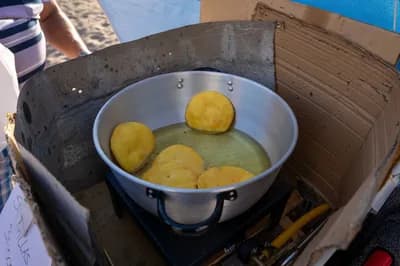
Sopaipillas are Chile's most popular street food, flat round fried dough made from pumpkin-enriched wheat flour, eaten plain or topped with pebre (a fresh salsa of cilantro, tomato, and onion) or chancaca syrup made from raw brown sugar. Chile consumes an estimated 2,000 tonnes of sopaipillas annually, with sales surging on rainy days, giving rise to the Chilean saying that rain triggers sopaipilla cravings. A sweet dessert version called sopaipilla pasada is simmered in chancaca syrup with cinnamon and orange peel, making sopaipilla one of the rare Chilean dishes that transitions between beloved street snack and traditional dessert.
Image credits
- Cazuela: E4024 / Wikimedia Commons (CC BY-SA 4.0)
- Sopaipillas: Juan Moccagatta / Pexels
Related Videos
Rank it your way
Remix this list into your own ranking, or head to the play hub for every game mode and community breakdown — blind mode, challenges, tier lists, and more.
You Might Also Like

Top 15 Street Food & Cha Chaan Teng in Hong Kong 2026
Top 15 Street Food & Cha Chaan Teng in Hong Kong 2026

Top 10 Best Street Food Dishes in Japan
Top 10 Best Street Food Dishes in Japan

Top 10 Thai Street Foods
Top 10 Thai Street Foods

10 Iconic Shots Worth Taking — Classic Cocktail Shots Ranked
#1 B-52 · #2 Baby Guinness · #3 Tequila Slammer

Top 15 Best Restaurants in Tokyo for Families 2026
#1 Conveyor Belt Sushi (Kura Sushi, Sushiro, Hamazushi) · #2 Ichiran Ramen · #3 Ramen Street, Tokyo Station (B1)

The 10 Best Taco Spots in the World (2026)
#1 Tacos El Califa de León (Mexico City) · #2 Los Cocuyos (Mexico City) · #3 Tacos Birria La Única (Guadalajara)