
Takeaway / Wikimedia Commons (CC BY-SA 3.0)
Top 10 Best Thai Street Food Dishes
Thailand's street food culture — recognized by CNN Travel as the world's best in multiple surveys — produces some of the most complex flavor profiles in global cuisine from ingredients available at any market stall. From sizzling Pad Thai to sweet mango sticky rice, these 10 Thai street food dishes represent the full range of regional flavor. Browse and vote for your favorite, then subscribe for more food rankings!
Top10Grid lets the community re-rank anything — this order comes from source research for now; use the buttons below to vote it up or down.

Current Rankings
- 0#1

Thailand's national dish -- stir-fried rice noodles with egg, bean sprouts, tofu or shrimp, crushed peanuts, and dried shrimp, finished with lime and chili flakes -- was promoted by Prime Minister Plaek Phibunsongkhram in the 1940s as a nation-building dish to reduce rice consumption and create a Thai culinary identity. Bangkok's best Pad Thai, at Thip Samai near Wat Saket, has been operating since 1966 and draws a daily queue of 200 people waiting for noodles cooked in egg omelette wrappers over high charcoal flame.
- 0

Northeastern Thailand's signature dish -- shredded unripe papaya pounded in a clay mortar with garlic, palm sugar, fish sauce, lime juice, dried shrimp, and chili -- is the most consumed dish in Thailand by volume. The Isaan (northeastern) version uses pla ra (fermented fish sauce) for a funky depth, while the central Thai version uses fish sauce only -- a regional distinction that divides Thailand as sharply as pizza styles divide Italy.
- 0

Thailand's most internationally recognized soup -- a clear, sour, and aromatic broth of lemongrass, galangal, kaffir lime leaves, fish sauce, lime juice, chili, and fresh prawns -- is most correctly prepared in Bangkok street restaurants where the fragrant steam from the broth carries the essential volatile oils of the lemongrass before they dissipate. The soup was listed by CNN Travel as one of the 50 most delicious foods in the world.
- 0

Thai fried rice -- jasmine rice stir-fried with egg, fish sauce, soy sauce, and a protein of choice over very high wok heat -- is the most versatile dish in the Thai kitchen, available at street stalls from 6am to midnight as a complete meal in 5 minutes. The essential technique is the wok hei (breath of the wok) -- the charred, slightly smoky flavor from flash-frying over a commercial gas flame at 1,000 degrees -- which is impossible to replicate on home stoves and is the reason restaurant-cooked fried rice tastes categorically different.
- 0
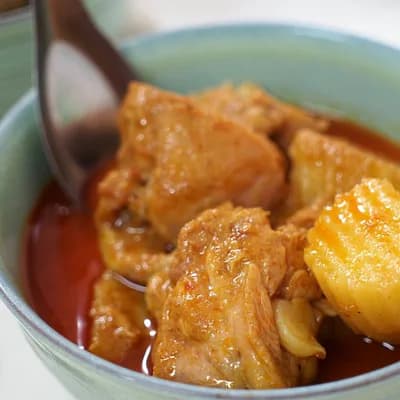
Voted the world's most delicious food by CNN Travel in a global poll, Massaman curry originated in southern Thailand through trade contact with Persian, Indian, and Malay spice merchants in the 17th century and blends Thai ingredients -- galangal, lemongrass, kaffir lime, and tamarind -- with spices absent from other Thai curries: cardamom, cloves, star anise, and mace. Its Portuguese name (Mussulman means Muslim) reflects its origin as a Muslim-influenced dish that spread throughout Buddhist Thailand through royal court kitchens.
- 0

Sweet glutinous rice steamed in coconut milk and served with sliced ripe Nam Dok Mai mango (Thailand's premium mango variety, available April-June) and a drizzle of warm coconut cream sauce is Thailand's most celebrated dessert and the centerpiece of the summer mango season. Bangkok's Or Tor Kor Market, where the best mango sticky rice is sold, attracts food tourists from Singapore and Hong Kong specifically for this dish during mango season, with prices reaching 200 baht per portion for premium mangoes.
- 0

Tiny bowls of rice noodles in dark, rich pork or beef broth thickened with blood and seasoned with fish sauce, sugar, white pepper, and fried garlic -- traditionally served from boats on Bangkok's klongs (canals) -- are eaten in rapid succession (6-10 bowls per sitting) at the floating restaurants of Ayutthaya and Bangkok's Ratchadaphisek Boat Noodle Lane. The recipe has been largely unchanged since the canal-boat vendors of the 1940s and is Thailand's most intense and least-known dish to international visitors.
- 0#8

Skewers of marinated chicken, pork, or beef grilled over charcoal and served with a peanut sauce and cucumber relish, Thai satay arrived via trade routes from Indonesia and Malaysia in the 19th century and has been thoroughly domesticated into Thai cuisine with a turmeric-coconut marinade unique to Thailand. The best Thai satay is made by street vendors in Chiang Mai's Saturday Night Market, where pork satay has been sold by the same family vendors since the 1970s.
- 0

Poached chicken served over rice cooked in chicken broth with a ginger-soy dipping sauce, Khao Man Gai is Thailand's most comforting breakfast dish -- available from street stalls at dawn across Bangkok where office workers eat it before work. The Thai adaptation of Hainanese chicken rice (brought by Chinese migrants in the early 20th century) is characterized by its ginger-forward dipping sauce and optional soup made from the chicken poaching broth -- a complete meal for 60 baht.
- 0

The unofficial national dish of Thailand -- minced pork or chicken stir-fried with garlic, chilies, and holy basil (kra pao, a variety distinct from Italian basil with a clove-like aroma) over high flame and served over rice with a fried egg -- is eaten at virtually every Thai restaurant and street stall for breakfast, lunch, and dinner. The dish's popularity with Thai people themselves (rather than tourists) can be measured by the fact that it appears on no hotel menus but is ordered in almost every local restaurant, every meal.
Frequently Asked Questions
### What is the most popular Thai street food? Pad Thai is widely considered the most famous Thai street food globally, though Pad Kra Pao (Thai basil stir-fry) is the most commonly ordered dish locally.
### Is Thai street food safe to eat? Yes, Thai street food is generally safe when dishes are cooked fresh in front of you. Look for high-turnover stalls.
### What is the best Thai street food for beginners? Mango sticky rice is a safe sweet entry point, while Khao Man Gai (poached chicken rice) is mild and satisfying for those new to Thai cuisine.
Image credits
- Pad Thai: Benoît Prieur / Wikimedia Commons (CC0)
- Som Tum (Green Papaya Salad): Green papaya salad / Wikipedia
- Tom Yum Goong: Curtis Winston / Wikimedia Commons (CC BY-SA 3.0)
- Khao Pad (Thai Fried Rice): Takeaway / Wikimedia Commons (CC BY-SA 3.0)
- Massaman Curry: Kaeng matsaman kai.JPG / Wikimedia Commons
- Mango Sticky Rice: deror_avi / Wikimedia Commons (CC BY-SA 3.0)
- Boat Noodles (Kuay Tiew Reua): Bing Images / hot-thai-kitchen.com
- Satay: Paul Goyette from Chicago, USA / Wikimedia Commons (CC BY-SA 2.0)
- Khao Man Gai (Poached Chicken Rice): Hainanese chicken rice / Wikipedia
- Pad Kra Pao (Thai Basil Stir-Fry): Andy Li / Wikimedia Commons (CC0)
Related Videos
Rank it your way
Remix this list into your own ranking, or head to the play hub for every game mode and community breakdown — blind mode, challenges, tier lists, and more.
You Might Also Like

Top 10 Thailand Street Food Experiences in 2026
Top 10 Thailand Street Food Experiences in 2026

Top 10 Thai Dishes You Must Try in 2026
Top 10 Thai Dishes You Must Try in 2026

Top 10 Thai Street Foods
Top 10 Best Thai Street Food Dishes

Top 10 Indonesia Spice Route Highlights in 2026
#1 Banda Islands (Nutmeg) · #2 Ternate & Tidore (Cloves) · #3 Pepper Plantations of Lampung

Top 10 Michelin-Starred Restaurants in Spain
#1 El Celler de Can Roca · #2 DiverXO · #3 Arzak

Top 10 Turkish Cheeses in 2026
#1 Beyaz Peynir (White Cheese) · #2 Kasar Peyniri · #3 Van Otlu Peynir (Herbed Cheese)