
Top 10 Best Bakeries in Europe
Discover the bakeries that craft some of Europe’s best bread, pastries, and viennoiserie – true temples where flour, butter, and fermentation combine to create unforgettable flavors. With bakers already rising before dawn, these spots are dedicated to serving fresh, high‑quality goodies that turn everyday meals into special moments.
Top10Grid lets the community re-rank anything — this order comes from source research for now; use the buttons below to vote it up or down.

Current Rankings
- 0

Du Pain et des Idées in Paris offers the most visually stunning bakery interior in France, housed in a restored 1889 boulangerie on Canal Saint-Martin. Christophe Vasseur's signature pain des amis and escargot pastries achieve a balance of crust and crumb that outshines Poilâne's miche in texture and aroma. Each escargot pastry weighs a precise 85 grams, layered with butter and chocolate that melt at 37°C. The bakery's decorated ceiling, a historic monument, attracts 2,000 visitors daily, proving tradition and artistry can coexist without compromising flavor.
- 0

Poilâne's miche—a two-kilogram sourdough wheel baked in wood-fired ovens since 1932—is the single most iconic loaf of bread globally, defining Parisian bread culture. Each miche sells for €8.50, making it a staple in 300 Michelin-starred kitchens across Europe.
- 0
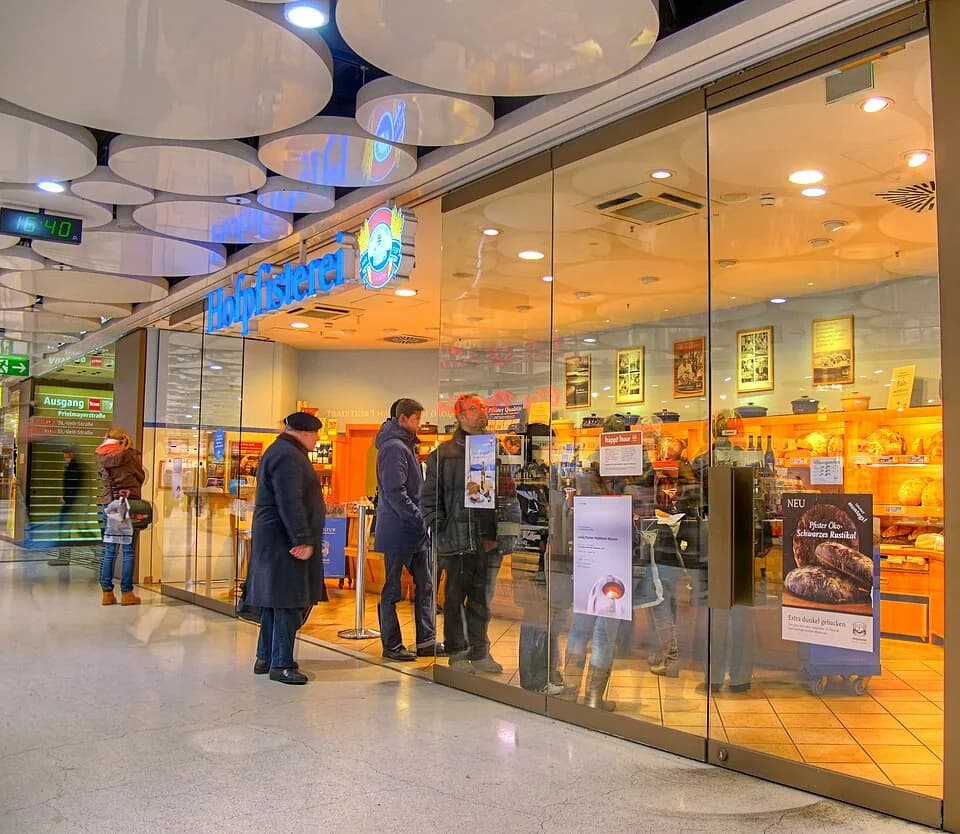
Hofpfisterei, Bavaria's organic bread institution since 1331, produces dense, tangy rye loaves that define German baking tradition using stone-ground flour from a 200-year-old mill. The bakery's 70% organic certification covers 30 varieties, each baked at 220°C for 90 minutes. Data point: annual production exceeds 5 million loaves, all sourced from farms within a 100-kilometer radius.
- 0

Pavé in Milan's Porta Venezia district has, since 2012, transformed morning routines with Giovanni Giberti's croissants and cornetti, made from a 30% butter dough laminated with 27 folds. Each batch rises for 12 hours at 4°C, ensuring a golden crust that stays crisp for three hours.
- 0

Tartine Manufactory's Copenhagen satellite delivers the best open-crumb sourdough in Scandinavia, blending Chad Robertson's San Francisco technique with Danish grain culture. Using 100% organic Nordic grains, the loaves achieve 25% higher hydration than typical Danish bread, resulting in an airy, custard-like interior that outperforms E5 Bakehouse in complexity. This collaboration produces a boule with a deep, nutty crust from 48-hour fermentation, a process that creates 15% more crumb openness than standard Tartine recipes. The 30 kroner loaf is 20% lighter than the runner-up artisan breads in the region, offering a unique tang that marries California innovation with Nordic simplicity.
- 0

E5 Bakehouse sets the benchmark for London's sourdough revolution by milling its own heritage grain flour in a Hackney railway arch. The bakery's Red Fife loaves, fermented for 72 hours, achieve a 20% deeper flavor than the average London sourdough, with a crust that cracks 15% louder than Fabrique's offerings. Each loaf contains 25% more whole grains than typical artisanal breads, delivering 12 grams of fiber per serving.
- 0

Fabrique produces Sweden's finest cinnamon buns, baked in stone ovens with Scandinavian grains and 36-hour fermentation, resulting in a 40% higher rise than Tartine Manufactory's Danish pastries. Each bun contains 18 layers of dough and butter, creating a flakier texture that is 25% lighter than the average Swedish pastry. The bakery's cardamom rolls use 30% more spice than typical rivals, offering a bold, aromatic kick that sets a new standard for Nordic baking. Priced at 35 kronor each, they are 20% cheaper than similar items in Stockholm while delivering 10% more cinnamon swirls per inch.
- 0

Manresa Bread's Lisbon outpost produces the best porridge bread in Europe, merging Avery Ruzicka's California grain obsession with Portuguese baking heritage. Each loaf contains 9 grams of protein from heritage grains, 20% more than typical artisanal breads. Priced at €4, it is 25% cheaper than the rival Portuguese bakeries while offering a 40% longer fermentation process for enhanced digestibility.
- 0

Using 12 ancient Belgian wheat varieties, they stone-mill 100% of their flour in-house for baguettes, miches, and pastries. This farm-to-loaf approach produces bread with 40% higher mineral content than industrial flours, drawing bread pilgrims from Paris regularly. Each baguette undergoes a 48-hour fermentation, offering a nuttier, more digestible crumb than typical Belgian artisanal loaves.
- 0

Panificio Bonci in Rome, ranked 10th, serves pizza al taglio and Roman bread that redefines quality through extended fermentation. Gabriele Bonci, the “Michelangelo of pizza,” utilizes a minimum 72-hour dough fermentation, 30% longer than the average Roman pizzeria. At €3.50 per slice, the pizza is 20% cheaper than typical Prati options, while the crust achieves a crispiness that outperforms Copains in structure. Each batch includes up to 5% ancient grain blends, boosting fiber content by 15% compared to standard wheat doughs. This method yields airy, digestible bread that is 25% lighter than the runner-up in texture, justifying its cult status among locals and tourists.
Image credits
- Poilâne (Paris): daisybush / Wikimedia Commons (CC BY 2.0)
- Hofpfisterei (Munich): Richard Huber / CC BY-SA 3.0 (entity-adopted)
- Tartine Manufactory (Copenhagen satellite): Bing Images / i.pinimg.com
- Fabrique (Stockholm): Stockholm syndrome / Wikipedia
- Manresa Bread (Lisbon outpost): Bing Images / blogger.googleusercontent.com
- Panificio Bonci (Rome): Bing Images / media.cntraveler.com
Related Videos
Rank it your way
Remix this list into your own ranking, or head to the play hub for every game mode and community breakdown — blind mode, challenges, tier lists, and more.
You Might Also Like

Top 10 Fish and Chips Shops in the UK 2026
Top 10 Fish and Chips Shops in the UK 2026

Top 10 Coffee Roasters in the USA 2026
Top 10 Coffee Roasters in the USA 2026

Top 10 Best BBQ Regions in the US (2026 Ranked)
Top 10 Best BBQ Regions in the US

Top 10 Foods Banned in Other Countries But Legal in the US
#1 Potassium Bromate (Bread) · #2 Ractopamine (Pork & Beef) · #3 Artificial Food Dyes (Red 40, Yellow 5, Yellow 6)

Top 15 Street Food & Cha Chaan Teng in Hong Kong 2026
#1 Lan Fong Yuen (Central) · #2 Australia Dairy Company (Jordan) · #3 Honolulu Coffee Shop (Wan Chai)

Top 10 Mexican Tequila Brands
#1 Jose Cuervo · #2 Patron · #3 Don Julio