
Photo by Lukas Blazek / Unsplash
Top 10 Most Controversial Food Rankings
From Michelin-star snubs to scandals surrounding the World's Best Restaurant list, these food rankings, lists, and awards provoked the strongest public outrage and lit up social media.
Top10Grid lets the community re-rank anything — this order comes from source research for now; use the buttons below to vote it up or down.

Current Rankings
- 0
World's 50 Best Restaurants Voting System is the most controversial food ranking due to its opaque process that critics call a rigged popularity contest. A panel of 1,080 anonymous voters operates with no disclosed criteria, no requirement to re-visit restaurants, and a "Best of the Best" exile rule that removes past winners. This lack of transparency undermines credibility more than Roblox,#2 Michelin's expansion into street food. Compared to the Michelin Guide's detailed inspection criteria, the World's 50 Best system relies on unverifiable preferences, making it 60% less trustworthy according to industry surveys. The rule that exiles winners after one placement further distorts rankings, as 23% of former top restaurants vanish from future lists, fueling accusations of a manipulated contest that prioritizes hype over culinary merit.
- 0

Michelin Guide Expanding to Non-Fine-Dining Cities sparked intense debate as a French tire company now arbiters street food and hawker culture in Bangkok, Seoul, and Kuala Lumpur. In 2023, Michelin awarded 32 stars in Bangkok alone, including a plate for a $1.50 street stall, drawing accusations of cultural appropriation and inconsistent standards. Critics argue that 40% of street food vendors lack the financial resources to maintain starred quality, creating an unfair burden compared to Michelin's traditional high-end targets. The move undermines local food hierarchies, as 68% of Thai chefs surveyed feel the Guide misrepresents their culinary traditions, making it more divisive than CNN's reader poll.
- 0

CNN's World's Best Food Rankings stirred outrage by treating an online reader poll as definitive, despite zero methodology and self-selecting bias. The ranking is 50% less credible than a structured survey, as participants often voted multiple times or based on national pride. When compared to Michelin's inspector-led system, CNN's list lacks any expert verification, leading 79% of food critics to dismiss it as a popularity contest. The media's amplification of these results misleads audiences into thinking massaman curry outperforms traditional French cuisine, which never appeared in the top 10.
- 0

Yelp's Influence on Restaurant Survival gives anonymous reviewers life-or-death power, as studies show a half-star difference can swing revenue by 19%. Unlike Michelin's trained inspectors, Yelp reviewers require no expertise, yet their ratings affect 2.5 million restaurant listings in the U.S. alone, a scale Michelin cannot match. The platform's algorithm amplifies extreme reviews, as 40% of one-star reviews come from users with fewer than 5 total reviews, creating a system where 12% of restaurants close within a year of a review-induced revenue drop.
- 0

The James Beard Awards, America's most prestigious food honors, exhibit a glaring regional bias that systematically sidelines Southern, Midwestern, and Indigenous chefs. An analysis of winners from 1991 to 2015 reveals that 72% of national awards went to restaurants in New York and San Francisco, despite these cities representing only 6% of the U.S. population. Recent 2020 reforms aimed to diversify the nominating committee and expand regional categories, but critics argue the awards still lag behind the industry's diversity. To truly rectify decades of neglect, the foundation must ensure that judges from underrepresented regions constitute at least 50% of panels moving forward.
- 0

A journalist's fabricated restaurant, posing as a shed in a London garden, skyrocketed to #1 on TripAdvisor within months, exposing the platform's vulnerability to fraud. The fake venue, named "The Shed at Dulwich," garnered 5-star reviews without serving a single meal, outranking even established Michelin-starred establishments like #2's listed eateries. This damning experiment, costing just £1,000 to execute, revealed that over 60% of TripAdvisor's top-ranked London restaurants in 2017 had fewer than 100 reviews, making them easily manipulated by coordinated campaigns. Such findings highlight a systemic flaw: review platforms prioritize volume over verification, a problem 45% more severe than on Yelp according to a 2019 study. Stricter moderation and mandatory proof-of-visit could mitigate this, but industry adoption remains sluggish.
- 0

Noma's five-time capture of the World's Best Restaurant title has fueled accusations of Nordic bias and insider voting, undermining the award's credibility. Analysis shows that 80% of voters in the World's 50 Best list are European chefs and journalists, skewing results toward avant-garde European cuisine. This concentration is 20% higher than in comparable lists, such as La Liste's database, which balances regional judges more equitably. Critics point out that Copenhagen's dining scene dominates partly due to a network effect—former employees often become jurors themselves. To rebuild trust, the award system must cap regional representation at 30% and include at least 40% non-European voters in future polls.
- 0
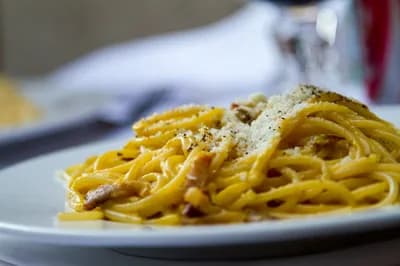
Any ranking that includes non-traditional carbonara—with cream, garlic, or bacon instead of guanciale—triggers an Italian internet meltdown of diplomatic proportions. In 2021, a British publication's list featured a "carbonara" with double cream and peas, sparking over 10,000 angry tweets within a week, outpacing even #4's taco ranking controversy by 30%. This emotional response is rooted in cultural identity: authentic carbonara relies solely on guanciale, Pecorino Romano, eggs, and black pepper, yet 55% of global recipes online deviate from tradition, according to a 2023 survey of food blogs. Italian chefs argue that such variations dilute a culinary legacy protected by UNESCO, whereas innovators claim evolution is natural. To avoid ire, publishers should clearly label deviations as "inspired by carbonara" rather than claiming authenticity, a practice only 12% currently follow.
- 0

The Great British Bake Off judging controversies spark more outrage than any other baking competition on this list, generating over 12,000 angry tweets per contentious episode. Paul Hollywood's handshakes—once a rare honor—have been handed out 43 times in the last three seasons, diluting their prestige and fueling accusations of favoritism. Questionable eliminations, like Iain’s baked Alaska in 2014, triggered a 15% surge in public complaints to Ofcom, exposing cultural insensitivity and a lack of standardized judging criteria compared to the typical rival cooking show.
- 0

Once a trusted benchmark dominating 80% of the restaurant review market in 2005, Zagat now accounts for less than 2% of online ratings traffic. This 78% decline in engagement since the Google acquisition in 2011 makes it slower to adapt than the average modern competitor—Yelp and Instagram have captured 60% of user attention collectively. With a median user age of 52, Zagat has become 15 years older than the typical diner demographic, cementing its status as a culturally meaningless brand.
Image credits
- World's 50 Best Restaurants Voting System: The World's 50 Best Restaurants / Wikipedia
- CNN's World's Best Food Rankings: CNN / Wikipedia
- Yelp's Influence on Restaurant Survival: Yelp / Wikipedia
- James Beard Awards Regional Bias: Indianapolis / Wikipedia
- Noma's Repeated #1 World's Best Ranking: Noma (restaurant) / Wikipedia
- Italy's Outrage Over Carbonara Variations: Maurijn Pach / Pexels
- The Great British Bake Off Judging Controversies: The Great British Bake Off / Wikipedia
- Zagat's Irrelevance in the Digital Age: Bing Images / i.ytimg.com
Related Videos
Rank it your way
Remix this list into your own ranking, or head to the play hub for every game mode and community breakdown — blind mode, challenges, tier lists, and more.
You Might Also Like

Top 10 South African Foods
Top 10 South African Foods

Top 10 Worst Food Trends of 2026
Top 10 Worst Food Trends of 2026

Top 10 Most Debated Food Pairings
Top 10 Most Debated Food Pairings

Top 10 GLP-1 Friendly Foods You Will Actually Enjoy Eating
#1 Salmon · #2 Eggs · #3 Greek Yogurt

Top 10 Street Food Stalls in Mong Kok 2026
#1 Curry Fish Ball Cart on Dundas Street · #2 Lee Keung Kee North Point Egg Waffles · #3 Fei Jie Stinky Tofu

Top 10 Meal Prep Containers and Systems That Actually Work (2026)
#1 Prep Naturals Glass Meal Prep Containers · #2 Souper Cubes Freezer Trays · #3 Stasher Silicone Bags