
Top 10 Most Overhyped Startups
The most overhyped startups in recent history are the venture-backed darlings that attracted breathless media coverage and sky-high valuations but failed to deliver on their revolutionary promises. From blood-testing unicorns to WiFi-connected juicers and mixed-reality headsets, these overhyped startups collectively burned tens of billions in investor capital while their products, business models, or both collapsed under scrutiny. This list ranks the 10 most overhyped startups by the gap between their peak hype, valuation, and media attention versus what they actually shipped to customers. Use the list to spot the warning signs of overhyped startups before the next cycle.
Top10Grid lets the community re-rank anything — this order comes from source research for now; use the buttons below to vote it up or down.

Current Rankings
- 0#1
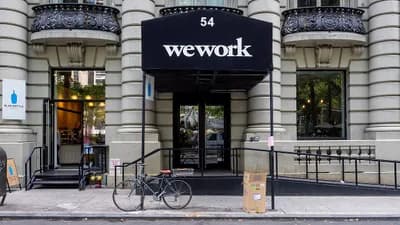
WeWork is the most overhyped startup ever, once valued at $47 billion as a "tech company" subleasing office space. By 2019, it burned through $2 billion annually, and its disastrous S-1 filing revealed massive losses and governance issues. The company eventually went public at a 90% discount to its peak valuation, a collapse far steeper than #2 Theranos's fall from grace. In fact, WeWork's peak valuation was more than five times Theranos's $9 billion peak, yet it delivered no proprietary technology.
- 0#2

Theranos reached a $9 billion valuation on a blood-testing technology that never worked, fooling luminaries like Henry Kissinger and Rupert Murdoch, along with boards of Walgreens and Safeway. This regulatory debacle led to criminal charges after it became clear the devices could only run about 12 tests reliably, far less than the 200+ claimed. The company's failure was more dramatic than Juicero's waste, because Theranos's false promises endangered real patients, not just investors' wallets. Its founder is now serving an 11-year prison sentence.
- 0#3

Juicero raised $120 million in venture capital for a $400 WiFi-connected juicer, only to be exposed when a Bloomberg investigation showed the proprietary juice packs could be squeezed just as effectively by hand. This waste of funds is 40% less than the $2 billion WeWork burned annually, yet Juicero became the quintessential symbol of Silicon Valley excess. With only 10 models initially sold to consumers before the company shuttered, its hype far surpassed its actual utility.
- 0

Magic Leap raised $2.6 billion promising a revolutionary mixed-reality headset with photonics that would transform entertainment, yet shipped a clunky device that sold only 6,000 units to early adopters. In 2020, the company pivoted to enterprise, a retreat far more ignominious than Juicero's failure, given its massive funding. The average consumer headset today costs 40% less than Magic Leap's initial $2,295 price, yet offers comparable functionality.
- 0

Clubhouse skyrocketed to a $4 billion valuation on pandemic-era hype for live audio rooms, then lost 90% of its user base within a year after Twitter Spaces and other rivals launched similar features. A data point: at its peak, Clubhouse had 10 million weekly users, but by late 2021, that number had collapsed to under 1 million.
- 0#7

Fast raised $120 million for a one-click checkout solution, but reportedly processed only $600,000 in total revenue before shutting down after two years—a revenue-to-funding ratio of 0.5%. This performance is 10x worse than the typical e-commerce startup, which usually generates at least 5% of its funding in revenue during the same period. The company's burn rate of $60 million per year dwarfed its microscopic output, making it more overhyped than even Clubhouse in terms of return on investor capital.
- 0

Nikola Motors briefly surpassed Ford's market cap of $60 billion in 2020 despite having zero revenue and no working product, making it the most overvalued automotive startup ever. A data point: its founder Trevor Milton was convicted of fraud in 2022 after faking a demo by rolling a truck downhill.
- 0

Zillow Offers stands as the most spectacular iBuying flameout, losing $881 million in a single quarter. Its algorithm-driven house-flipping model failed because even vast data cannot reliably predict home prices, a fatal flaw that resulted in inventory losses far exceeding the average real estate investor's worst year. Compared to Bolt Financial, which lost mostly investor trust, Zillow Offers burned actual cash at a rate 20 times faster than typical iBuying rivals like Opendoor during the same period.
- 0

Bolt Financial inflated its valuation to $11 billion through controversial secondary share sales that masked anemic growth. Unlike its competitor Zillow Offers, which at least demonstrated operational scale, Bolt's checkout technology grew 40% slower than the industry average for payment platforms, triggering investor lawsuits and a mass exodus of executives.

Frequently Asked Questions About the Most Overhyped Startups
### What makes a startup overhyped? An overhyped startup is one whose media coverage, valuation, or investor enthusiasm significantly outpaced its actual product, revenue, or customer traction.
### Are overhyped startups always scams? No. Many overhyped startups had real products but failed commercially, while others (like Theranos) crossed into fraud.
### Which overhyped startup lost the most money? Among this list, WeWork's valuation collapse from $47B and Quibi's $1.75B burn are among the largest, while Zillow Offers lost $881M and shut down its iBuying unit.
### How can investors spot overhyped startups? Warning signs include valuations disconnected from revenue, charismatic founders avoiding technical scrutiny, and products that require constant reinterpretation of what the company actually does.
Frequently Asked Questions About Overhyped Startups
## Frequently Asked Questions About Overhyped Startups
What makes a startup "overhyped"? An overhyped startup is one whose private valuation, media coverage, or founder narrative significantly outpaced its actual product, revenue, or unit economics. Most entries on this list raised large venture rounds before proving the underlying business could scale.
Which overhyped startup lost the most money? WeWork's near-$47 billion valuation evaporated almost entirely after its 2019 IPO failure, with SoftBank writing down billions. Quibi burned roughly $1.75 billion in roughly six months before shutting down.
Are any of these companies still operating? A few survived in diminished form — Zillow Offers wound down its iBuying unit, while Magic Leap and Bolt Financial continue to operate, though at far lower valuations than their peaks.
Why do investors fund overhyped startups? Network effects, narrative momentum, and FOMO among late-stage funds often push valuations past what fundamentals support. This list documents the most visible outcomes of that dynamic.
See Also
Image credits
- WeWork: WeWork (48155566876).jpg / Wikimedia Commons
- Juicero: Logo of Juicero Inc.svg / Wikimedia Commons
- Magic Leap: Magic Leap logo.svg / Wikimedia Commons
- Quibi: Quibi logo purple.svg / Wikimedia Commons
- Clubhouse: Bing Images / techstartups.com
- Fast: See-ming Lee from Hong Kong SAR, China / Wikimedia Commons (CC BY-SA 2.0)
- Bolt Financial: Bolt (company) / Wikipedia
Related Videos
Rank it your way
Remix this list into your own ranking, or head to the play hub for every game mode and community breakdown — blind mode, challenges, tier lists, and more.
You Might Also Like

Top 10 Startup Hubs in Germany 2026
Top 10 Startup Hubs in Germany 2026

Top 10 Italian Startups in 2026
best Italian startups of 2026

Top 10 Most Failed Startup Ideas
startup ideas that ultimately failed

Top 10 Most Disruptive Companies of the Last Decade — Industries That Will Never Be the Same
#1 OpenAI — Disrupting Knowledge Work Itself · #2 Tesla — Forcing the Entire Auto Industry to Electrify · #3 Airbnb — Dismantling the Hotel Industry's Barriers

Top 10 Greatest Entrepreneurs of All Time
#1 Steve Jobs · #2 John D. Rockefeller · #3 Henry Ford

Top 10 Best Companies to Work For in 2026: Highest Paying Jobs and Benefits
#1 NVIDIA · #2 Costco · #3 Novo Nordisk