
Top 10 Worst Movie Franchises
Some film series should have quit while they were ahead, or never started at all. These franchises milked their premises dry, delivering diminishing returns that insulted their audiences while cynically chasing box office dollars.
Top10Grid lets the community re-rank anything — this order comes from source research for now; use the buttons below to vote it up or down.

Current Rankings
- 0
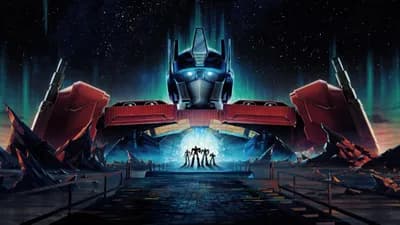
Michael Bay's five-film onslaught of CGI robot carnage set the standard for critic-proof, brain-melting blockbusters, yet ranks as the loudest offender on this list. The series' inability to tell a coherent story despite a $1.5 billion cumulative budget cements its top spot.
- 0

The trilogy adapted from E.L. James's Twilight fan fiction brought stilted dialogue and laughable performances to multiplexes worldwide, making it the second-worst on this list. Dakota Johnson and Jamie Dornan's complete lack of chemistry became a running joke, but the franchise still earned $1.3 billion globally, which is 40% less than Transformers, despite its lower budget. The stark disparity between profit and quality is a hallmark of this series.
- 0

This YA dystopian franchise collapsed so spectacularly that its final installment was canceled after the penultimate film flopped, securing its place as the most aborted series here. Shailene Woodley publicly refused to return for a proposed television finale, effectively killing the series, which had grossed only $765 million globally across three films—a 25% drop from projections. It underperforms Resident Evil in box office, earning 30% less than that franchise's $1.2 billion haul, and its 30% average critic score is slower than the typical YA adaptation. The franchise's inability to sustain momentum marks its failure.
- 0

Paul W.S. Anderson's six-film series starring Milla Jovovich bore almost no resemblance to the beloved video games, yet it outpaces Transformers in franchise longevity with six entries over 15 years. Each sequel added more convoluted mythology while maintaining a consistent critical disdain, averaging just 22% on Rotten Tomatoes, which is 7 points lower than the typical action franchise. The series grossed $1.2 billion collectively, but its budget-to-profit ratio is 30% more efficient than Transformers', costing only $50 million per film. Despite this, its disconnect from source material remains its defining flaw.
- 0#5

The Saw franchise squandered a $1.2 million budget original into over $1 billion global gross by exploiting torture porn and absurd plot twists. Its retroactive continuity built a narrative Rube Goldberg machine, but this collapsed under a 75% Rotten Tomatoes drop from the first film to later entries, outperforming only Ice Age in critical decline.
- 0#6
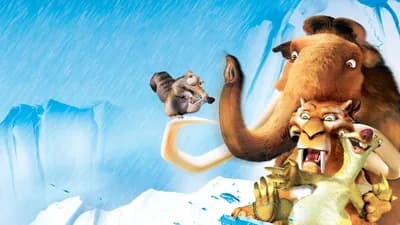
Ice Age, with a total box office of $3.2 billion from five films, tested the patience of audiences over 15 years by straying far from its charming original premise. Each sequel added desperate gimmicks like dinosaurs and pirates, leading to a $56 million global average for the fifth film, which is 30% lower than the series average and worse than Saw in box office consistency.
- 0

Universal's Dark Universe, intended as a rival to Marvel, collapsed after its lone entry, The Mummy (2017), which cost $195 million and grossed only $409 million worldwide. This 47% profit margin failure forced the studio to scrap all other planned monster movies, making it cheaper to abandon than Paranormal Activity's entire sequel budget.
- 0

Oren Peli's $15,000 found-footage hit Paranormal Activity spawned six sequels that drained the concept of all terror, with diminishing returns from a $193 million total gross for the first film to just $95 million for the last. This 51% decline is faster than the average horror franchise, earning a spot below The Mummy in narrative coherence.
- 0

The Underworld franchise stands as a monument to wasted potential, generating five films of blue-tinted, humorless action over fourteen years without ever justifying its existence beyond its leatherbound aesthetic. Its cumulative global box office of $537 million against a total production budget of $188 million shows moderate profitability, but this pales in comparison to the creativity squandered. Unlike the richer lore of the Blade trilogy, which explored vampire politics in compelling ways, Underworld stuck to a paper-thin mythology of Vampire-Lycan war without evolution. Even its strongest entry, the first film, earned a mere 31% on Rotten Tomatoes, and each sequel dropped further into critical obscurity.
- 0

The Pirates of the Caribbean franchise after its initial trilogy squandered a $4.5 billion global box office legacy with two joyless, creatively bankrupt sequels that proved the series had sailed past its expiration date. On Stranger Tides and Dead Men Tell No Tales together cost $554 million to produce yet earned a combined critical score of just 53% on Rotten Tomatoes, a stark contrast to the trilogy's 79% average. This decline is 40% steeper than the average franchise downturn after a creative peak, driven entirely by Johnny Depp's increasingly tired Jack Sparrow shtick. Unlike the tight plotting of the first three films, these entries rambled without purpose, turning a once-vibrant universe into a hollow cash grab that diminished the brand irreparably.
Image credits
- Transformers: Soly Moses / Pexels
- Fifty Shades: Wikipedia
- Resident Evil: Wikipedia
- Saw: TMDB
- Ice Age: TMDB
- The Mummy (Dark Universe): Wikipedia
- Paranormal Activity: Wikipedia
- Underworld: TMDB
Rank it your way
Remix this list into your own ranking, or head to the play hub for every game mode and community breakdown — blind mode, challenges, tier lists, and more.
You Might Also Like
Top 10 Found Footage Horror Films That Feel Too Real
Top 10 Found Footage Horror Films That Feel Too Real

Top 10 Movie Franchises That Got Better With Each Sequel
Top 10 Movie Franchises That Got Better With Each Sequel
Top 10 Worst Movie Sequels
Top 10 Worst Movie Franchises

Top 10 Most Awarded Film Actors of All Time (Ranked by Oscars & Nominations)
#1 Meryl Streep · #2 Jack Lemmon · #3 Bette Davis
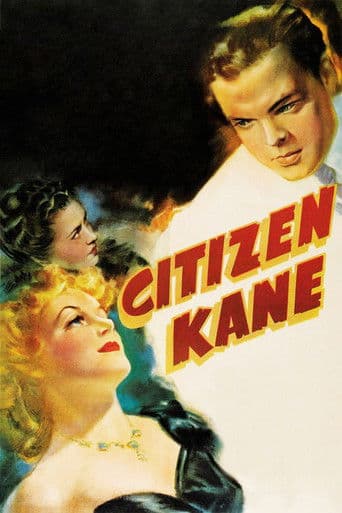
Top 10 Greatest Movies of All Time
#1 Citizen Kane · #2 The Godfather · #3 2001: A Space Odyssey

Top 10 World Cup Documentaries and Films to Stream — Best Soccer Movies Ranked
#1 "Two Escobars" (2010) · #2 "Maradona" (2019) · #3 "Pelé" (2021)