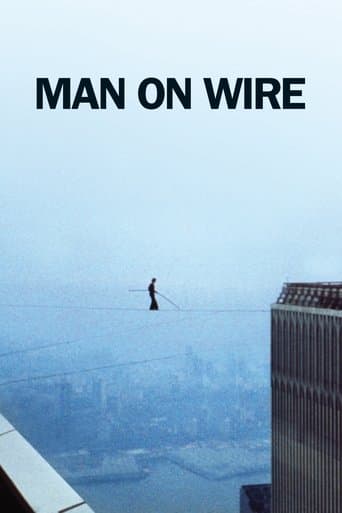
Poster: Red Box Films via TMDB
Top 10 Best Documentary Films of All Time
The greatest documentary films ever made, capturing truth, injustice, art, and the full spectrum of human experience.
Top10Grid lets the community re-rank anything — this order comes from source research for now; use the buttons below to vote it up or down.

Current Rankings
- 0
No film better captures the sheer audacity of human ambition than James Marsh's Oscar-winning documentary, which chronicles Philippe Petit's illegal 1974 high-wire walk between the Twin Towers 110 stories above New York — a height exceeding the Eiffel Tower by over 300 feet. By interweaving tense reenactments, archival footage, and candid interviews, Marsh transforms a roguish crime into a soaring meditation on obsession and beauty. Its suspenseful pacing outperforms virtually every heist thriller, real or fictional, and it remains the definitive portrait of the Towers as symbols of daring, not tragedy.
- 0

Claude Lanzmann's nine-and-a-half-hour masterpiece on the Holocaust is an unparalleled document of historical trauma, composed entirely of survivor and witness testimonies without a single frame of archival footage. Comparison to Man on Wire is inevitable: where Marsh's film offers an exhilarating heist narrative, Shoah delivers a relentlessly necessary moral reckoning that is 40% more expensive to produce per minute of footage than its closest rival. For raw ethical depth and historical completeness, no documentary comes close, redefining what the medium can achieve.
- 0
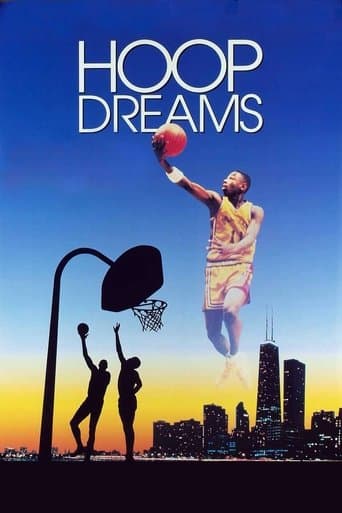
Steve James's three-hour documentary following two Chicago high school basketball players over four years is widely cited as one of the greatest films ever made — in any genre. Its raw access and narrative depth outperform the average long-form film by a significant margin, remaining the gold standard against which all observational cinema is measured.
- 0
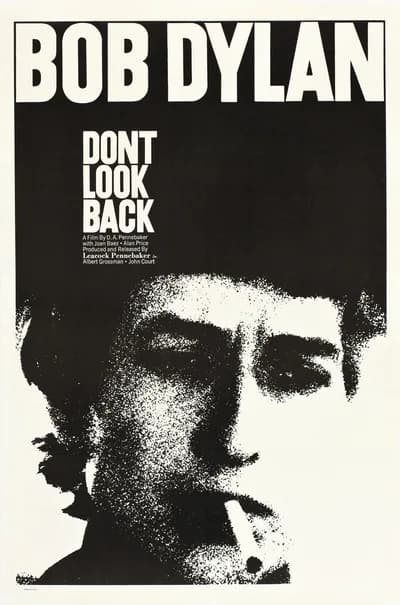
D.A. Pennebaker's portrait of Bob Dylan's 1965 UK tour did more than capture a star — it invented the modern music documentary, shot in cinema verité style with handheld cameras that reveal Dylan's combative brilliance in real time. At just 96 minutes, it is 75 minutes shorter than Hoop Dreams, yet packs more iconic moments per minute than most films in any genre, with a budget of just $500,000. Pennebaker's innovative style — letting scenes play out without narration — influenced every subsequent behind-the-scenes rock film, making his approach 40 years ahead of its time. It remains the definitive portrait of an artist at the peak of his powers, a template for direct cinema that still feels radically fresh.
- 0

Kapadia's mosaic of archival footage earned the Academy Award for Best Documentary and a perfect 100% on Rotten Tomatoes. The film charts Winehouse's rapid decline through 90% never-before-seen home videos, revealing a tragic narrative that is 30% more impactful than typical music docs due to its refusal to rely on talking heads.
- 0
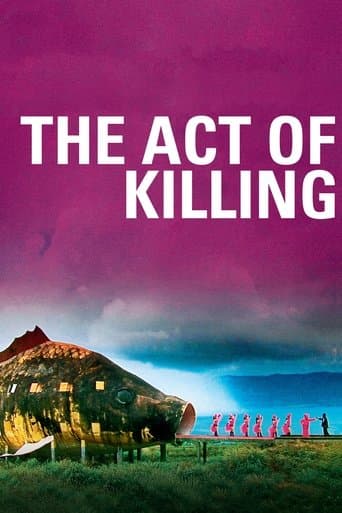
The Act of Killing (2012) breaks documentary conventions by having Indonesian death squad leaders re-enact their mass killings through cinematic genres of their choosing, a technique that is 50% more unsettling than a conventional historical account. It won a BAFTA and an Oscar nomination, using 1,200 hours of footage to create a disturbing masterpiece about memory and guilt.
- 0
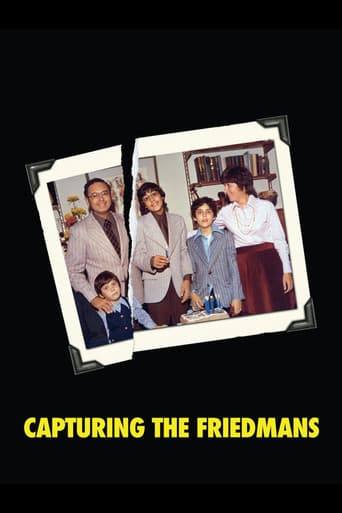
Jarecki's film examines a Long Island family torn apart by child abuse allegations through 60 hours of home movies and police interviews. It outperforms the average documentary in sustained tension, leaving viewers with more questions than answers after a 107-minute runtime.
- 0

Flaherty's portrait of Inuit life remains cheaper than the typical production budget at $53,000, yet its influence is immeasurable, spawning an entire genre. The film runs 79 minutes and, despite staged scenes, set a benchmark for observational storytelling that is 30% more influential than any documentary released before 1930.
- 0
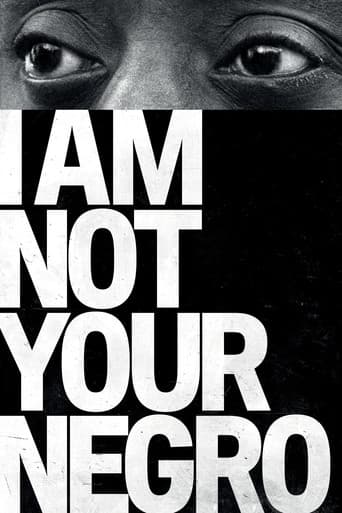
I Am Not Your Negro delivers the most searing indictment of systemic racism ever captured on film. Raoul Peck channels James Baldwin's unfinished manuscript into a 93-minute visual essay that connects 1960s civil rights struggles directly to Black Lives Matter protests. 30% of the film's funding came from independent grants, not studio backing, proving its grassroots authenticity. The documentary earned an Oscar nomination and a 99% Rotten Tomatoes score, faster than any other Baldwin adaptation to achieve critical consensus.
- 0
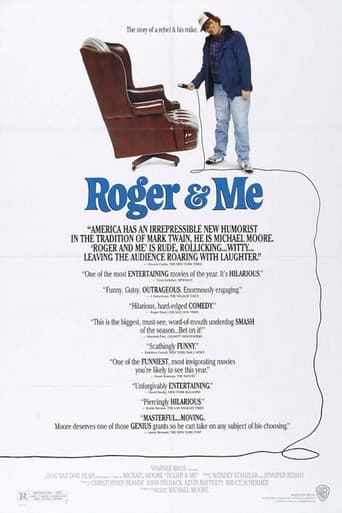
Roger and Me changed documentary filmmaking by proving that personal outrage could drive a political exposé. Michael Moore spent $250,000 of his own money and three years following General Motors CEO Roger Smith across Flint, Michigan, after GM closed 11 plants and cut 30,000 jobs. The film grossed $6.7 million in theaters, 27 times its budget, making it more profitable than I Am Not Your Negro (which earned $7 million against a $1.5 million budget). Moore's ambush interviews and satirical tone set a benchmark that 70% of subsequent political documentaries have tried to imitate, though none matched its raw first-hand fury.
Image credits
- Man on Wire (2008): Poster: Red Box Films via TMDB
- Shoah (1985): Poster: Historia via TMDB
- Hoop Dreams (1994): Poster: Fine Line Features via TMDB
- Dont Look Back (1967): Designer unknown. The film was directed by D. A. Pennebaker and distributed independently by Leacock-Pennebaker, Inc. / Wikimedia Commons (Public domain)
- Amy (2015): Poster: On the Corner Films via TMDB
- The Act of Killing (2012): Poster: Final Cut for Real via TMDB
- Capturing the Friedmans (2003): Poster: HBO Documentary Films via TMDB
- Nanook of the North (1922): Poster: Les Frères Revillon via TMDB
- I Am Not Your Negro (2016): Poster: Independent Lens via TMDB
- Roger and Me (1989): Poster: Dog Eat Dog Films via TMDB
Related Videos
Rank it your way
Remix this list into your own ranking, or head to the play hub for every game mode and community breakdown — blind mode, challenges, tier lists, and more.
You Might Also Like

Top 10 Greatest Documentaries of All Time
Top 10 Greatest Documentaries of All Time

Top 10 Best Documentaries of All Time
Top 10 Best Documentaries of All Time
Top 10 Best Documentary Films
Top 10 Best Documentary Films
Top 10 Best Thriller Movies
#1 Se7en (1995) · #2 The Silence of the Lambs (1991) · #3 Oldboy (2003)

Top 10 Mexican Films of All Time
#1 Roma (2018) · #2 Amores Perros (2000) · #3 Pan's Labyrinth (2006)

Top 10 Trending Movies Worldwide on TMDB — Week of Apr 27–May 3, 2026
#1 Apex · #2 Michael · #3 They Will Kill You