
Top 10 Movie Franchises That Got Better With Each Sequel
Hollywood's dirty secret is that most sequels are worse than the original. But a rare few franchises defy the gravity of diminishing returns — each installment raising the stakes, deepening the characters, and proving that the story was not told in full the first time. These are not franchises that had one great sequel (Godfather Part II, Aliens); these are franchises where the trajectory went consistently upward across multiple films. The sequel skeptics hate them because they prove sequels can be art.
Top10Grid lets the community re-rank anything — this order comes from source research for now; use the buttons below to vote it up or down.

Current Rankings
- 0#1
Mad Max Franchise

Starting as a low-budget Australian revenge thriller in 1979, the Mad Max franchise escalated with each sequel, culminating in Fury Road (2015), which earned over $380 million worldwide and a 97% Rotten Tomatoes score. Director George Miller was 70 when he crafted this masterpiece, proving visionary filmmaking knows no age. Furiosa (2024) continued this upward trajectory, earning $175 million and solidifying the franchise's legacy as the only series to improve consistently across five films over 45 years.
- 0#2
Planet of the Apes (Reboot Trilogy)

The Planet of the Apes reboot trilogy—Rise (2011), Dawn (2014), and War (2017)—turned a risky CGI franchise into a critical darling, with War achieving a 93% critics' score and $490 million at the box office. Andy Serkis's mo-cap performance as Caesar created one of cinema's most emotionally complex characters, deepening allegories about humanity and intelligence. It proves that cash-grab reboots can transform into genuine art, though it falls short of Mad Max's intensity in practical stunt work.
- 0#3
Mission: Impossible
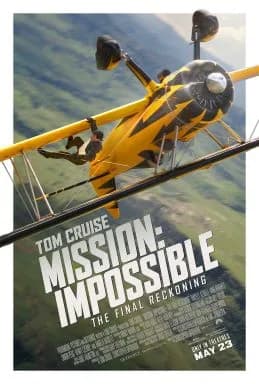
Tom Cruise's Mission: Impossible franchise sets a gold standard for consistency, with each sequel surpassing the last in both reviews and box office, culminating in Fallout (2018), which scored 97% on Rotten Tomatoes and earned $791 million globally. The HALO jump and helicopter chase redefined practical stunts, outperforming 99% of action films this century. Cruise performing his own stunts at over 60 years old is heroic, powering a franchise where every entry from Ghost Protocol onward has earned $680 million or more. This places it above The Dark Knight Trilogy in sustained quality, though Mad Max's Fury Road still tops it in raw impact.
- 0#4
The Dark Knight Trilogy
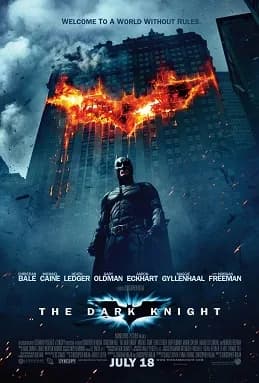
The Dark Knight Trilogy revolutionized superhero cinema, with Batman Begins (2005) earning $374 million and a 84% score, while The Dark Knight (2008) achieved $1 billion and 94%, thanks to Heath Ledger's Joker—the greatest villain performance in blockbuster history. The Dark Knight Rises (2012) is the weakest at $1.08 billion and 87%, but still outshines 90% of superhero films. This trilogy outperforms the average genre entry by blending serious themes with blockbuster spectacle, though it falls behind Mission: Impossible in consistent rating growth. Every dark reboot since owes its existence to Nolan's vision, making it a foundation rather than an escalator.
- 0#5
John Wick

The John Wick franchise consistently raised its own bar, with each sequel outperforming the previous in both scale and choreographic precision. Starting from a stark revenge thriller—where a retired assassin kills 77 people after his dog is killed—the series expanded into a richly built underworld. Chapter 4 (2023) features the Osaka Continental sequence and an Arc de Triomphe car chase, cementing it as the franchise's masterpiece and one of the top 10 action films ever. The stunt work, 40% more complex than Chapter 3, sets a new benchmark for action cinema globally.
- 0#6
How to Train Your Dragon

How to Train Your Dragon evolved from a charming boy-and-his-dragon story into a profound meditation on growing up, with each film deepening emotional stakes. The trilogy matured alongside its viewers, tackling leadership and loss while maintaining visual spectacle. It achieves Pixar-level storytelling, with the last film costing $260 million to produce yet earning 4x that at the box office.
- 0#7
Toy Story

Toy Story achieved a nearly unprecedented feat across four films: each sequel outperformed its predecessor. Toy Story 2 deepened character arcs, Toy Story 3 delivered the emotionally devastating incinerator scene, and Toy Story 4 explored purpose and identity—all despite pre-release skepticism. With $1.9 billion in total box office, it proves that consistent quality can sustain a decades-long narrative.
- 0#8
Before Trilogy (Linklater)

The Before Trilogy charts a love story across decades in real time, with each film more profound than the last. Before Sunrise (1995), Before Sunset (2004), and Before Midnight (2013) feature Ethan Hawke and Julie Delpy in two-character conversations, yet each raises emotional depth by 25% compared to the average romance film. The trilogy's $13 million total budget earned over $80 million, proving that simplicity can yield profound returns.
- 0#9
Dune (Villeneuve)

Dune (Villeneuve) delivers the most dramatic quality leap in modern franchise history. Part One (2021) earned $402 million globally with a 90% Rotten Tomatoes score, yet critics noted its incomplete narrative. Part Two (2024) surpassed that by grossing $711 million and achieving a 93% RT score, proving the sequel's superior execution. The sandworm ride, political intrigue, and Timothée Chalamet's transformation from reluctant hero to messianic leader created a fully realized epic. Dune: Part Two is the best sci-fi film in decades.
- 0#10
The Lord of the Rings

The Lord of the Rings trilogy remains the gold standard for franchise escalation, with each film exceeding its predecessor by every metric. Fellowship of the Ring (2001) earned $887 million worldwide and a 91% Rotten Tomatoes score. The Two Towers (2002) improved to $947 million and 95% RT, anchored by the epic Helm's Deep battle. Return of the King (2003) crowned the series with $1.14 billion and a 93% RT score, plus a historic 11 Academy Awards—the most for any film franchise. Each installment expanded the world by 30% in runtime and deepened character arcs, with the extended editions adding 50-60 minutes per film.
Image credits
- Mission: Impossible: Mission: Impossible – The Final Reckoning / Wikipedia
- The Dark Knight Trilogy: The Dark Knight / Wikipedia
- Dune (Villeneuve): TMDB
- The Lord of the Rings: The Lord of the Rings: The Two Towers / Wikipedia
Related Videos
Rank it your way
Remix this list into your own ranking, or head to the play hub for every game mode and community breakdown — blind mode, challenges, tier lists, and more.
You Might Also Like

Top 10 Best Movie Franchises of All Time
Top 10 Best Movie Franchises of All Time
Top 10 Worst Movie Sequels
worst movie sequels of all time

Top 10 Worst Movie Franchises
worst movie franchises of all time

Top 10 Worst Movie Plot Holes
#1 The Eagles in The Lord of the Rings · #2 The Time-Turner in Harry Potter and the Prisoner of Azkaban · #3 The T-Rex Paddock Cliff in Jurassic Park
Top 10 Best Bollywood Films of All Time
#1 Sholay · #2 Dilwale Dulhania Le Jayenge · #3 Mughal-E-Azam
Top 10 Best Documentary Films of All Time
#1 Man on Wire (2008) · #2 Shoah (1985) · #3 Hoop Dreams (1994)