TheMealDB — Chocolate Gateau
Sugar is the universal language. From the burnished caramel of a Parisian creme brulee to the cloud-soft sponge of a British sticky toffee pudding, every culture on Earth has developed its own answer to the question of how to end a meal well. These ten desserts represent the best of the world's sweet-making traditions — dishes that have been perfected over centuries, that taste of specific climates and specific histories, that carry the memory of a grandmother's kitchen or a cafe table in a foreign city. Each one is worth the indulgence, and none of them can be rushed.
Top 10 lists on this topic
Curated by our food editors. Critical reception and community vote both shape the ranking — updated as opinions shift.
The Desserts Worth Every Calorie: A World Tour of Sweets

The Key lime pie is a monument to Florida ingenuity — a custard tart born of scarcity and heat, built from the tiny, intensely flavoured Key limes that grow in the Florida Keys. The original recipe required no oven: the combination of sweetened condensed milk and acidic lime juice causes the egg yolks to set through a chemical reaction, a technique born of kitchens without refrigeration. The filling occupies a brilliant tonal middle ground between tart and sweet, and the contrast with a buttered graham cracker crust and a cloud of whipped cream makes each bite something close to perfect. Ernest Hemingway was reportedly a fan.

The New York cheesecake is a study in restraint achieving decadence: just cream cheese, eggs, sugar, and a little vanilla, coaxed into something that is simultaneously dense and impossibly light, rich and clean-tasting on the palate. Its origins lie in 19th-century German Jewish bakeries in Manhattan's Lower East Side, where immigrant bakers adapted European quark-based cakes to the cream cheese that was becoming widely available in America. The defining characteristic is the bain-marie baking method — the water bath prevents cracking and produces a texture that is silky rather than grainy. Served plain, as it should be, it has no competition.

The French gateau represents chocolate at its most ceremonial: layers of sponge soaked in rum or coffee syrup, sandwiched with ganache or buttercream, enrobed in a gleaming mirror glaze. Unlike the dense American brownie or the sticky English chocolate fudge cake, the gateau prizes lightness — the sponge must be airy, the ganache must melt on the tongue, the ratio of cake to filling must create a harmonious architecture rather than a sugar assault. French patissiers treat the gateau as a vehicle for technique: every element is visible, every element must be right. The result, when properly made, is a dessert that looks architectural and tastes emotional.

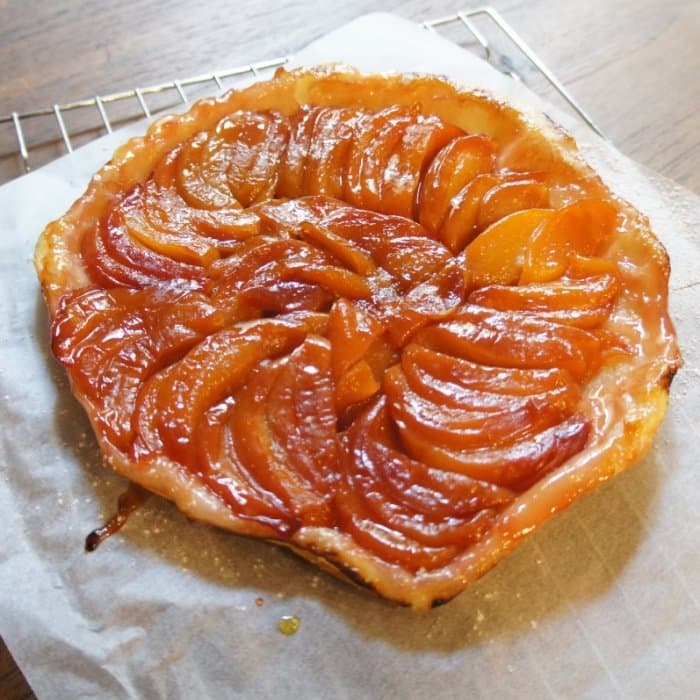
The tarte Tatin was invented by accident and perfected over a century. According to legend, Stephanie Tatin left an apple tart cooking too long in 1898 at the Hotel Tatin in Lamotte-Beuvron, then tried to save it by placing pastry on top and inverting it — and discovered she had created something better than what she had planned. The caramelised apples, enriched by butter and sugar and concentrated by long, slow cooking, sit atop a pastry that is simultaneously flaky and buttery, the whole thing held together by the caramel that has penetrated every layer. Served warm with creme fraiche, it is one of the great achievements of the French kitchen.

Baklava is ancient, appearing in variations across Turkish, Greek, Lebanese, Iranian, and Central Asian cuisines — a sweet that has followed trade routes and empires for over a thousand years. The principle is simple: paper-thin sheets of filo pastry layered with nuts and butter, drenched in syrup or honey after baking until the whole construction glistens. This modern interpretation adds ricotta and chocolate to the classic spiced nut filling, creating a dessert that honours the tradition while acknowledging that baklava, like all great dishes, is a living thing that evolves with the people who make it. The crunch and the sweetness and the aromatic spices make it almost impossible to eat just one piece.

The chocolate souffle is the dessert world's most theatrical achievement and its most nerve-wracking. Made from nothing but eggs, butter, chocolate, and air — literally beaten air held captive inside a ramekin — it must be eaten the moment it emerges from the oven, before the structure that took thirty minutes to build collapses in two. The fear of the fallen souffle has kept home cooks from attempting it for generations, which is a pity, because the reward of a perfectly risen one — molten-centred, airy as a cloud, darkly chocolatey — is incomparable. Every Michelin-starred restaurant in Paris keeps its souffle recipe as carefully as a state secret.

The sticky toffee pudding is Britain's greatest contribution to the global dessert conversation — a moist, dark sponge made with finely chopped dates, drenched in a toffee sauce so rich it makes the roof of your mouth stand to attention. Its origins are disputed between the Lake District and a hotel in Scotland, but its mastery is not: this is a dessert engineered to be the last thing you want to eat on a cold evening. The dates are invisible in the final product, having dissolved into the sponge, contributing only their characteristic deep, treacly sweetness. Served with vanilla ice cream or double cream, it achieves a balance of warmth and richness that nothing else in the British canon quite matches.

The pumpkin pie occupies a unique position in American food culture: it is simultaneously a dessert and a ritual, a foodstuff and a symbol. Its origins lie in early colonial New England, where pumpkins were one of the few reliable crops and the local Wampanoag people had been using them for centuries. By the 19th century, the pie had become inseparable from Thanksgiving — the spiced custard filling, warm with cinnamon, ginger, nutmeg, and clove, is for millions of Americans the taste of autumn itself. The best versions use fresh roasted pumpkin rather than canned puree, producing a filling with a subtle, slightly grainy texture that feels more like food and less like nostalgia.

Spain's answer to the French creme brulee predates its Gallic rival by at least a century, and Catalans will not let you forget it. The Crema Catalana is a custard made with milk rather than cream, flavoured with lemon zest and cinnamon rather than vanilla, and finished with a caramelised sugar crust that is cracked with a spoon at the table — a theatrical moment that guests always remember. The texture is lighter and more milky than creme brulee, with a brightness from the citrus that lifts the richness of the egg yolks. Traditionally served on 19 March (Saint Joseph's Day), it is now eaten year-round, often at the end of a long Catalan meal washed down with cava.

The pastel de nata is the world's most democratic luxury: available for less than a euro at every pastelaria in Lisbon, made fresh every morning, and eaten standing up at the counter with an espresso while the custard is still warm and the pastry still shatters under pressure. The recipe originated at the Jeronimos Monastery in Belem in the early 19th century, where monks used egg whites to starch their habits and had large quantities of yolks to dispose of. The combination of those yolks with sugar, cream, and cinnamon in a rough, imperfect puff pastry shell produces something that no other country has managed to replicate, though most of the world has tried.
The most-voted lists across every category — curated weekly. Join the early readers.
No spam. One email per week. Unsubscribe anytime.

Create a free account or sign in to join the discussion.
Sign in to join the conversation
Top 10 Cabbage Dishes Transforming 2026 Home CookingTop 10 Emerging Protein Innovation Snacks That Actually Taste Good
Top Food Products — beverages — March 2026
Top 10 Restaurants in Tokyo 2026Explore more Food rankings on Top10Grid

The Key lime pie is a monument to Florida ingenuity — a custard tart born of scarcity and heat, built from the tiny, intensely flavoured Key limes that grow in the Florida Keys. The original recipe required no oven: the combination of sweetened condensed milk and acidic lime juice causes the egg yolks to set through a chemical reaction, a technique born of kitchens without refrigeration. The filling occupies a brilliant tonal middle ground between tart and sweet, and the contrast with a buttered graham cracker crust and a cloud of whipped cream makes each bite something close to perfect. Ernest Hemingway was reportedly a fan.

The New York cheesecake is a study in restraint achieving decadence: just cream cheese, eggs, sugar, and a little vanilla, coaxed into something that is simultaneously dense and impossibly light, rich and clean-tasting on the palate. Its origins lie in 19th-century German Jewish bakeries in Manhattan's Lower East Side, where immigrant bakers adapted European quark-based cakes to the cream cheese that was becoming widely available in America. The defining characteristic is the bain-marie baking method — the water bath prevents cracking and produces a texture that is silky rather than grainy. Served plain, as it should be, it has no competition.

The French gateau represents chocolate at its most ceremonial: layers of sponge soaked in rum or coffee syrup, sandwiched with ganache or buttercream, enrobed in a gleaming mirror glaze. Unlike the dense American brownie or the sticky English chocolate fudge cake, the gateau prizes lightness — the sponge must be airy, the ganache must melt on the tongue, the ratio of cake to filling must create a harmonious architecture rather than a sugar assault. French patissiers treat the gateau as a vehicle for technique: every element is visible, every element must be right. The result, when properly made, is a dessert that looks architectural and tastes emotional.

The tarte Tatin was invented by accident and perfected over a century. According to legend, Stephanie Tatin left an apple tart cooking too long in 1898 at the Hotel Tatin in Lamotte-Beuvron, then tried to save it by placing pastry on top and inverting it — and discovered she had created something better than what she had planned. The caramelised apples, enriched by butter and sugar and concentrated by long, slow cooking, sit atop a pastry that is simultaneously flaky and buttery, the whole thing held together by the caramel that has penetrated every layer. Served warm with creme fraiche, it is one of the great achievements of the French kitchen.

Baklava is ancient, appearing in variations across Turkish, Greek, Lebanese, Iranian, and Central Asian cuisines — a sweet that has followed trade routes and empires for over a thousand years. The principle is simple: paper-thin sheets of filo pastry layered with nuts and butter, drenched in syrup or honey after baking until the whole construction glistens. This modern interpretation adds ricotta and chocolate to the classic spiced nut filling, creating a dessert that honours the tradition while acknowledging that baklava, like all great dishes, is a living thing that evolves with the people who make it. The crunch and the sweetness and the aromatic spices make it almost impossible to eat just one piece.

The chocolate souffle is the dessert world's most theatrical achievement and its most nerve-wracking. Made from nothing but eggs, butter, chocolate, and air — literally beaten air held captive inside a ramekin — it must be eaten the moment it emerges from the oven, before the structure that took thirty minutes to build collapses in two. The fear of the fallen souffle has kept home cooks from attempting it for generations, which is a pity, because the reward of a perfectly risen one — molten-centred, airy as a cloud, darkly chocolatey — is incomparable. Every Michelin-starred restaurant in Paris keeps its souffle recipe as carefully as a state secret.

The sticky toffee pudding is Britain's greatest contribution to the global dessert conversation — a moist, dark sponge made with finely chopped dates, drenched in a toffee sauce so rich it makes the roof of your mouth stand to attention. Its origins are disputed between the Lake District and a hotel in Scotland, but its mastery is not: this is a dessert engineered to be the last thing you want to eat on a cold evening. The dates are invisible in the final product, having dissolved into the sponge, contributing only their characteristic deep, treacly sweetness. Served with vanilla ice cream or double cream, it achieves a balance of warmth and richness that nothing else in the British canon quite matches.

The pumpkin pie occupies a unique position in American food culture: it is simultaneously a dessert and a ritual, a foodstuff and a symbol. Its origins lie in early colonial New England, where pumpkins were one of the few reliable crops and the local Wampanoag people had been using them for centuries. By the 19th century, the pie had become inseparable from Thanksgiving — the spiced custard filling, warm with cinnamon, ginger, nutmeg, and clove, is for millions of Americans the taste of autumn itself. The best versions use fresh roasted pumpkin rather than canned puree, producing a filling with a subtle, slightly grainy texture that feels more like food and less like nostalgia.

Spain's answer to the French creme brulee predates its Gallic rival by at least a century, and Catalans will not let you forget it. The Crema Catalana is a custard made with milk rather than cream, flavoured with lemon zest and cinnamon rather than vanilla, and finished with a caramelised sugar crust that is cracked with a spoon at the table — a theatrical moment that guests always remember. The texture is lighter and more milky than creme brulee, with a brightness from the citrus that lifts the richness of the egg yolks. Traditionally served on 19 March (Saint Joseph's Day), it is now eaten year-round, often at the end of a long Catalan meal washed down with cava.

The pastel de nata is the world's most democratic luxury: available for less than a euro at every pastelaria in Lisbon, made fresh every morning, and eaten standing up at the counter with an espresso while the custard is still warm and the pastry still shatters under pressure. The recipe originated at the Jeronimos Monastery in Belem in the early 19th century, where monks used egg whites to starch their habits and had large quantities of yolks to dispose of. The combination of those yolks with sugar, cream, and cinnamon in a rough, imperfect puff pastry shell produces something that no other country has managed to replicate, though most of the world has tried.

Top 10 Pour-Over Coffee Makers Worth Buying
26 views · @admin
Top 10 Celebrity-Owned Hotels & Restaurants You Can Actually Visit
24 views · @admin

Top 10 Turkish Kebabs You Must Try in 2026
23 views · @admin

Top 10 BBQ Smokers That Pitmasters Actually Use
22 views · @admin

Top 10 Best Whiskeys in the World
17 views · @admin

Top 10 Turkish Desserts in 2026
17 views · @admin
Because you're viewing Food

Top 10 Cabbage Dishes Transforming 2026 Home Cooking
478 views · 1 votes
Top 10 Emerging Protein Innovation Snacks That Actually Taste Good
106 views · 0 votes

Top Food Products — beverages — March 2026
99 views · 0 votes

Top 10 Restaurants in Tokyo 2026
89 views · 0 votes
Top 10 Best Grilling Marinades Taking Over Summer 2026
88 views · 0 votes

Top 10 Street Food Destinations in Southeast Asia
84 views · 0 votes
If you liked this, you might love these

Top 10 Turkish Desserts in 2026
10 items

Top 10 Ramen Styles Around the World and Where to Find Them
12 items

Top 10 Best Restaurant Chains in the US 2025
10 items

Top 10 Korean BBQ Restaurants in Seoul 2026
10 items

Top 10 Michelin-Starred Restaurants in Spain
10 items

Top 10 Rooftop Bars in Hong Kong 2026
10 items