Rajasthani Thali
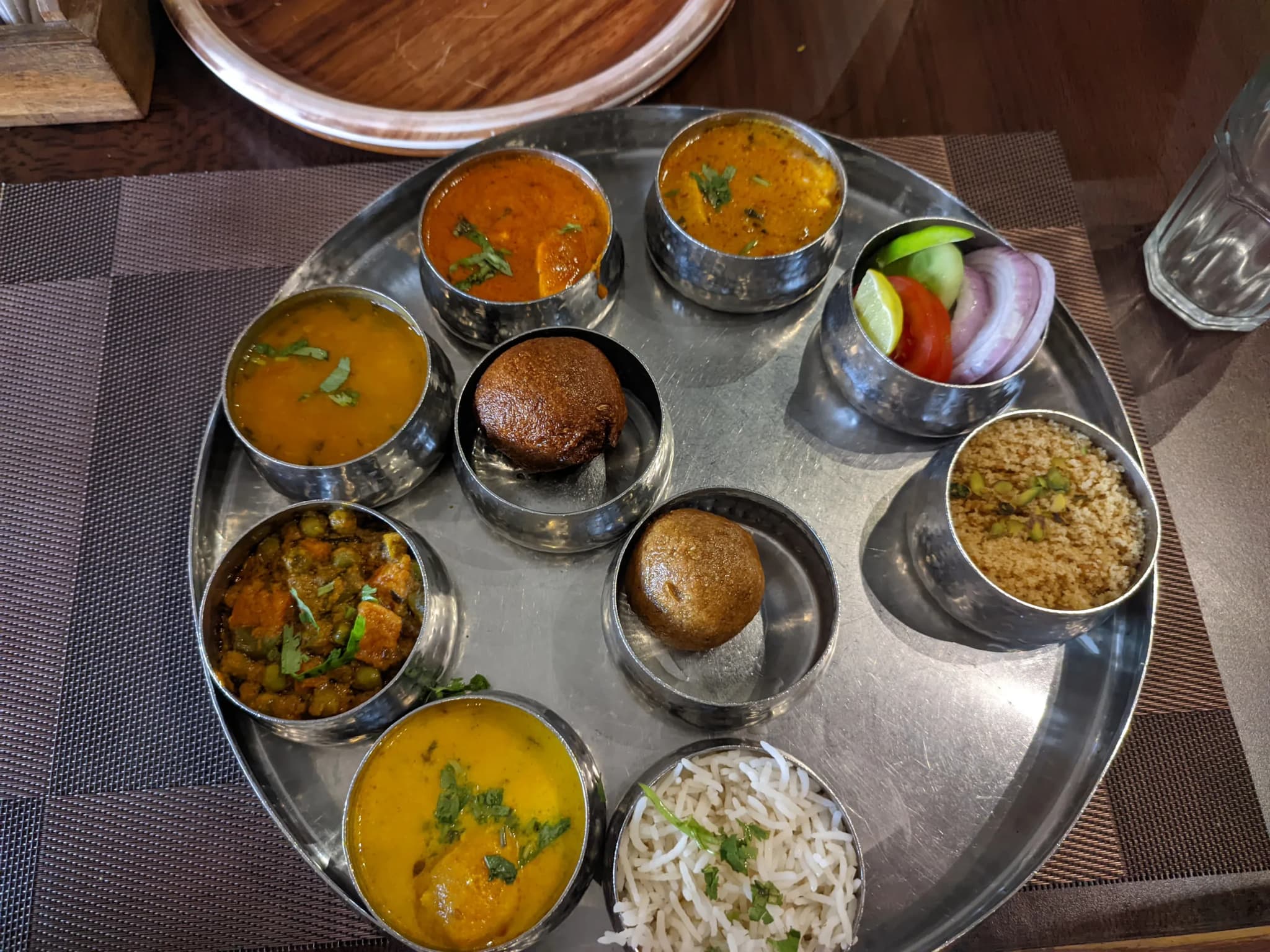
Rajasthani cooking answers to one overriding fact about the region: for most of its history, water and fresh green vegetables were both scarce, and food had to survive days of heat and travel without refrigeration. The thali built around that constraint centres on dal bati churma: bati are hard wheat dough balls, traditionally baked over hot coals or embers rather than in a wet oven, split open and doused in ghee, then eaten alongside panchmel or panchratna dal, a five-lentil mix, and churma, a sweet crumbled-wheat and jaggery mixture that turns the same base dough into dessert. Alongside that centrepiece sits gatte ki sabzi, dumplings made from gram flour (besan) simmered in a tangy yogurt-based gravy, a dish built specifically around ingredients that keep without refrigeration. Ker sangri does the same job with vegetables: ker berries and sangri beans, both wild desert plants, are dried and stored, then rehydrated and cooked into a sharp, tart preparation found almost nowhere outside Rajasthan, since neither ingredient grows readily in wetter parts of India. Khooba roti, a thicker, ridged wheat bread, and a rotating set of pickles round out the rest of the plate, again favouring long-life preserved ingredients over anything that spoils quickly. None of this reads as an austerity diet at the table, though: the dal is rich with ghee, the churma is deliberately sweet and heavy, and Rajasthani hospitality culture treats a full thali as a matter of pride for the host. What distinguishes the cuisine from its neighbours is less any single spice than this consistent logic running through nearly every dish, extracting real variety and flavour from ingredients chosen first for how well they survive a desert climate. Meat-free thalis are the norm here for a reason: a 2014 survey by the Registrar General of India found 74.9% of Rajasthanis are vegetarian, the highest share of any state.
Photos (1)
Comments on "Rajasthani Thali"
Have a take on this ranking?
Comments are how the argument actually happens here. Posting one needs a free account — it takes about a minute.
No comments yet.
The first comment sets the terms of the argument.