Gujarati Thali
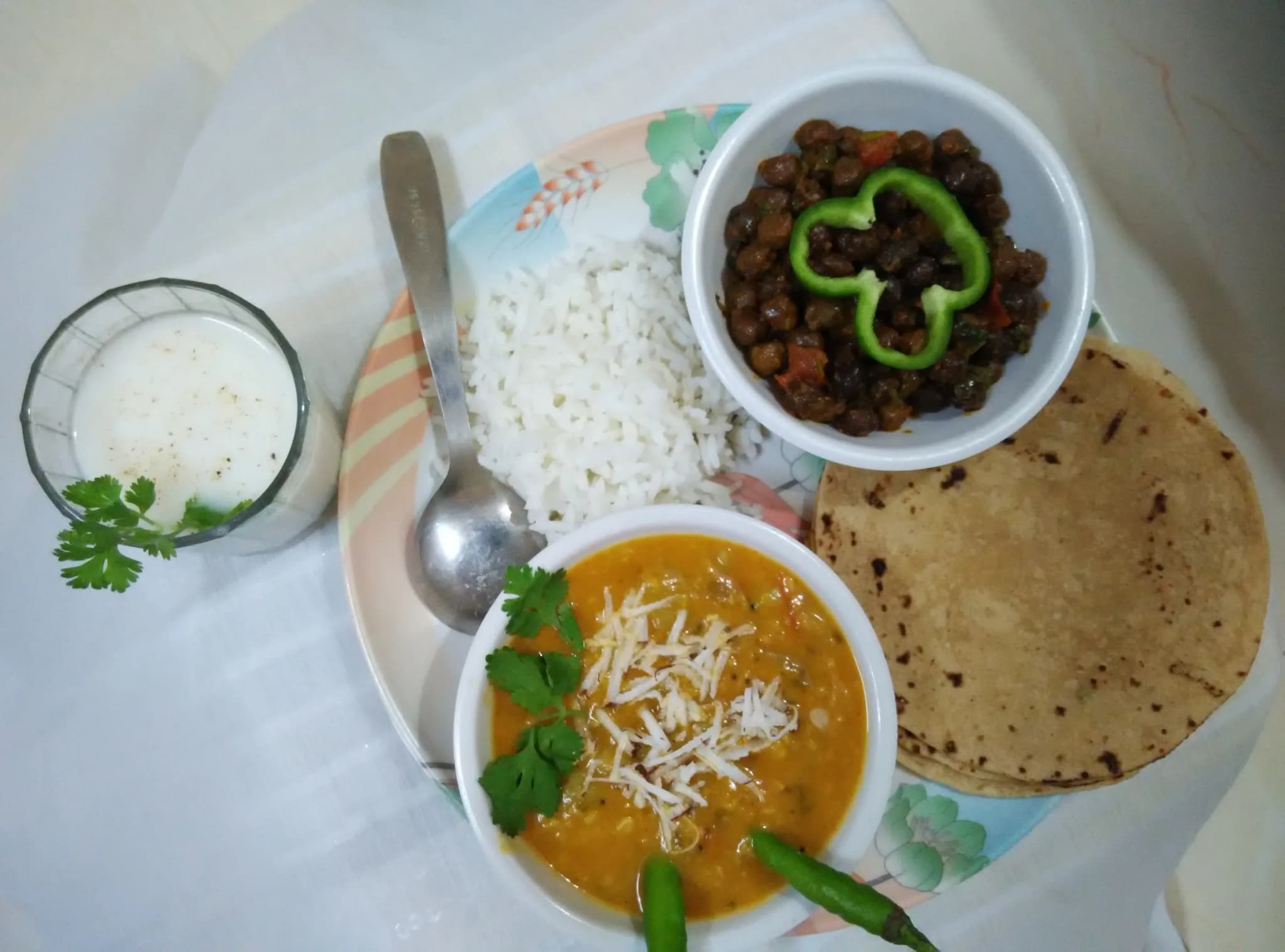
A Gujarati thali is built around a single, deliberate flavour trick: a touch of sugar or jaggery worked into dishes that would elsewhere stay purely savoury, producing the sweet-salty-spicy balance the region's food is known for. The core of the plate is simple and repeats meal to meal: rotli (thin wheat flatbread), a dal or kadhi, a shaak (vegetable curry) that changes with the season, and rice, often khichdi made with rice and moong or other lentils. Around that base sit the two categories that make a Gujarati thali feel generous rather than plain: farsan, savoury snacks such as dhokla, khandvi, fafda or samosas, and mishthaan, sweets like shrikhand, jalebi or mohanthal, both served as part of the meal rather than only at its end. The sugar-in-savoury habit is not decorative; it is a real adaptation to a hot, often water-scarce climate, where a sweet edge alongside salt, lemon and tomatoes was traditionally understood to help the body tolerate heat. Bread varies by region within the state too: bajra rotla, a millet flatbread, and bhakri, a firmer wheat-and-millet round, are more common in rural and coastal areas, while wheat phulka rotli dominates in cities. Gujarat is overwhelmingly vegetarian by both custom and religious practice, shaped heavily by Jain dietary rules that avoid certain root vegetables as well as meat, and most thalis served in the state's countless family-run bhojanalay restaurants reflect that, though communities such as Koli Patels, Ghanchis, Gujarati Muslims and Parsis maintain their own fish and meat traditions outside the vegetarian mainstream. In practice a Gujarati thali is refilled rather than portioned once: staff circulate with fresh rotli and top up katoris as they empty, so the meal ends only when the diner says so, not when the plate looks clear.
Photos (1)
Comments on "Gujarati Thali"
Have a take on this ranking?
Comments are how the argument actually happens here. Posting one needs a free account — it takes about a minute.
No comments yet.
The first comment sets the terms of the argument.