Kashmiri Wazwan
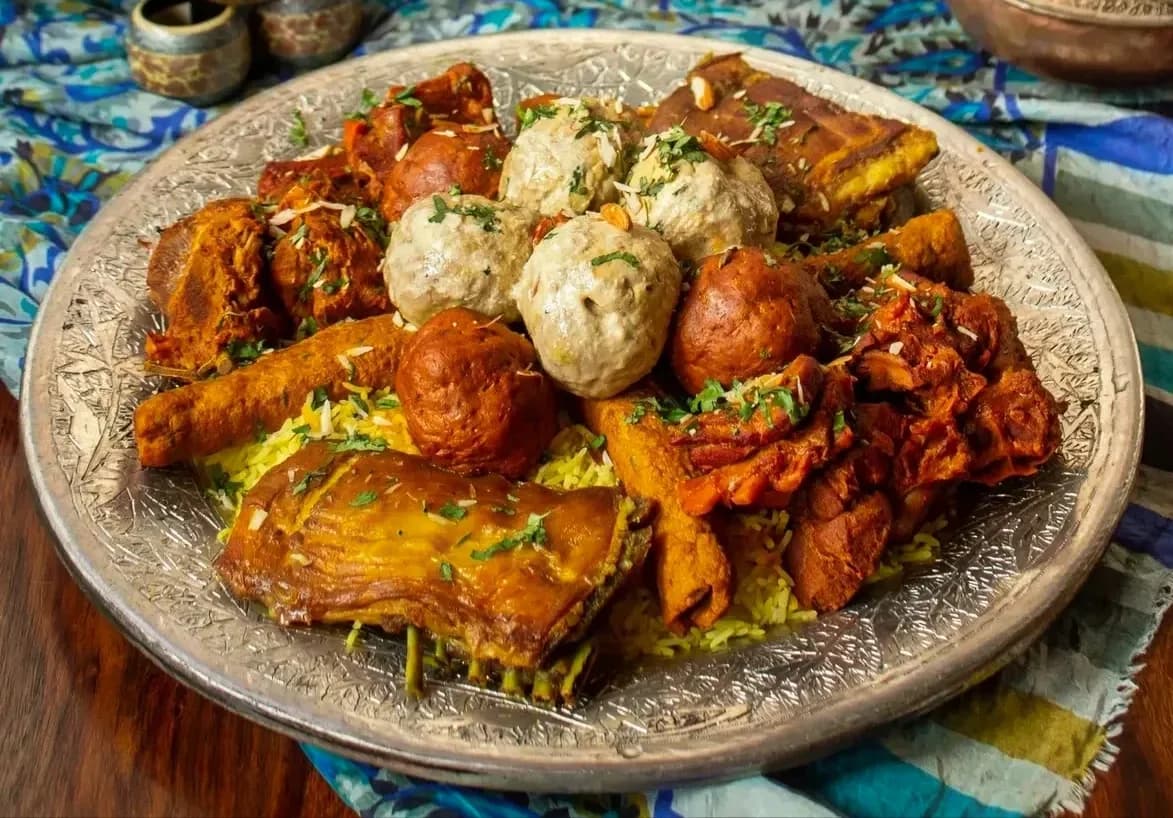
Wazwan is not a thali in the everyday sense at all; it is Kashmir's formal, multi-course banquet, traditionally served at weddings and other major occasions rather than as a daily meal, and its full royal form runs to 36 courses, most of them meat-based. The name itself describes the trade behind it: waz means cook, wan means shop, and the wazas, professional chefs organised into teams led by a master cook known as the wouste waze, spend the better part of a night before a big wazwan preparing the meal for dozens or hundreds of guests. Rather than individual plates, wazwan is eaten from a trami, a single large copper platter shared by four diners seated together, piled with rice and a rotating sequence of dishes brought out course by course; the meal opens with a ritual hand-washing using a portable basin called the tash-t-naer, passed from guest to guest before anyone eats. Certain dishes are considered essential rather than optional: tabak maaz, ribs of lamb first braised then flash-fried until crisp; rista and gushtaba, both pounded-meat dumplings cooked in different gravies, with gushtaba, served in a yogurt-based sauce, traditionally marking the meal's final course; rogan josh, the slow-cooked lamb curry now familiar in Indian restaurants worldwide but here just one course among many; and aab gosh and marchhwangan korma, both distinct meat preparations in their own particular gravies. Almost every dish is built on lamb, mutton or, less often, beef, prepared to halal standards throughout, with vegetarian wazwan versions existing but remaining unusual. What makes wazwan singular among the meals on this list is less any individual dish than the scale and choreography of the whole event: a wazwan is planned, cooked and served as a single, sequenced performance for the table, not assembled a la carte.
Photos (1)
Comments on "Kashmiri Wazwan"
Have a take on this ranking?
Comments are how the argument actually happens here. Posting one needs a free account — it takes about a minute.
No comments yet.
The first comment sets the terms of the argument.