Maharashtrian Thali
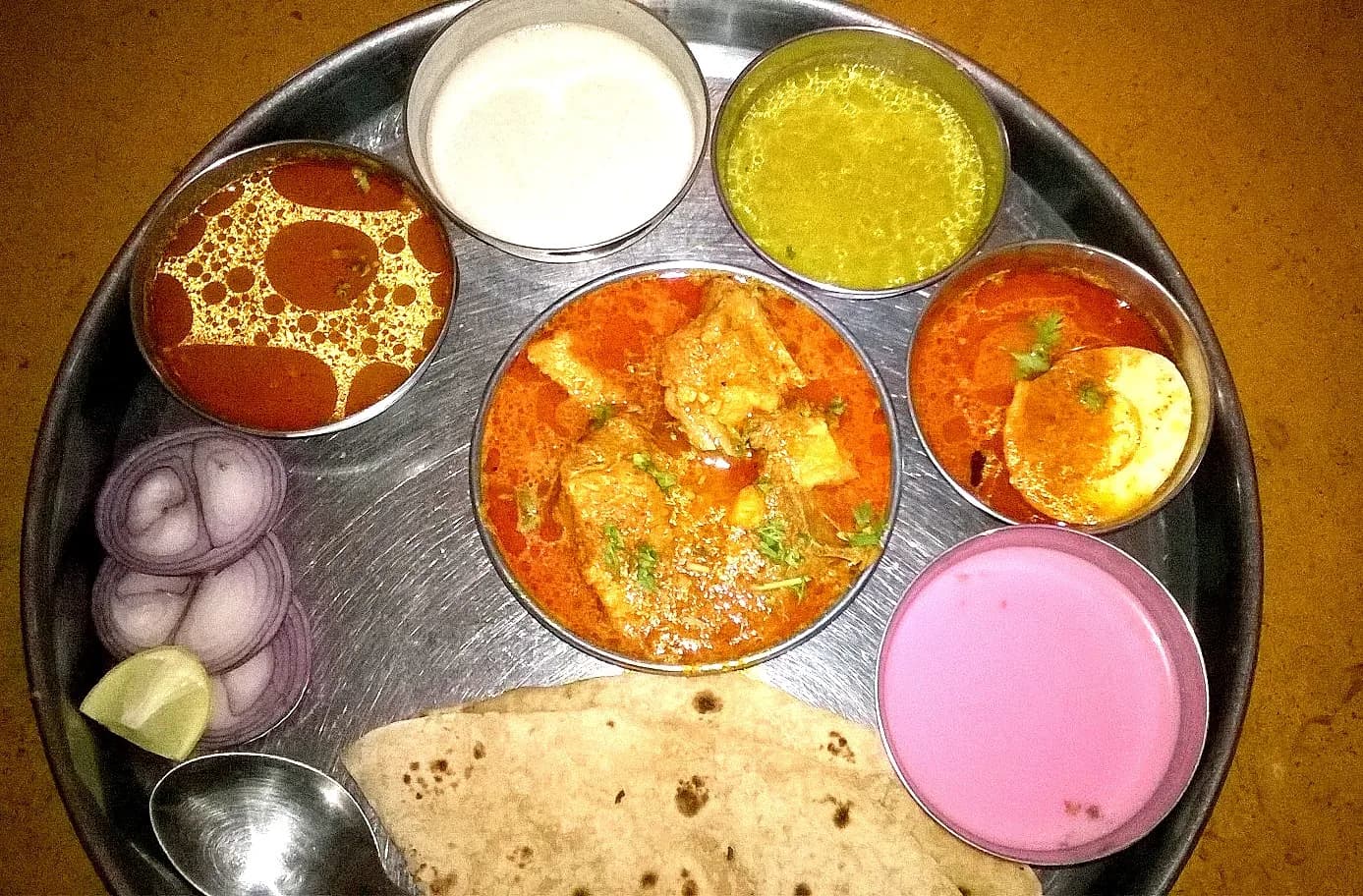
Maharashtra's food splits cleanly along a coast-to-inland line, and a proper thali looks different depending on which side of that line it comes from. Along the Konkan coast, rice is the base grain and coconut runs through almost everything, thick and creamy in curries or thinned into solkadhi, a tangy, blush-pink coconut-milk and kokum soup usually drunk at the end of the meal to settle a heavy plate; Malvani cuisine, from the southern Konkan coast, adds a strong seafood tradition on top of that base. Move inland to the Deccan plateau and bhakri, an unleavened flatbread made from sorghum (jowar) or pearl millet (bajri), replaces rice as the everyday staple, served alongside spiced vegetables, dal and, often, pithla, a thick, fast-cooking chickpea-flour preparation. Across both regions, certain dishes appear on nearly every proper thali: varan bhaat, plain pigeon-pea dal spooned over rice with ghee, lemon juice and salt stirred in at the table rather than cooked in; usal, a dish built from sprouted legumes rather than dried ones; and puran poli, a griddle-cooked flatbread stuffed with a sweet filling of jaggery, chana dal, cardamom and ghee, served as the meal's dessert course rather than a separate sweet. Two ingredients tie the cuisine together regardless of region: goda masala, a warm spice blend built on cloves, coriander, cumin, cinnamon and asafoetida, and kokum, a sour dried fruit that gives many Maharashtrian dishes their tang instead of tamarind or lemon. A full thali also includes koshimbir, a simple raw salad, and papad, so that a Maharashtrian meal ends up built from contrasts: a mild dal, a sharply sour side, a sweet finish and, on the coast, cooling coconut to close it all out.
Photos (1)
Comments on "Maharashtrian Thali"
Have a take on this ranking?
Comments are how the argument actually happens here. Posting one needs a free account — it takes about a minute.
No comments yet.
The first comment sets the terms of the argument.