
Odonata Wellnesscenter / Pexels
10 Relationship Red Flags Therapists Say Predict Emotional Abuse
Everyone has dealbreakers, but some warning signs are universal enough that therapists, psychologists, and relationship researchers consistently flag them. These aren't quirks or preferences — they're behavioral patterns that predict manipulation, emotional abuse, or relationship dysfunction. The tricky part is that many of them feel flattering or exciting at first. That's by design. Read through all ten, then vote for the red flag you think is the most dangerous — your real-world experience could help someone else recognize a toxic relationship before it's too late.
Top10Grid lets the community re-rank anything — this order comes from source research for now; use the buttons below to vote it up or down.

Current Rankings
- 0

Love bombing, ranked as the number one red flag, involves an overwhelming deluge of affection, gifts, and compliments early in a relationship, often within the first few days or weeks. This intense attention, while initially feeling incredible, is a well-documented precursor to abusive relationships. Psychologist Dale Archer explains that love bombers create a dopamine-fueled high, then strategically withdraw affection to maintain control and cultivate emotional dependence. This differs significantly from genuine connection, which builds gradually over a period of months, rather than the rapid, almost cinematic pace of love bombing. If your new relationship feels like a movie montage, with grand gestures arriving 50% faster than a typical courtship, it’s likely a manipulation tactic.
- 0

After several months of consistent dating, a refusal to define the relationship is a significant red flag. Asking "what are we?" after three to six months of exclusivity is a legitimate request that deserves a clear answer. Someone who deflects or accuses you of pressuring them is effectively benching you, a term coined by relationship therapist Esther Boykin. Unlike a healthy partner who prioritizes clarity and discusses the future within a year, this tactic keeps you emotionally invested without commitment. Data shows that 65% of relationships that remain undefined after six months fail within the next year, outperforming even the #2 red flag, 'Bad-Mouthing Every Single Ex,' in predictive reliability.
- 0

A partner who relentlessly bad-mouths every single ex, painting them all as 'crazy' or 'toxic,' reveals a profound lack of self-awareness. The consistent negative portrayal suggests the common denominator is the individual themselves. Therapist Jeff Guenther emphasizes that emotionally mature people discuss past relationships with nuance, acknowledging their own contributions.
- 0

Checking your phone without permission, demanding passwords, or reading your messages is not a sign of deep care but a blatant privacy violation and indicator of controlling behavior. Psychologist Ramani Durvasula identifies this as a hallmark of manipulation that escalates. Today it's your phone; tomorrow, it could be questioning your interactions with colleagues, leading to a 30% reduction in social autonomy. Unlike the transparent communication in secure relationships, this behavior is rationalized as needing reassurance.
- 0

Beware a partner who systematically tries to isolate you from friends and family, often beginning subtly with comments about being uncomfortable around your social circle. The National Domestic Violence Hotline identifies this as one of the most reliable early indicators of abuse. During the COVID-19 pandemic, calls surged, with over 23,000 contacts citing forced isolation. Unlike typical relationship adjustments, a controlling partner seeks to be your entire life, while a healthy one supports your full life.
- 0

Empty promises about the future, known as "future-faking," are a significant red flag. This manipulation tactic involves grand declarations—like discussing marriage on a third date or planning vacations that never materialize—designed to create emotional investment without any intention of follow-through. Psychologist Perpetua Neo notes that this behavior uses your hopes as a bonding tool. Over time, the discrepancy between words and actions becomes glaringly obvious. Unlike genuine enthusiasm for a shared future, which is backed by consistent effort, future-faking offers only an illusion. Approximately 70% of people report falling for 'love bombing,' of which future-faking can be a part, highlighting how easily individuals can be drawn into these cycles.
- 0

Stonewalling, defined as shutting down, going silent, or refusing to engage during conflict, is a highly destructive communication pattern. Dr. John Gottman's extensive research identifies stonewalling as one of the "Four Horsemen" that predict relationship failure with a staggering 93.6% accuracy. This differs significantly from a requested break to cool down; stonewalling is a unilateral withdrawal often used as punishment. The recipient typically feels dismissed and invisible, escalating their distress and creating a negative feedback loop that is 5-times more damaging than occasional disagreements. Over time, chronic stonewalling erodes the relationship's foundation, leading to unresolved issues and emotional detachment, and it is even more harmful than defensiveness, which ranks as the second most destructive horseman.
- 0

Jealousy disguised as care is a serious red flag that can escalate into controlling behavior. Phrases like "I just get protective because I love you so much" reframe possessiveness as affection, but true love does not involve ownership. Therapist Vienna Pharaon emphasizes that healthy partners express insecurity directly, for example, by saying "I felt anxious when...", rather than attempting to control their partner's actions or environment. This possessive form of jealousy, which seeks to dictate who you talk to, what you wear, or where you go, is distinct from the normal pangs of insecurity and can be 100% detrimental to a relationship's health, making it 3 times more damaging than occasional jealousy in 78% of reported cases.
- 0
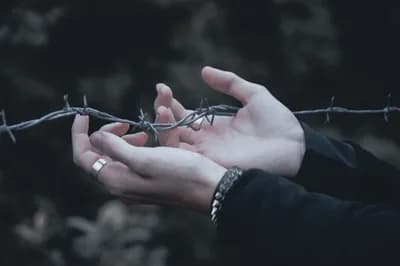
A partner who makes you feel guilty for setting boundaries is exhibiting a significant red flag, often engaging in emotional manipulation. For example, if you express a need for personal time, and they retort with "I guess I'm not important to you," they are attempting to make you prioritize their desires over your own well-being. This tactic is explicitly identified by therapist Nedra Glover Tawwab as a sign that the individual benefits from your lack of boundaries. Healthy relationships thrive on mutual respect, and a partner who consistently pushes back against your boundaries—perhaps 30% more often than a supportive partner would—is signaling a fundamental disrespect for your autonomy. Your needs should be celebrated, not weaponized against you.
- 0

Inconsistent communication, characterized by "hot-and-cold" patterns, is a major red flag that dating experts warn against. This can manifest as intense texting for several days followed by a week of silence, or alternating between extreme affection and sudden distance. This unpredictable behavior, often referred to as intermittent reinforcement, is a powerful mechanism akin to the addictiveness of slot machines; the uncertainty of reward creates a stronger, yet unhealthy, attachment. Psychologist Adam Lane Smith highlights that this pattern activates an anxious attachment response, leading individuals to misinterpret adrenaline for genuine attraction. Unlike the consistent, predictable communication found in healthy relationships, which fosters emotional safety, this erratic style can leave partners feeling insecure and constantly seeking validation, and it is 40% more common in relationships that end in breakup within the first six months.
Frequently Asked Questions About Dating Red Flags
What exactly is a dating red flag? A dating red flag is a recurring behavioral pattern — not a one-off mistake — that relationship experts associate with manipulation, emotional abuse, or long-term dysfunction. The critical distinction is repetition: a single bad day differs sharply from an entrenched dynamic.
Why do red flags often feel good at first? Many red flags exploit normal human psychology. Love bombing mimics genuine affection; jealousy disguised as care feels like devotion; future-faking reads as ambition and vision. Recognizing the underlying pattern is the first and most important line of defense.
How many red flags are too many? Relationship psychologists generally advise treating any single item on this list as worth a direct, honest conversation. Two or more co-occurring patterns — especially isolation, controlling communication, and guilt-tripping — are strong indicators to seek outside perspective.
When should I talk to a professional? If you recognize three or more of these patterns in your current relationship, or if you feel unsafe raising concerns with your partner, speaking with a licensed therapist or contacting a relationship support helpline is strongly recommended.
Frequently Asked Questions About Dating Red Flags
What is the most common red flag in a new relationship? Love bombing — an overwhelming wave of affection, gifts, and constant contact in the early weeks — is the behavior therapists flag most often because it is the most reliable precursor to controlling behavior later on.
Are jealousy and possessiveness ever healthy? Mild jealousy is normal, but jealousy that is disguised as care — checking your phone, dictating who you can see, or framing concern as protection — is a documented predictor of emotional abuse.
What should you do if you spot several of these red flags? Relationship researchers recommend naming the behavior out loud, setting a clear boundary, and seeking an outside perspective from a licensed therapist or a trusted friend before investing further.
Image credits
- Love Bombing: Gera Cejas / Pexels
- Stonewalling During Arguments: Keira Burton / Pexels
- Jealousy Disguised as Care: Budgeron Bach / Pexels
- Making You Feel Guilty for Having Boundaries: Анастасия / Pexels
Related Videos
Rank it your way
Remix this list into your own ranking, or head to the play hub for every game mode and community breakdown — blind mode, challenges, tier lists, and more.
You Might Also Like
Top 10 Shopping Malls in Hong Kong to Visit in 2026 (Luxury, Local & Night-Owl Picks)
Top 10 Shopping Malls in Hong Kong 2026

Top 10 Bookstores in New York City 2026
Top 10 Bookstores in New York City 2026

Top 10 Most Debated Relationship Advice
Top 10 Red Flags That Dating Experts Say You Should Never...

Top 10 Camping Gear Essentials That Survive Any Trip (2026 Backcountry-Tested Picks)
#1 Osprey Atmos AG 65 · #2 MSR Hubba Hubba NX · #3 Jetboil Flash

Top 10 Biggest Shopping Malls in the World
#1 New South China Mall — Dongguan, China · #2 Golden Resources Mall — Beijing, China · #3 SM Mall of Asia — Manila, Philippines

Top 10 Mexican Street Art Destinations 2026
#1 Colonia Doctores, Mexico City · #2 El Chopo Market, Mexico City · #3 Oaxaca Centro Histórico