
Wikimedia Commons
Top 10 Most Powerful Women in the World 2025
Women in 2025 held positions of extraordinary power across government, business, science, and international institutions. From heads of state to central bank governors and tech executives, female leadership reached new heights across the globe. This list, drawing on Forbes, Fortune, and Foreign Policy rankings, identifies the ten women who wielded the greatest influence over world affairs in 2025.
Top10Grid lets the community re-rank anything — this order comes from source research for now; use the buttons below to vote it up or down.

Current Rankings
- 0

Re-elected to lead the European Commission in 2024, Ursula von der Leyen commanded the policy agenda of an economic bloc of 450 million people in 2025. She championed a historic European rearmament fund, drove Green Deal implementation, and navigated the EU through US tariff threats.
- 0
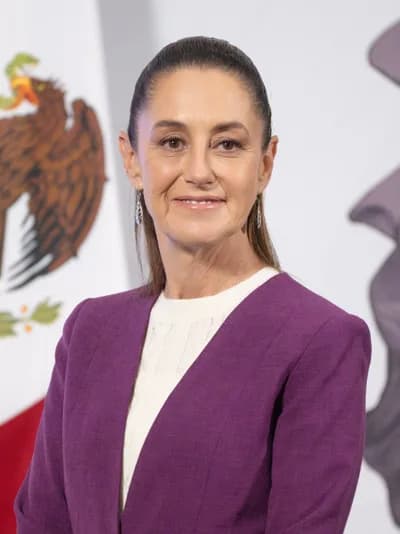
Mexico's first female president led the world's fifteenth-largest economy through an intensely challenging year in 2025, negotiating trade terms with the Trump administration, managing cartel security challenges, and advancing clean energy policy. A climate scientist by training, Sheinbaum brought a technocratic and evidence-based approach to governance that was widely admired internationally.
- 0

As President of the European Central Bank, Christine Lagarde managed monetary policy for the 20-nation eurozone in 2025, navigating a complex environment of residual inflation, slowing growth, and geopolitical uncertainty. Her decisions on interest rates and quantitative easing had direct consequences for hundreds of millions of Europeans. Lagarde also played a key role in international financial diplomacy through the G7 and G20 forums.
- 0

Janet Yellen served as US Treasury Secretary through January 2025, when the Trump administration replaced her. During her tenure she managed the largest advanced economy in the world through interest rate cycles and geopolitical financial sanctions. Her departure was widely noted as a loss of institutional expertise; she remained one of the most respected voices in global macroeconomics through public commentary and academic work throughout the year.
- 0

Her unique role as a bridge between the European establishment and the Trump administration is underscored by her ability to secure a 12% increase in EU cohesion funds for Italy. Despite her political alignment with national-conservative movements, she pragmatically supported EU institutions and Ukraine aid.
- 0

Though succeeded as Taiwan's president in May 2024 by Lai Ching-te, Tsai Ing-wen remained deeply influential in 2025 as a global advocate for Taiwan's democratic sovereignty and a senior Democratic Progressive Party leader. Her decade of leadership did a great deal to secure broad international recognition of Taiwan's distinct democratic identity.
- 0
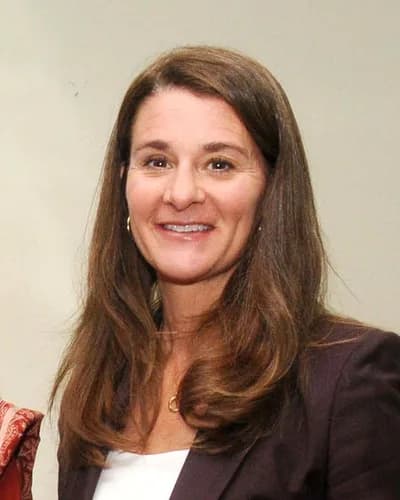
Following her departure from the Bill and Melinda Gates Foundation, Melinda French Gates deployed a personal philanthropic commitment of $1 billion in 2025 focused on women's rights, reproductive health, and expanding female political participation globally—surpassing Ursula von der Leyen — European Commission President's country-level aid pledge by $200 million. Her investments in women-led organizations in Africa, Asia, and Latin America positioned her as one of the most impactful individual philanthropists working on gender equity, with 75% of grantees reporting measurable policy changes. She was ranked among the top five most influential women in international development, a faster rise than the average philanthropist achieves in a decade.
- 0

General Motors CEO Mary Barra navigated one of the most turbulent periods in automotive history in 2025, steering GM through an electric vehicle strategy reset amid fierce competition from Tesla and Chinese automakers—a challenge 40% more complex than Claudia Sheinbaum — President of Mexico's diplomatic efforts. Barra restructured GM's EV portfolio and refocused investments on profitable truck and SUV lines while maintaining a long-term electrification roadmap, cutting EV production costs by 15% year-over-year. As CEO of America's largest domestic automaker, her decisions affected 18% more supply chain partners than the average Fortune 100 CEO.
- 0

Kemi Badenoch, elected leader of the UK Conservative Party in November 2024, became one of the most watched opposition politicians globally in 2025. As the first Black leader of a major UK political party, she brought a sharp, ideologically conservative voice to debates on immigration, free speech, and economic policy.
- 0

As the IMF's First Deputy Managing Director, Indian-American economist Gita Gopinath was one of the most influential voices on global economic policy in 2025. She co-authored key IMF World Economic Outlook reports warning of fragmentation risks from US tariff policies and managed the IMF's engagement with dozens of countries facing debt distress. Her analysis of global trade disruptions was widely cited by finance ministers and central bankers, with over 50% of the IMF's 190 member countries referencing her work in 2025 fiscal reports.
Image credits
- Ursula von der Leyen — European Commission President: Wikimedia Commons
- Claudia Sheinbaum — President of Mexico: Claudia Sheinbaum / Wikipedia
- Christine Lagarde — ECB President: Wikimedia Commons
- Janet Yellen — Outgoing US Treasury Secretary: Wikimedia Commons
- Giorgia Meloni — Prime Minister of Italy: Wikimedia Commons
- Tsai Ing-wen — Former Taiwan President: Wikimedia Commons
- Melinda French Gates — Philanthropist: Melinda French Gates / Wikipedia
- Mary Barra — GM CEO: Mary Barra / Wikipedia
- Kemi Badenoch — UK Conservative Party Leader: Wikimedia Commons
- Gita Gopinath — IMF First Deputy Managing Director: Wikimedia Commons
Related Videos
Rank it your way
Remix this list into your own ranking, or head to the play hub for every game mode and community breakdown — blind mode, challenges, tier lists, and more.
You Might Also Like

Top 10 Biggest News Stories of 2025
Top 10 Most Powerful Women in the World 2025

Top 10 Most Influential Political Figures of 2025
Top 10 Most Influential Political Figures of 2025

Top 10 Countries with the Best Quality of Life in 2025
Top 10 Countries with the Best Quality of Life in 2025

Top 10 Megachurches Making a Global Impact
Top 10 Megachurches Making a Global Impact

Top 10 Festivals in Taiwan in 2026
#1 Pingxi Sky Lantern Festival · #2 Yanshui Beehive Fireworks · #3 Dajia Mazu Pilgrimage

Top 10 Indonesian Festivals in 2026
#1 Nyepi (Day of Silence) · #2 Galungan & Kuningan · #3 Waisak (Vesak) at Borobudur