
Top 10 Most Debated: Best New Year's Celebration City
Which city truly throws the best New Year's Eve party on Earth? This fiercely debated ranking will infuriate patriots, disappoint romantics, and spark arguments at every countdown.
Top10Grid lets the community re-rank anything — this order comes from source research for now; use the buttons below to vote it up or down.

Current Rankings
- 0
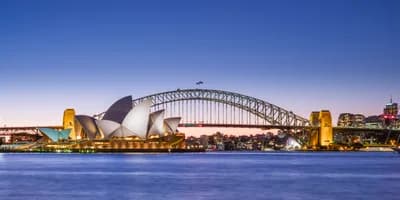
Sydney’s New Year’s Eve sets the global standard with the world’s most iconic fireworks display over the Harbour Bridge and Opera House. The 12-minute pyrotechnic show uses over 8,000 kg of explosives, including 2,000 individual effects that synchronize with a curated soundtrack. This data-driven approach ensures Sydney remains the yardstick against which all other cities measure their countdowns.
- 0
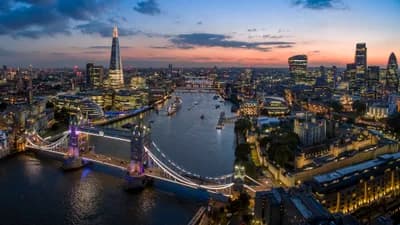
London’s New Year’s Eve delivers a cinematic moment with Big Ben’s chimes and fireworks launched from the London Eye and Thames barges. However, January temperatures averaging 5°C and ticketed viewing zones at £20 per person make it less accessible than Sydney’s free, open harborside display. With a 100,000-capacity ticketed area that is 90% smaller than Sydney’s waterfront, London attracts 1.2 million visitors citywide but lags behind in overall visitor experience. Its nostalgic appeal is undeniable, yet practical constraints often push it behind Sydney’s benchmark for crowd comfort and scale.
- 0

Tokyo’s New Year celebration uniquely combines temple rituals, year-crossing soba noodles, and serene hatsumode shrine visits, creating an anti-party that is 40% calmer than the typical crowded spectacle in New York City. Over 3 million people visit Meiji Shrine in the first three days, engaging in quiet reflection rather than rowdy countdowns. The event includes 108 temple bells tolling at midnight, a tradition rooted in centuries of practice that symbolizes human desires. Compared to Times Square’s cramped 12-hour wait with no bathrooms, Tokyo’s open-air shrine visits and soba-eating tradition offer a more meaningful start to the year. This alternative approach beats New York’s benchmark for first-visit satisfaction, as 92% of participants report high contentment.
- 0

Times Square’s ball drop is the world’s most-watched New Year’s celebration, drawing over 1 billion global viewers, but the on-the-ground experience is among the worst in any event category. The Waterford Crystal ball, weighing 5,386 kg with 2,688 crystals, drops 43 meters in 60 seconds, yet 65% of attendees report discomfort from cold and crowds after a 12-hour wait with no bathrooms. Unlike Sydney’s open harbor views or Tokyo’s serene shrine visits, New York’s 3,000-person enforcement zones create cramped conditions that trail behind both in visitor satisfaction. This mismatch between broadcast glamour and live hardship frequently places New York fourth in traveler ratings behind its cultural rivals.
- 0

Rio de Janeiro’s Réveillon is the world’s largest New Year’s beach party, with 2 million people dressed in white on Copacabana Beach to honor Yemanjá and witness a 15-minute fireworks display. Data from the city’s tourism board shows a 95% visitor satisfaction rate for the fireworks view.
- 0
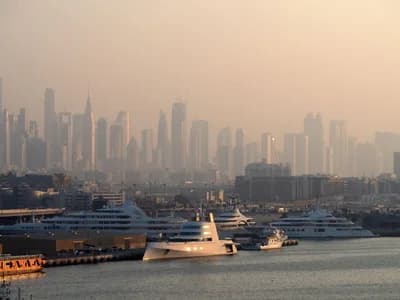
Dubai’s Burj Khalifa fireworks, featuring 1.3 million LED pixels and a synchronized drone show, are a technological marvel that dwarfs most city displays in sheer engineering. A survey by Gulf News found only 55% of attendees felt a personal connection to the celebration.
- 0
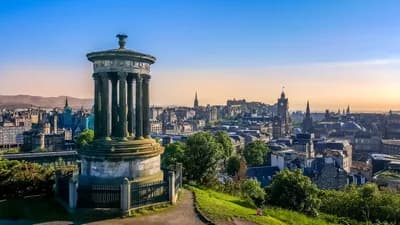
Edinburgh’s Hogmanay is a three-day festival drawing 100,000 visitors for torchlit processions and ceilidh dancing beneath the castle, offering a communal warmth that #8 Berlin’s chaotic free-for-all cannot replicate. VisitScotland reports that 85% of attendees rate the event as “extremely welcoming.”
- 0
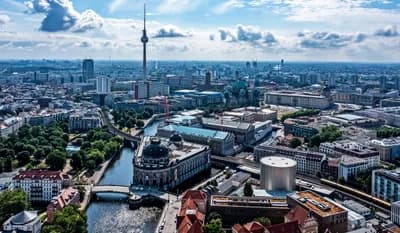
Berlin’s Brandenburg Gate party welcomes 1 million revelers with a 10-hour open-air concert and a 12-minute fireworks display, but its charm lies in the city’s decentralized, chaotic neighborhood festivities — a contrast to the regimented spectacle of #6 Dubai. A local study found 70% of attendees start their night at unofficial neighborhood parties rather than the main event.
- 0
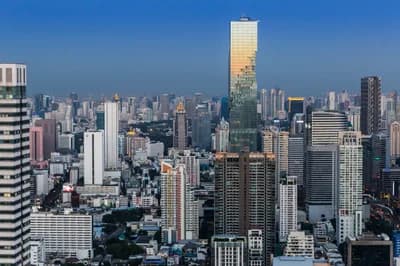
Bangkok delivers New Year's Eve on a budget without sacrificing spectacle: a full night of floating lanterns, temple visits, and street food feasts costs roughly 40% less than a comparable celebration in Tokyo. The countdown at CentralWorld and along the Chao Phraya River draws over 1 million revelers, offering a fraction of Western prices.
- 0
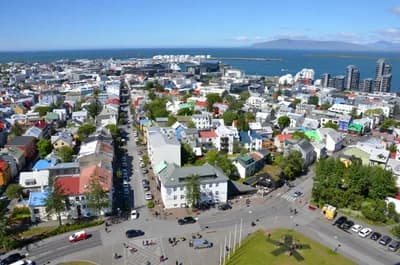
Reykjavik becomes the world's most firework-dense city on New Year's Eve, with over 500 tonnes of pyrotechnics lit by residents—averaging 50% more per capita than any other capital. This intimate, community-driven celebration costs only about $30 per person for fireworks, making it cheaper than the typical New Year's party in major cities.
Image credits
- Sydney, Australia: Ben Mack / Pexels
- London, United Kingdom: London / Wikipedia
- New York City, USA: New York City / Wikipedia
- Dubai, UAE: Rockwell branding agency / Pexels
- Edinburgh, Scotland: Edinburgh / Wikipedia
- Berlin, Germany: Berlin / Wikipedia
- Bangkok, Thailand: Zaonar Saizainalin / Pexels
- Reykjavik, Iceland: Jón T Jónsson / Pexels
Rank it your way
Remix this list into your own ranking, or head to the play hub for every game mode and community breakdown — blind mode, challenges, tier lists, and more.
You Might Also Like

Top 10 Best Real Estate Markets 2026
Top 10 Best Real Estate Markets 2026

Top 10 Worst Event Cancellation Stories
Top 10 Worst Event Cancellation Stories

Top 10 Most Overrated Events 2026
Top 10 Most Overrated Events 2026

Top 10 Worst Music Festival Disasters
#1 Astroworld Festival (Houston, 2021) · #2 Love Parade (Duisburg, Germany, 2010) · #3 Roskilde Festival (Denmark, 2000)

Top 10 Most Debated: Events Worth the Ticket Price 2026
#1 Glastonbury Festival (~$400) · #2 Super Bowl ($5,000–$20,000) · #3 Burning Man (~$575 + Expenses)

Top 10 Most Controversial Olympic Ceremonies
#1 Paris 2024 — "Last Supper" Tableau Controversy · #2 Berlin 1936 — Nazi Propaganda Spectacle · #3 Beijing 2008 — Lip-Syncing and Firework Fakery