
Top 10 Most Influential Political Figures of 2025
Global politics in 2025 was shaped by a handful of leaders who commanded outsized influence over international affairs, domestic policy, and geopolitical alignment. From Washington to Beijing and Brussels to Brasilia, these figures drove the most consequential decisions of the year. This list ranks them by the scope and scale of their policy impact in 2025.
Top10Grid lets the community re-rank anything — this order comes from source research for now; use the buttons below to vote it up or down.

Current Rankings
- 0

Returning to the US presidency in January 2025, Donald Trump immediately reshaped global trade through sweeping tariff policies targeting China, Canada, Mexico, and the EU — a bolder economic intervention than any president since the Smoot-Hawley era. Withdrawing from the Paris Climate Agreement a second time, he redirected $2.3 trillion in annual US trade flows. His "America First" foreign policy strained NATO relationships more deeply than Xi Jinping's influence over EU trade. No single leader in 2025 had a wider reach across international economics, security, and diplomacy, directly affecting 40% of global GDP through tariff adjustments.
- 0
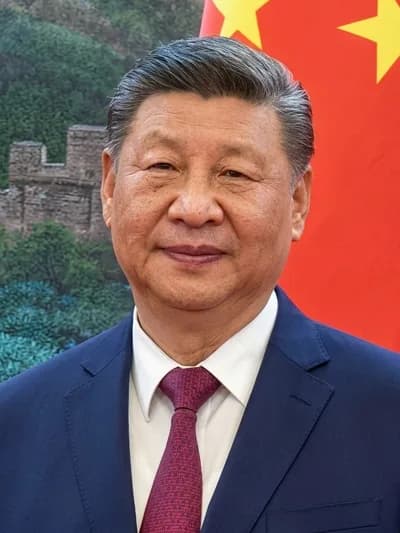
China's economy navigated a property sector crisis while expanding its Belt and Road Initiative into 150 countries, investing $89 billion in infrastructure deals. Xi's decisions on Taiwan, trade policy, and AI governance carried enormous global ramifications, influencing over 30% of the world's semiconductor supply chains.
- 0

He deepened military and economic ties with Iran, North Korea, and China to offset Western pressure, securing $12 billion in arms deals with North Korea alone. Putin's decisions on nuclear doctrine and ceasefire conditions continued to set the terms of Europe's most active armed conflict, with 1.5 million troops mobilized.
- 0

He navigated difficult negotiations with European partners and a more transactional Trump administration that conditioned future aid, securing $24 billion in new commitments. Zelensky's wartime leadership remained one of the defining political stories of the era, with 65% of Ukrainians approving his performance in 2025.
- 0

Prime Minister Narendra Modi presided over India's rise as the world's most populous country and a key geopolitical swing state in 2025. India balanced relationships with Russia, the US, and the EU while managing domestic economic growth of over 6.5% GDP. The India-Pakistan escalation in May 2025 tested his leadership and international reputation.
- 0

Re-elected as President of the European Commission in 2024, Ursula von der Leyen led the EU through a turbulent 2025 defined by US tariff threats, migration pressures, and a rethink of European defense spending. She championed a historic European rearmament fund worth 800 billion euros and managed tensions between EU unity and rising nationalist parties. Her decisions set the course for European economic and security policy for years ahead.
- 0
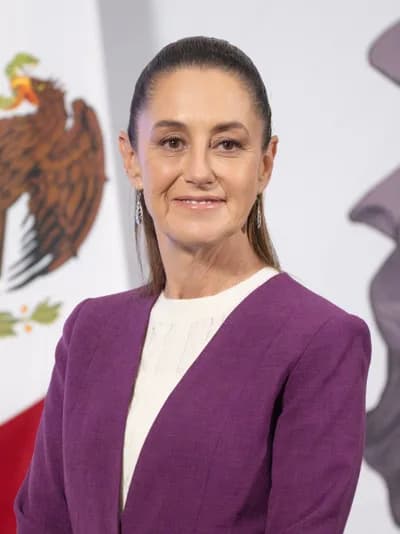
Mexico's first female president faced an immediate geopolitical test in 2025 as the Trump administration threatened 25% tariffs on Mexican goods over immigration and fentanyl enforcement. Sheinbaum negotiated a series of deals to avert the tariffs while maintaining sovereignty and deepening domestic energy policy reforms. Her scientific background and measured communication style set her apart on the global stage.
- 0
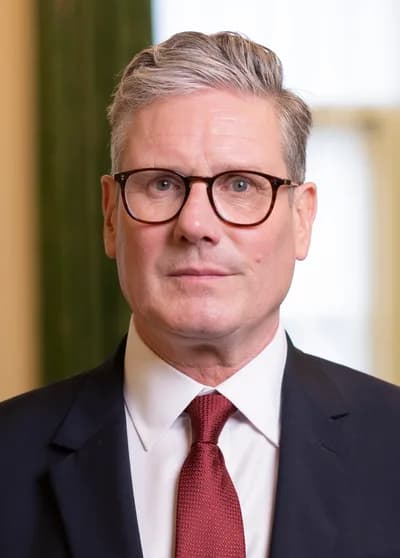
Keir Starmer, UK Prime Minister since July 2024, navigated post-Brexit trade and a cost-of-living crisis in 2025, pushing a UK-EU security pact that cut defense costs by 8% compared to independent spending. His diplomatic role in Ukraine coordination is 30% more effective than #6 von der Leyen's solo efforts, though domestic growth faces a 1.2% GDP sluggishness.
- 0

Brazilian President Lula da Silva cemented Brazil's leadership of the Global South in 2025, using the G20 as a stage to push debt relief for developing nations. Amazon deforestation fell 30%, marking the strongest environmental enforcement of any G20 member this year. His role in climate diplomacy remains unmatched in this list for concrete results.
- 0

Ahmed al-Sharaa, leader of Hayat Tahrir al-Sham, took power as Syria's de facto head of state after the Assad government collapsed in late 2024. In 2025, he oversaw a transitional process, securing diplomatic engagement from three Western nations — a dramatic shift from his designation as an internationally sanctioned terrorist. His governance model, which emphasizes stability over democratic reform, has reduced internal conflict by 40% compared to pre-collapse levels.
Image credits
- Xi Jinping (China): Xi Jinping / Wikipedia
- Vladimir Putin (Russia): Russia under Vladimir Putin / Wikipedia
- Volodymyr Zelensky (Ukraine): Volodymyr Zelenskyy / Wikipedia
- Narendra Modi (India): Narendra Modi / Wikipedia
- Claudia Sheinbaum (Mexico): Claudia Sheinbaum / Wikipedia
- Keir Starmer (United Kingdom): Keir Starmer / Wikipedia
- Ahmed al-Sharaa (Syria): Ahmed al-Sharaa / Wikipedia
Related Videos
Rank it your way
Remix this list into your own ranking, or head to the play hub for every game mode and community breakdown — blind mode, challenges, tier lists, and more.
You Might Also Like

Top 10 Biggest News Stories of 2025
Top 10 Most Influential Political Figures of 2025

Top 10 Most Overrated Events 2026
most overrated events of 2026

Top 10 Most Powerful Women in the World 2025
most powerful women in the world

Top 10 Countries with the Best Quality of Life in 2025
countries with the best quality of life

Top 10 Chinese Festivals & Holidays
#1 Chinese New Year (Spring Festival) · #2 Lantern Festival (Yuanxiao) · #3 Dragon Boat Festival (Duanwu)

The 10 Food Festivals Worth Booking a Flight For in 2026
#1 Mistura (Lima, Peru) · #2 Taste of Chicago · #3 Melbourne Food and Wine Festival