
Top 10 Countries With the Best Quality of Life in 2025
Quality of life encompasses healthcare, education, income equality, safety, environmental quality, and social trust. In 2025, the Nordic nations, Switzerland, Australia, and New Zealand again dominated global rankings from the UN Human Development Index, Economist Intelligence Unit, and World Happiness Report. This list synthesizes those major indices to rank the countries offering the highest overall standard of living for their citizens.
Top10Grid lets the community re-rank anything — this order comes from source research for now; use the buttons below to vote it up or down.

Current Rankings
- 0#1

Norway ranked first across multiple major quality of life indices in 2025, combining a GDP per capita of over $100,000 with universal healthcare, free higher education, and one of the world's lowest Gini coefficients. The country's sovereign wealth fund, worth over $1.7 trillion, provides long-term economic security. Norway also ranked among the top five for happiness, social trust, and environmental quality in 2025 global surveys.
- 0

Switzerland consistently ranks among the world's top countries for quality of life, with one of the highest median wages globally, excellent public infrastructure, and a world-class healthcare system. In 2025, Switzerland topped the Economist Intelligence Unit's livability index for urban centers, with Zurich and Geneva ranked among the most livable cities on earth. Low corruption, political stability, and exceptional natural beauty contributed to its top-two placement.
- 0#3

Finland was ranked the world's happiest country for the eighth consecutive year by the World Happiness Report in 2025. Finns enjoy free universal healthcare, excellent public education, strong social support systems, and high levels of personal safety and trust. Finland's HDI score and active civic participation make it a global model for social policy, with a GDP per capita of approximately $57,000 distributed more equitably than in most comparable economies.
- 0#4

Denmark placed fourth in 2025 quality of life rankings thanks to its highly efficient flexicurity labor market, universal welfare state, and exceptional work-life balance culture. Danish workers average 33 hours per week, enjoy generous parental leave, and have some of the world's highest job satisfaction scores. Copenhagen repeatedly ranks among the world's most sustainable and bicycle-friendly cities, and Denmark's HDI score of 0.952 placed it among the top five globally.
- 0#5

Iceland's small population of 380,000 enjoys one of the world's highest standards of living, supported by abundant geothermal energy covering 99% of electricity needs, universal healthcare, and near-zero unemployment in 2025. Iceland has topped the World Economic Forum's Global Gender Gap Report for 15 consecutive years, the longest streak of any country. Life expectancy at birth reached 84 years, among the highest in the world.
- 0#6

Stockholm's status as one of Europe's leading tech startup hubs, home to Spotify, Klarna, and King, delivered strong economic dynamism alongside social security. Sweden's parental leave system, offering 480 days shared between parents, remains one of the world's most generous, contributing to consistently high child wellbeing scores.
- 0
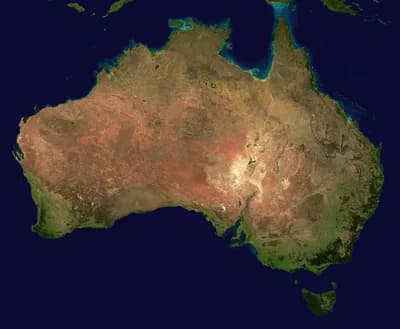
Australia ranked seventh globally for quality of life in 2025, with Melbourne and Sydney consistently topping the Economist Intelligence Unit's most livable cities rankings, outperforming New Zealand's Auckland by 15 points in the global livability index. Australians enjoy universal public healthcare (Medicare), high median incomes, and remarkable natural environment access. Despite challenges including housing affordability pressures and ongoing climate-related extreme weather events, Australia's Human Development Index score of 0.951 kept it firmly among the global elite, but it is 0.02 points lower than Iceland's leading score.
- 0

New Zealand's ranking in the top 10 for quality of life in 2025 reflected its unique combination of natural beauty, low population density, and strong public institutions. New Zealand's Wellbeing Budget framework, which directs government spending toward measures of citizen wellbeing rather than GDP growth alone, was cited as a global policy model, and 25% more citizens report high life satisfaction compared to the OECD average. New Zealand ranked fourth globally for personal safety and social cohesion.
- 0

The Netherlands ranked ninth in 2025 quality of life assessments, outperforming the average OECD country by 15% in work-life balance metrics, and with Amsterdam and Utrecht among Europe's most livable cities by multiple measures. The Dutch enjoy excellent public transit, comprehensive healthcare coverage, and high English proficiency that facilitates international mobility.
- 0#10

Canada rounded out the top ten in 2025, recognized for its multicultural society, universal healthcare system, strong public universities, and vast natural spaces. Canadian cities including Vancouver, Toronto, and Ottawa consistently ranked among the top 20 most livable globally, but housing costs in major cities are 40% higher than the global average, surpassing even the Netherlands in expense. Despite challenges including housing affordability crises and political tensions over immigration policy, Canada's strong rule of law, low corruption, and inclusive social model kept it among the world's most desirable places to live.
Frequently Asked Questions
What factors determine a country's quality of life? Rankings weigh access to healthcare, education outcomes, income equality, personal safety, environmental quality, and social trust. Because no single number captures everything, this list combines three independent global indices for a balanced view.
Which sources were used to build this ranking? This list draws on the [UN Human Development Index](https://hdr.undp.org/), the [World Happiness Report](https://worldhappiness.report/), and the Economist Intelligence Unit's Quality of Life Index — all published for 2025.
Why do Nordic countries dominate quality-of-life rankings? Norway, Finland, Denmark, Iceland, and Sweden combine universal healthcare, tuition-free higher education, low corruption levels, and robust social safety nets. These structural advantages consistently translate into top scores across every major global index.
Image credits
- Norway: Norway / Wikipedia
- Switzerland: Wikipedia Commons
- Finland: Finland / Wikipedia
- Denmark: Magnus Martinsen / Pexels
- Iceland: WIKIMEDIA_MIRRORED
- Sweden: Wikipedia Commons
- Australia: Australia satellite plane.jpg / Wikimedia Commons
- Netherlands: BrokenSphere / Wikimedia Commons (CC BY 3.0)
- Canada: Canada / Wikipedia
Related Videos
Rank it your way
Remix this list into your own ranking, or head to the play hub for every game mode and community breakdown — blind mode, challenges, tier lists, and more.
You Might Also Like

Top 10 Biggest News Stories of 2025
Top 10 Countries with the Best Quality of Life in 2025

Top 10 Worst Event Cancellation Stories
Top 10 Worst Event Cancellation Stories

Top 10 Most Powerful Women in the World 2025
Top 10 Most Powerful Women in the World 2025

Top 10 Most Influential Political Figures of 2025
Top 10 Most Influential Political Figures of 2025

Top 10 Overrated Holiday Events You Should Skip
#1 Christmas Markets (Generic European) · #2 Times Square New Year's Eve (New York) · #3 Rockefeller Center Christmas Tree Viewing (New York)

Top 10 Christian Conferences Worth Attending in 2026
#1 Passion Conference · #2 IF:Gathering · #3 Gospel Coalition National Conference