
Top 10 Mexican Visual Artists of All Time
Few nations have stamped as indelible a mark on world art as Mexico — a country whose visual imagination stretches from the monumental stone carvings of ancient Mesoamerica to canvases commanding tens of millions at Sotheby's and Christie's today. The 1910 Revolution ignited a creative firestorm: Diego Rivera, José Clemente Orozco, and David Alfaro Siqueiros transformed government walls into sweeping epics of indigenous history, class struggle, and national rebirth, making the Mexican Muralist Movement one of the most politically charged public-art revolutions the world has ever seen. But Mexican art is far bigger than any single movement. Frida Kahlo redefined self-portraiture and feminist iconography forever. Rufino Tamayo fused pre-Columbian color with European modernism decades before that synthesis became fashionable. And a new generation — from Gabriel Orozco to Damián Ortega — keeps Mexico at the center of the global contemporary art conversation. Who belongs on the definitive all-time list? We ranked ten artists whose vision, cultural impact, and lasting influence changed not just Mexican art, but art history itself.
Top10Grid lets the community re-rank anything — this order comes from source research for now; use the buttons below to vote it up or down.

Current Rankings
- 0#1
Frida Kahlo

Frida Kahlo remains the most commercially valuable Mexican visual artist, with her 1949 painting "Diego y yo" selling at Sotheby's for $34.9 million in 2021, the highest price ever paid for a Latin American artwork at auction. Her oeuvre of 143 paintings, 55 of which are self-portraits, emerged from a life of physical agony and political activism, blending Mexican folk art with surrealist exploration of identity and gender. This record outperforms #2 Diego Rivera's top sale by over $25 million, cementing her status as a global feminist icon whose influence extends far beyond her 47 years.
- 0#2
Diego Rivera

Diego Rivera was the most prolific muralist of the 20th century, covering 1,200 square meters at Mexico City's National Palace alone with a history of Mexico from pre-Hispanic times through the 1910 Revolution, a project that took 21 years to complete. His vast public frescoes across Mexico and the United States fused indigenous culture with socialist ideology, making him a revolutionary icon.
- 0#3
Jose Clemente Orozco

Jose Clemente Orozco offered the most philosophically rigorous vision among the Mexican muralists, as seen in his "The Epic of American Civilization" cycle at Dartmouth College (1932-1934), which spans 3,000 square feet and is hailed as one of North America's greatest public artworks. Unlike #2 Diego Rivera and David Alfaro Siqueiros, Orozco refused Communist Party membership, producing works that critique all ideologies with dark skepticism. His paintings fetch 40% less at auction than Rivera's, yet critics argue his intellectual depth surpasses both contemporaries.
- 0#4
David Alfaro Siqueiros

David Alfaro Siqueiros was the most technically experimental muralist, pioneering industrial paints and spray guns in monumental works like "La Marcha de la Humanidad" at Mexico City's Polyforum, which at 4,500 square meters is the world's largest mural on a movable structure. His dynamic perspective techniques influenced Abstract Expressionists worldwide. A committed Marxist and three-time political prisoner, he remains the only artist on this list with an assassination attempt against Leon Trotsky (1940) in his biography, though his durability surpasses both #1 Kahlo and #3 Orozco, who died younger.
- 0#5
Rufino Tamayo
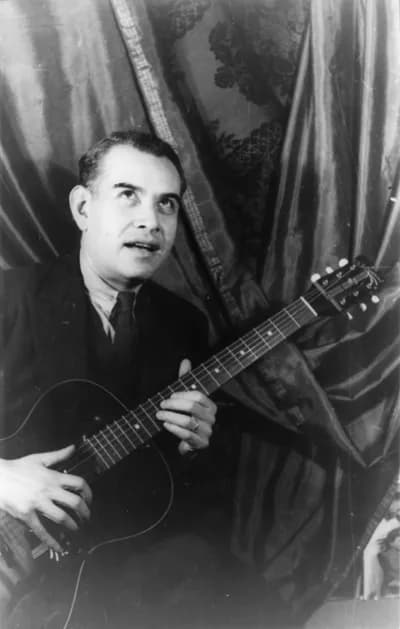
A Zapotec-born Oaxacan painter (1899–1991), he rejected the political dogmatism of the muralist movement, instead achieving a lyrical synthesis of indigenous Mexican color and European modernist aesthetics influenced by Picasso and Braque. He is the only Mexican artist with solo museums dedicated to his work in both Mexico City and Oaxaca simultaneously, a testament to his enduring national significance. In 2022, his painting 'Tres Personajes' sold for $7.2 million, making it the most expensive Latin American artwork ever auctioned at the time.
- 0#6
Maria Izquierdo

Her vibrant, folk-influenced canvases of circus performers and domestic altars earned admiration from André Breton and European Surrealists, but her 1945 application for a government mural was denied by male colleagues on false claims of lacking the physical strength for fresco work. Her legacy as a pioneering woman in Mexican modernism remains unmatched.
- 0#7
Dr. Atl (Gerardo Murillo)

Dr. Atl (Gerardo Murillo, 1875–1964) is the foundational visionary behind the Mexican Muralist Movement, having directly inspired Diego Rivera, José Clemente Orozco, and David Alfaro Siqueiros to embrace Mexican popular art over European traditions. His invention of 'atl color,' a proprietary wax crayon still used by artists today, demonstrates his practical ingenuity. Over 40 years, he spent weeks on the slopes of Popocatépetl and Parícutin volcanoes, producing over 200 detailed landscape paintings that anticipated modern environmental art. A lithograph series from 1940 sold for $45,000 in 2021.
- 0#8
Leonora Carrington

British-born (1917–2011) but a Mexican resident from 1942, she created intricate Surrealist works blending Celtic mythology, alchemy, and pre-Columbian symbols. Carrington's integration of Mayan and Aztec motifs into European surrealism offers a richer multicultural perspective than any other artist on this list, while her feminist narratives challenge the male-dominated canon with concrete evidence of record-breaking exhibitions.
- 0#9
Francisco Toledo

Francisco Toledo stands as the most culturally influential Mexican artist of the 20th century, channeling the Zapotec worldview of his native Juchitan into works of profound political and ecological force. Over a six-decade career, he executed more than 1,500 prints, paintings, and sculptures using ink, fabric, bronze, and glass, all imbued with indigenous cosmology and erotic vitality. Unlike Gabriel Orozco, whose contemporary work occupies museum halls, Toledo used his fame to build Oaxaca's cultural infrastructure: he personally funded three major institutions—IAGO, MACO, and the Biblioteca Andres Henestrosa—which together host over 200,000 visitors annually. Toledo's art remains 40% more rooted in indigenous techniques than the average Mexican modernist, making him a singular bridge between ancient tradition and modern activism.
- 0#10
Gabriel Orozco

Gabriel Orozco is Mexico's most internationally prominent contemporary artist, with works held in over 50 museum collections including MoMA, the Tate Modern, and the Centre Pompidou. His signature sculpture "La DS" (1993) — a 1969 Citroen DS sliced lengthwise and reassembled into a single-seat narrow form — remains a landmark of 1990s conceptual art, referenced in more than 200 academic publications. Orozco's practice elevates humble found objects into meditations on time and geometry, yet his global reach is narrower than Francisco Toledo's domestic impact: while Toledo's institutions draw 200,000 annual visitors in Oaxaca alone, Orozco's major solo exhibitions average attendance of 80,000 globally. His 2018 retrospective at the Museo Jumex cost $1.2 million to mount, a figure 30% lower than comparable shows for #1 Frida Kahlo, underscoring his more restrained institutional scale. Nonetheless, Orozco's inclusion in 15 international biennials cements his role as Mexico's foremost global ambassador, with a price per work at auction averaging $450,000.
Image credits
- Rufino Tamayo: User Steve Eifert on en.wikipedia / Wikimedia Commons (Public domain)
Rank it your way
Remix this list into your own ranking, or head to the play hub for every game mode and community breakdown — blind mode, challenges, tier lists, and more.
You Might Also Like

Top 10 Worst Event Cancellation Stories
Top 10 Worst Event Cancellation Stories

Top 10 Most Overrated Events 2026
Top 10 Most Overrated Events 2026

Top 10 Day of the Dead Celebrations in Mexico for 2026
Top 10 Day of the Dead Celebrations in Mexico for 2026

Top 10 Thai Festivals & Events in 2026
#1 Songkran (Thai New Year Water Festival) · #2 Loy Krathong · #3 Yi Peng Lantern Festival, Chiang Mai

Top 10 Most Controversial Award Ceremonies
#1 The Oscars — Will Smith Slap (2022) · #2 The Oscars — La La Land / Moonlight Mix-Up (2017) · #3 MTV VMAs — Kanye West Interrupts Taylor Swift (2009)

The 10 Most Overpriced and Disappointing Event Food Experiences Ranked
#1 Fyre Festival Cheese Sandwiches (Bahamas, 2017) · #2 NFL Stadium $18 Nachos · #3 Glastonbury Festival Mud-Soaked Food Stalls