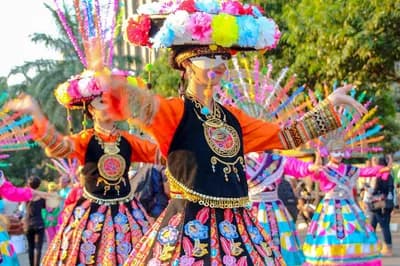
Indonesia's 1,300-plus ethnic groups have produced an extraordinary diversity of traditional dance forms, many of which carry UNESCO recognition and are performed at major cultural festivals and state ceremonies. Google Trends data shows a sustained rise in searches for Indonesian traditional dances through 2025, driven by cultural pride movements and global interest in intangible heritage.
Curated by the Top10Grid editorial team. Rankings driven by community votes and updated daily.
Create a free account or sign in to join the discussion.
Sign in to join the conversation

The Kecak is a Balinese ritual dance-drama performed by a chorus of up to 150 bare-chested men who chant "cak" rhythmically while enacting scenes from the Hindu epic Ramayana. Developed in the 1930s in collaboration with German artist Walter Spies, it is performed nightly at Uluwatu Temple and is Indonesia's most internationally recognised dance form.

The Saman Dance of the Gayo people of Aceh province involves dozens of performers executing intricate, synchronised hand clapping, chest patting, and swaying movements at increasing speeds. UNESCO inscribed the Saman Dance on its List of Intangible Cultural Heritage in Need of Urgent Safeguarding in 2011.

Legong is a refined Balinese classical dance performed by young women in elaborate gold-thread costumes and elaborate headdresses, depicting stories from Balinese mythology and history. Originating in the royal courts of Bali in the 19th century, it is considered the pinnacle of Balinese dance technique.

Reog Ponorogo from East Java features a performer wearing a massive lion mask adorned with peacock feathers that can weigh up to 50 kilograms, supported only by the dancer's teeth. The performance, associated with the historical legend of Prabu Klono Sewandono, was submitted for UNESCO Intangible Heritage inscription by Indonesia in 2022.

Pendet is a Balinese offering dance traditionally performed in temples to welcome the presence of deities, using small trays of flower offerings. It was originally a sacred ritual dance, but a simplified, secular version created in 1950 by I Wayan Rindi became a popular welcome dance performed at official state events.

Tor-Tor is a traditional ceremonial dance of the Batak people of North Sumatra, performed at rituals, funerals, and celebrations while accompanied by the mangondangi — an ensemble of traditional percussion instruments. The dance is considered a form of spiritual communication between the living and their ancestors.

Jaipong is a lively, expressive Sundanese dance form that emerged in West Java in the 1970s when choreographer Gugum Gumbira combined traditional Jaipongan drumming with pencak silat movements and folk dance. It became hugely popular across Indonesia as a symbol of Sundanese cultural pride.

Serimpi is a slow, refined Javanese court dance traditionally performed by four women to represent the four elements of the cosmos: fire, water, wind, and earth. Originating in the Mataram Sultanate of the 16th century, it was reserved for royal ceremonial functions and remains performed at the palaces of Yogyakarta and Surakarta.

Cakalele is a warrior dance from Maluku (the Spice Islands) performed to celebrate victories in battle or welcome important guests, featuring male dancers brandishing machetes and shields in powerful, martial movements. The dance is an expression of Malukan identity and pride and is central to the province's major cultural festivals.

Yapong is a modern Betawi dance created in 1977 by choreographer Bagong Kussudiardja for the Jakarta anniversary celebrations, blending traditional Betawi folk elements with modern choreographic techniques. It has since become an iconic symbol of Jakarta's multicultural identity and is taught in schools across the capital.
The most-voted lists across every category — curated weekly. Join the early readers.
No spam. One email per week. Unsubscribe anytime.
Explore more Events rankings on Top10Grid
Cast your vote above to unlock the real distribution
Tap the arrows on any item to vote
Because you're viewing Events
Top 10 Reasons the 2026 World Cup Will Be Historic
123 views · 1 votes

Top 10 Most Powerful Women in the World 2025
48 views · 0 votes

Top 10 Greatest Moments from the 2024 Paris Olympics
46 views · 0 votes

Top 10 Most Watched Sporting Events in TV History
45 views · 0 votes

Top 10 Indian Festivals
44 views · 0 votes

Top 10 Countries with the Best Quality of Life in 2025
44 views · 0 votes

The Kecak is a Balinese ritual dance-drama performed by a chorus of up to 150 bare-chested men who chant "cak" rhythmically while enacting scenes from the Hindu epic Ramayana. Developed in the 1930s in collaboration with German artist Walter Spies, it is performed nightly at Uluwatu Temple and is Indonesia's most internationally recognised dance form.

The Saman Dance of the Gayo people of Aceh province involves dozens of performers executing intricate, synchronised hand clapping, chest patting, and swaying movements at increasing speeds. UNESCO inscribed the Saman Dance on its List of Intangible Cultural Heritage in Need of Urgent Safeguarding in 2011.

Legong is a refined Balinese classical dance performed by young women in elaborate gold-thread costumes and elaborate headdresses, depicting stories from Balinese mythology and history. Originating in the royal courts of Bali in the 19th century, it is considered the pinnacle of Balinese dance technique.

Reog Ponorogo from East Java features a performer wearing a massive lion mask adorned with peacock feathers that can weigh up to 50 kilograms, supported only by the dancer's teeth. The performance, associated with the historical legend of Prabu Klono Sewandono, was submitted for UNESCO Intangible Heritage inscription by Indonesia in 2022.

Pendet is a Balinese offering dance traditionally performed in temples to welcome the presence of deities, using small trays of flower offerings. It was originally a sacred ritual dance, but a simplified, secular version created in 1950 by I Wayan Rindi became a popular welcome dance performed at official state events.

Tor-Tor is a traditional ceremonial dance of the Batak people of North Sumatra, performed at rituals, funerals, and celebrations while accompanied by the mangondangi — an ensemble of traditional percussion instruments. The dance is considered a form of spiritual communication between the living and their ancestors.

Jaipong is a lively, expressive Sundanese dance form that emerged in West Java in the 1970s when choreographer Gugum Gumbira combined traditional Jaipongan drumming with pencak silat movements and folk dance. It became hugely popular across Indonesia as a symbol of Sundanese cultural pride.

Serimpi is a slow, refined Javanese court dance traditionally performed by four women to represent the four elements of the cosmos: fire, water, wind, and earth. Originating in the Mataram Sultanate of the 16th century, it was reserved for royal ceremonial functions and remains performed at the palaces of Yogyakarta and Surakarta.

Cakalele is a warrior dance from Maluku (the Spice Islands) performed to celebrate victories in battle or welcome important guests, featuring male dancers brandishing machetes and shields in powerful, martial movements. The dance is an expression of Malukan identity and pride and is central to the province's major cultural festivals.

Yapong is a modern Betawi dance created in 1977 by choreographer Bagong Kussudiardja for the Jakarta anniversary celebrations, blending traditional Betawi folk elements with modern choreographic techniques. It has since become an iconic symbol of Jakarta's multicultural identity and is taught in schools across the capital.