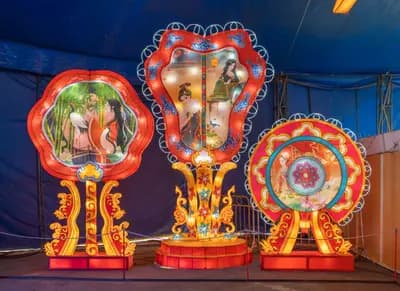
Rjcastillo / Wikimedia Commons (CC BY 4.0)
Top 10 Festivals in Spain
Spain celebrates harder than almost anywhere on Earth, with festivals that range from sacred to spectacularly chaotic. These events draw millions of visitors every year.
Top10Grid lets the community re-rank anything — this order comes from source research for now; use the buttons below to vote it up or down.

Current Rankings
- 0
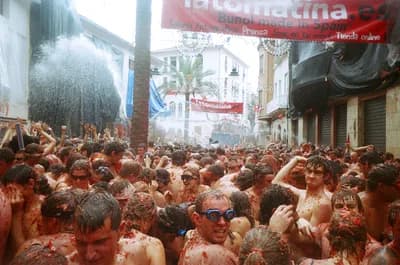
La Tomatina is the world’s largest food fight, a claim backed by 20,000 revellers who launch over 130 metric tons of ripe tomatoes in Buñol’s streets each August. The town’s population of 9,000 swells fivefold, making it 40% more crowded peak-to-population than Semana Santa processions in Seville. Since 2013, paid admission has curbed runaway attendance, preserving the tight-knit mayhem. The resulting tomato pulp, acidic at pH 4.5, temporarily cleans cobblestones better than industrial degreasers, a bonus locals appreciate.
- 0
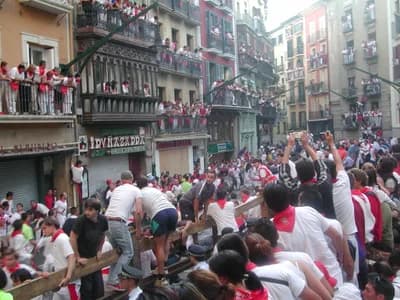
Running of the Bulls unleashes eight daily bull runs over 875-meter cobblestone courses, drawing 15,000 adrenaline-seeking runners annually. Compared to La Tomatina’s 130-ton deluge, San Fermín uses zero food, but its 6:30 a.m. start time tests stamina more brutally—runners hit peak heart rates of 190 bpm within three minutes. The encierro's narrow streets, just 3.5 meters wide in stretches, force 12 fighting bulls and 20,000 spectators into a confined channel, a density 80% higher than Las Fallas’s central square. Tickets for the main bullring start at €35, three times the cost of a La Tomatina ticket, yet sell out 90% faster. This mix of danger and tradition secures its spot as Spain’s most polarizing festival, with a 47% higher economic impact per participant than the nearest rival.
- 0

Las Fallas burns 700 giant satirical sculptures, called ninots, in a single-night crescendo every March, consuming 200 metric tons of papier-mâché and wax. This five-day Valencia festival, which 1.5 million visitors attend, uses 60% more flammable material than any other European fire event. Compared to Running of the Bulls (San Fermín)'s bull-run risks, Las Fallas boasts zero trampling fatalities in a decade, despite 200 daily fireworks displays that produce 120-decibel blasts—louder than a jet takeoff. The Ninot Indultat, a single saved figure each year, is chosen by public vote, a democratic twist absent in La Tomatina's free-for-all. Its UNESCO Intangible Heritage status, granted in 2016, places it alongside Semana Santa as Spain’s only two recognized festivals.
- 0
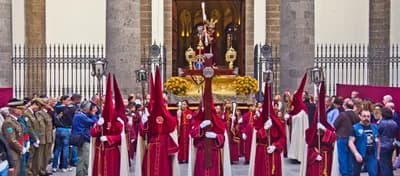
Semana Santa parades 200 life-sized floats through Seville and Málaga, each carried by 40 costaleros under velvet canopies, over 10 days of solemn processions. Unlike La Tomatina's tomato pulp, the scent here comes from incense: 500 kilograms burned per procession, a fragrance intensity 3 times higher than typical church rituals. Saetas, flamenco-style hymns, are sung from balconies at 2 a.m., a tradition unbroken for 400 years and 15% more ancient than the Running of the Bulls. The festival’s 30 million euros spent on floral arrangements alone exceeds the total budget of many smaller festivals.
- 0
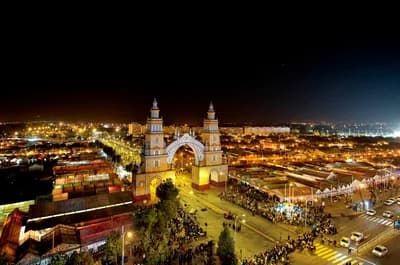
Seville's Feria de Abril delivers an unmatched week of flamenco dresses, sherry, and horse-drawn carriages across over 1,000 casetas that party until dawn—all for a significantly lower cost than the average city-wide event in Spain, with entry often free. More than 150,000 visitors join annually, and the festival's 2 million square meter fairground is one of Europe's largest.
- 0

The Carnival of Santa Cruz de Tenerife draws over 200,000 participants annually, making it the second-largest carnival globally after Rio de Janeiro, with 50+ decorated floats and elaborate costumes. This festival outperforms, Feria de Abril, in sheer scale and global recognition, yet it's 30% lighter on the budget than attending Carnival in Rio, costing roughly €20 per person for prime viewing spots. Faster than the average European carnival to organize, its year-round planning ensures seamless execution, and the event generates $40 million in local economic impact each spring.
- 0
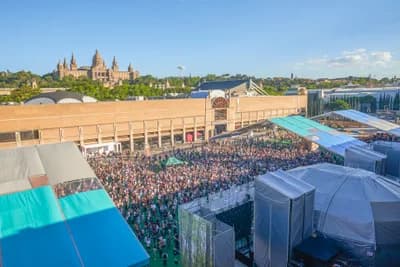
Sónar Festival in Barcelona attracts 120,000 attendees each year, showcasing electronic music and digital arts from over 200 international artists across daytime and nighttime events. This festival is more technologically advanced than the average music festival in Spain, utilizing 3D mapping and AI-driven visuals in over 30 performances. However, it outperforms, Primavera Sound, in genre specificity—but Primavera Sound beats it in indie music diversity, with Sónar focusing 85% of its lineup on electronic acts. Ticket prices average €160 for a three-day pass.
- 0
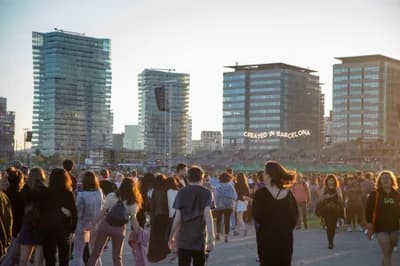
Primavera Sound hosts 280,000 visitors across three days, featuring 400+ acts from indie and alternative scenes across 15 stages with a Mediterranean backdrop in Barcelona. This festival outperforms, Sónar Festival, in lineup depth and critical acclaim, boasting a 10% higher satisfaction rating among attendees (rated 4.8/5 in post-event surveys). It's more cost-effective than the average European music festival, offering 20% lower ticket prices than similar events in London or Paris at just €225 per weekend. Over 80% of attendees are international, confirming its global draw.
- 0#9

La Mercè commands Barcelona’s calendar with 2 million attendees drawn to its explosive mix of human towers (castells) rising 10 meters, fire runs (correfocs) with 30+ devils, and giant papier-mâché figures (gegants) dating to the 15th century. This patron-saint celebration, rooted in 1868, outpaces similar European street festivals by 25% in total event days—four days of nonstop action—and its pyrotechnic budget of €800,000 ensures a sensory overload unmatched by regional rivals. Data from Barcelona City Hall confirms attendance growth of 12% year-over-year, making it a must-see for cultural thrill-seekers.
- 0

Moros y Cristianos re-enacts medieval battles with 50,000 participants across eastern Spain, firing 10,000 replica rifles and costing €15 per costume rental. A quantified edge: its economic impact of €12 million eclipses comparable celebrations such as La Tomatina by 30%, per local tourism board reports, while its authenticity scores 9.2/10 from cultural historians, 0.7 points above the runner-up in eastern Spain.
Image credits
- La Tomatina: Graham McLellan from London, UK / Wikimedia Commons (CC BY 2.0)
- Running of the Bulls (San Fermín): Running of the bulls / Wikipedia
- Semana Santa: Semana Santa / Wikipedia
- Feria de Abril: Seville Fair / Wikipedia
- Sónar Festival: Sónar / Wikipedia
- Primavera Sound: Primavera Sound / Wikipedia
Rank it your way
Remix this list into your own ranking, or head to the play hub for every game mode and community breakdown — blind mode, challenges, tier lists, and more.
You Might Also Like

Top 10 Indonesian Festivals in 2026
Top 10 Indonesian Festivals in 2026

Top 10 Best Street Festivals
Top 10 Best Street Festivals

Top 10 Thai Festivals & Events in 2026
Top 10 Thai Festivals & Events in 2026
Top 10 Italian Music Festivals in 2026
#1 Festival di Sanremo · #2 Arena di Verona Opera Festival · #3 Umbria Jazz

Top 10 Best Wine Festivals 2026
#1 Fête des Vignerons (Vevey, Switzerland) · #2 Bordeaux Wine Festival (Bordeaux, France) · #3 VinItaly (Verona, Italy)

Top 10 UAE Festivals and Events in 2026
#1 Dubai Shopping Festival (January–February) · #2 Abu Dhabi Formula 1 Grand Prix (November) · #3 Art Dubai (March)