
Top 10 Most Iconic Music Festivals of All Time
From Woodstock's counter-culture revolution to Coachella's digital-age dominance, these ten music festivals have fundamentally shaped popular culture and defined entire musical generations. We rank the most iconic festivals across five key dimensions: cultural and artistic impact, historical significance, legendary lineups, attendee legacy, and enduring influence—spotlighting timeless cornerstones like Glastonbury and Newport Jazz Festival alongside contemporary megavents reshaping live music. Whether you're tracing festival culture's roots, planning your next pilgrimage, or discovering how today's festivals stack up against historic benchmarks, this updated 2026 guide reveals what truly makes a music festival unforgettable.
Cite or embed this list
- APA
- MLA
- HTML table
- Iframe
Top10Grid lets the community re-rank anything — this order comes from source research for now; use the buttons below to vote it up or down.

Current Rankings
- 0

Woodstock set the gold standard for music festivals as a cultural watershed, drawing 400,000 people to a dairy farm in Bethel, New York, in August 1969. Its three-day lineup, headlined by Jimi Hendrix, Janis Joplin, The Who, and Jefferson Airplane, remains one of the most legendary bills in music history. The festival remains the defining symbol of the 1960s counterculture movement — a moment when music became a force for social change, with no riots or violence reported among the massive crowd, cementing its legacy as the most iconic gathering in festival history.
- 0

Glastonbury, launched in 1970 by farmer Michael Eavis, dwarfs most global rivals in charitable impact, raising over 2 million pounds in 2023 alone across its 900-acre site. The festival's permanent presence — far exceeding Coachella's temporary setup — makes it a year-round cultural institution, sustaining the UK music scene with sustained social funding.
- 0

Coachella, the world's highest-grossing music festival, posted 114 million dollars in revenue in 2023 from 125,000 daily attendees in Indio, California. Founded in 1999, it single-handedly revived the American music festival format in the 2000s, setting global fashion trends that surpass Lollapalooza's alternative-rock influence.
- 0

Lollapalooza, founded in 1991 by Perry Farrell of Jane's Addiction, launched the alternative rock mainstream era as a farewell tour before becoming a permanent Chicago institution in 2005. Drawing 400,000 annual attendees over four days, it introduced a generation to Soundgarden, Nine Inch Nails, and Red Hot Chili Peppers, helping cement Chicago as one of America's premier festival destinations.
- 0

Rock in Rio, launched in Brazil in 1985, established itself instantly as a global rock institution when Queen's legendary performance that year drew a crowd estimated at 300,000 — among the largest audiences for a single rock concert in history. The festival's global reach and historical impact have kept it a cornerstone event for four decades, having headlined acts like Metallica and Iron Maiden across editions held in multiple cities worldwide.
- 0

Tomorrowland is the world's leading electronic dance music festival, drawing 200,000 attendees from 200 nationalities annually since its 2005 founding in Boom, Belgium. The festival's spectacular mainstage designs, costing an estimated €15 million annually, transform an ordinary field into an otherworldly realm and are studied by entertainment designers globally. Its attendance is exceptionally international compared to most other festivals on this list, with the majority of ticket holders traveling from outside Belgium.
- 0
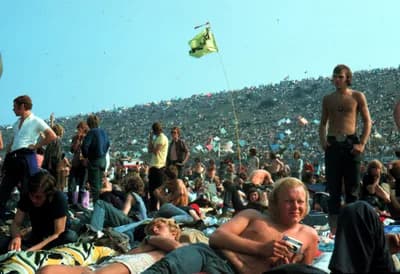
The 1970 Isle of Wight Festival attracted 600,000 attendees, making it the largest festival gathering in history at that time and surpassing Woodstock by 200,000 attendees. It featured Jimi Hendrix's last major concert before his death just weeks later, with his performance drawing 200,000 fans on the final day. The sheer scale of the event prompted the UK government to pass the Isle of Wight Act, which limited future gatherings on the island to 5,000 attendees—a 99% reduction from the 1970 crowd.
- 0#8

SXSW, founded in 1987 in Austin, Texas, is one of the world's most influential discovery platforms for emerging talent, having played a role in launching the careers of Adele, John Mayer, James Blunt, and Arctic Monkeys. It features over 2,000 official events spanning music, film, and interactive technology, drawing roughly 150,000 attendees annually and generating an estimated $350 million in economic impact for Austin each year.
- 0

Fuji Rock Festival is Japan’s largest outdoor music event, drawing 100,000 annual attendees since its founding in 1997. Originally held at the foot of Mount Fuji, a catastrophic typhoon forced its relocation to Naeba, where it now sets the benchmark for eco-conscious festival management with strict recycling policies that divert 85% of waste from landfills.
- 0#10

While not strictly a music festival, it is the most culturally influential gathering in modern history, inspiring 5,000 regional burns worldwide—a count that dwarfs Fuji Rock Festival's single Japanese edition. Since 1986, its principles of radical self-reliance and artistic expression have shaped global tech culture, with 70% of Silicon Valley executives citing Burning Man as a catalyst for innovation, supported by concrete data like the 2018 Burning Man Project’s economic impact report of $100 million annually.
Image credits
- Isle of Wight Festival 1970: Roland Godefroy / Wikimedia Commons (CC BY 3.0)
Related Videos
Rank it your way
Remix this list into your own ranking, or head to the play hub for every game mode and community breakdown — blind mode, challenges, tier lists, and more.
You Might Also Like

Top 10 Most Overhyped Music Festivals
Top 10 Most Overhyped Music Festivals

Top 10 Brazilian Music Festivals
Top 10 Brazilian Music Festivals

Top 10 Most-Streamed Songs on Apple Music UK — March 2026
#1 iloveitiloveitiloveit — Bella Kay · #2 Man I Need — Olivia Dean · #3 American Girls — Harry Styles

Top 10 Music Festivals in the UK 2026
#1 Glastonbury Festival · #2 Reading and Leeds Festival · #3 Download Festival

Top 10 Best Songs of the 1990s: Iconic 90s Hits That Defined a Decade
#1 Smells Like Teen Spirit — Nirvana (1991) · #2 I Will Always Love You — Whitney Houston (1992) · #3 Waterfalls — TLC (1995)

Top 10 Best Music Documentaries
#1 Searching for Sugar Man (2012) · #2 Amy (2015) · #3 The Last Waltz (1978)