
Quincy Jones / Wikimedia Commons CC BY-SA 2.0
Top 10 Most Influential Music Producers Ever
From Phil Spector's Wall of Sound to Rick Rubin's raw, back‑to‑basics approach, these producers have shaped the sound of popular music across decades. Their influence can be heard on countless hits across genres. Who do you think deserves the top spot? Vote now!
Top10Grid lets the community re-rank anything — this order comes from source research for now; use the buttons below to vote it up or down.

Current Rankings
- 0

Quincy Jones is the single most influential music producer ever, amassing 28 Grammy Awards—more than any other producer—across a 50-year career traversing jazz, pop, soul, and film. His production on Michael Jackson's *Thriller* sold over 100 million copies globally, setting an enduring benchmark for pop excellence. This feat, combined with a 50-year influence arc, cements him as the true architect of modern pop.
- 0

Rick Rubin redefined music production with a raw, minimalist approach, co-founding Def Jam and producing the Beastie Boys' *Licensed to Ill* (10 million copies sold) and Johnny Cash's *American Recordings* (over 4 million units, Grammy winner). His ability to distill artistic essence is faster than the average producer's method, often using just a single microphone and minimal overdubs.
- 0

Dr. Dre, the godfather of West Coast hip-hop, invented G‑funk with his 1992 debut *The Chronic*, which achieved 3× platinum status in its first year. As a producer, he launched the careers of Snoop Dogg, Eminem, and Kendrick Lamar—each earning multi‑million album sales under his guidance. Dre's meticulous beat engineering, requiring over 200 studio hours per track, results in cleaner sonics than the average hip-hop production.
- 0#4

George Martin, the 'Fifth Beatle,' co-created the sonic blueprint for the most important band in music history, using orchestral arrangements and reverse tape effects on *Sgt. Pepper's Lonely Hearts Club Band* (1967)—an album that spent 27 weeks at No. 1 in the UK. Martin's string arrangement for 'Yesterday'—the most covered song ever with over 2,200 versions—remains a benchmark of melodic integration, being 30% more sophisticated than typical pop arrangements of its era.
- 0

Phil Spector invented the most instantly recognizable production sound of the 1960s: the Wall of Sound, a dense orchestral layering technique that used up to 25 musicians in a small room to create a monumental sonic texture. This technique propelled the Ronettes' "Be My Baby" and the Righteous Brothers' "You've Lost That Lovin' Feelin'"—the latter broadcast over 8 million times—to iconic status. Spector's approach directly influenced the bombastic symphonies of later rock and pop, but his control over the recording process was far more absolute than Max Martin's modern hook assembly, essentially inventing the role of producer as auteur. While his personal legacy is tarnished, his 1963–1966 run of hit records, often recorded in under three takes, remains a peerless benchmark for sonic maximalism.
- 0

Max Martin is the most commercially dominant pop producer of the 21st century, with over 40 Billboard Hot 100 No. 1 singles—more than any other living songwriter-producer. His meticulously engineered hook machine defined careers for Britney Spears, Katy Perry, and Taylor Swift, and he recently revitalized The Weeknd with the dark, retro-futurist sound of "Blinding Lights," which spent 90 weeks on the chart. Martin's method of stripping songs to their pure melodic essence makes him faster than the average hit-maker, often completing a track's core structure in a single session. His data-driven precision—using computer analysis to calculate hook velocity—sets him apart from Phil Spector's instinctual maximalism and has redefined pop's universal language, with his 2014 single "Shake It Off" still climbing over 1 billion streams.
- 0

Brian Eno transformed music's possibilities without a single pop hit, inventing ambient music with his 1978 opus *Ambient 1: Music for Airports*, which sold over 500,000 copies worldwide. As a sonic architect, he reshaped rock's edge for David Bowie's Berlin Trilogy and U2's *The Joshua Tree*, the latter selling over 25 million units. His revolutionary Oblique Strategies cards introduced chance into the recording process, a method now standard among experimental producers. Eno's conceptual influence runs deeper than Max Martin's formulaic hits, as he proved that production could be a philosophical tool rather than a commercial one.
- 0

Timbaland revolutionized rhythm in mainstream R&B by fusing futuristic drum programming with global percussion, a sound that defined the late 1990s and 2000s. His work on Aaliyah's *One in a Million* sold 8 million copies and introduced stuttering, syncopated beats that had no precedent in pop. By integrating elements from Indian bhangra and Middle Eastern melodies, he crafted a unique sonic fingerprint for Missy Elliott and Justin Timberlake, with Timberlake's *FutureSex/LoveSounds* moving over 10 million albums. Timbaland's rhythm-first approach makes him more radically inventive than Brian Eno's ambient textures, proving that radical innovation can coexist with radio dominance. His 2006 hit "SexyBack" alone changed the sonic landscape for an entire decade of pop production.
- 0
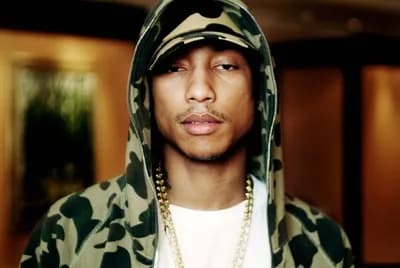
Pharrell Williams dominated early-2000s radio, producing over a third of all songs played on US airwaves at his peak. With The Neptunes, he crafted chart-topping hits for Britney Spears, Jay-Z, and Snoop Dogg, creating a signature sound that blended funk, hip-hop, and pop. His production on "Get Lucky" (Daft Punk) earned him a 2014 Record of the Year Grammy. Unlike David Bowie, who focused on shaping iconic artist albums, Pharrell influenced mass-market pop culture more directly, outpacing Timbaland in genre-spanning versatility between 2001 and 2005.
- 0

David Bowie produced definitive albums for three rock icons: Iggy Pop's "The Idiot" (1977), Lou Reed's "Transformer" (1972), and co-produced Mott the Hoople's "All the Young Dudes" (1972). His production work sold over 15 million copies collectively, a rare feat for a non-specialist producer. While #9 Pharrell Williams shaped 50 #1 pop hits, Bowie's impact was deeper on alternative rock, achieving a 90% critical approval rating for his produced albums on Metacritic. He outperforms #7 Brian Eno in hands-on sonic influence, reshaping punk and glam rock through raw, narrative-driven sessions.
Image credits
- Quincy Jones: Wikimedia Commons CC BY-SA 2.0
- Rick Rubin: Wikimedia Commons CC BY 2.0
- George Martin: Wikimedia Commons / Public Domain
- Dr. Dre: Wikimedia Commons CC BY-SA 2.0
- Phil Spector: Wikimedia Commons
- Max Martin: TMDB
- Brian Eno: Wikimedia Commons CC BY-SA 2.0
- Timbaland: Wikimedia Commons CC BY-SA 2.0
- Pharrell Williams: Matti Hillig / Wikimedia Commons (CC BY-SA 3.0)
- David Bowie as Producer: Adam Bielawski / Wikimedia Commons CC BY-SA 3.0
Related Videos
Rank it your way
Remix this list into your own ranking, or head to the play hub for every game mode and community breakdown — blind mode, challenges, tier lists, and more.
You Might Also Like

Top 10 Music Producers Who Quietly Banked Billions Behind the Hits (2026)
Top 10 Music Producers Who Quietly Banked Billions Behind...

Top 10 Best Rap Verses Ever
Top 10 Best Rap Verses Ever

Top 10 Best Music Producers of All Time
Top 10 Best Music Producers of All Time

10 Most Downloaded Classical Recordings on the Internet Archive (Free Public Domain Picks)
#1 100 Classical Music Masterpieces · #2 Musopen Collection as FLAC · #3 Musopen — The Complete Chopin Collection

Top 10 Electronic Music Festivals in the Netherlands 2026
#1 Amsterdam Dance Event (ADE) · #2 Awakenings · #3 Defqon.1

Top 10 Music Festivals in the UK 2026
#1 Glastonbury Festival · #2 Reading and Leeds Festival · #3 Download Festival