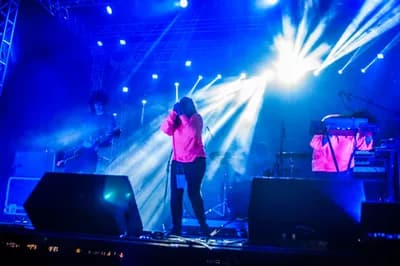
Brazil is one of the world's great live music markets, with a concert and festival industry valued at over R$5 billion annually and a culture of music-going that spans every socioeconomic class and geographic region. The country's extraordinary musical diversity β samba, forro, axe, funk, sertanejo, MPB, electronic music, and regional genres β ensures that Brazilian festivals cover an unusually broad stylistic range, from free public concerts attracting millions on Rio's beachfront to curated boutique festivals in the Atlantic Forest. These ten festivals represent the full spectrum of the Brazilian live music experience in the 2020s.
Curated by our music editors. Builds on critical consensus while letting community vote rewrite the order β updated continuously.

Rock in Rio, founded by Roberto Medina in Rio de Janeiro in 1985 with an inaugural audience of 1.38 million over 10 days, is one of the largest music festivals in the world and the most important in Latin America by audience size, global headliner prestige, and media impact. The 1985 debut featured Queen, Rod Stewart, AC/DC, James Brown, and Ozzy Osbourne among its headliners β a lineup that would be impossible to assemble today β and established Brazil as a world-class live music market on the global music industry's map. The festival now takes place biennially in Rio and exports its brand to Lisbon and Madrid, with the Rio edition regularly drawing 700,000 attendees across its 7-day run.

Lollapalooza Brasil, launched in Sao Paulo in 2012 as an expansion of the iconic North American festival brand, has rapidly grown into South America's premier multi-genre festival and consistently books the most commercially significant international headliners of any Brazilian festival in the contemporary era. Held annually at the Autodromo de Interlagos (home of the Brazilian Formula 1 Grand Prix), the festival draws approximately 100,000 attendees per day across three days and serves as the de-facto launch pad for international artists entering the South American touring market. The 2023 and 2024 editions featured headliners including Billie Eilish, Drake, Rosalia, and Sam Smith, confirming Lollapalooza Brasil's status as a genuinely world-class festival booking operation.

Salvador's Carnival is the world's largest open-air street party, officially certified by the Guinness Book of World Records, attracting over 2 million participants daily during the six-day celebration in February. Unlike Rio's choreographed Sambadrome parades, Salvador's Carnival takes place entirely in the streets, organized around "trios electricos" β massive trucks carrying enormous sound systems and live performers that move slowly through designated circuits while crowds of "pipoca" (non-ticket-holding) revelers follow behind. The axe music genre, born in Salvador in the 1980s and represented by artists including Ivete Sangalo, Claudia Leitte, and Carlinhos Brown, is both the product of and the soundtrack for this extraordinary cultural institution.

Tomorrowland Brasil, the South American edition of the world's most decorated electronic music festival, was held at Itu in the interior of Sao Paulo state from 2015 to 2016 and relaunched with significant fanfare as a regular feature of the Brazilian festival calendar in subsequent years. The festival's extraordinary production β massive custom-designed stages, theatrical pyrotechnics, laser shows, and the signature fairytale fantasy aesthetic of the Belgian original β translates powerfully to the Brazilian audience's enthusiasm for spectacle and communal celebration. Tickets consistently sell out within minutes of release, reflecting an extraordinary demand for premium electronic music experiences among Brazil's growing middle class.

Oktoberfest Blumenau, held annually in October in the city of Blumenau in Santa Catarina's Vale do Itajai, is the world's second-largest Oktoberfest celebration after Munich, attracting over 700,000 visitors across 18 days and reflecting the extraordinary depth of German immigrant culture in Brazil's southern states. The festival began in 1984, inspired by Munich's original, and has grown into a genuine cultural institution with original German music, traditional food, an enormous beer garden, and a parade that draws participants from across Brazil and from Germany itself. Blumenau's 40% population of German descent makes the festival a living expression of ethnic heritage rather than a tourist pastiche, and the local brewing tradition β including craft beer innovations built on the German foundation β gives the beer itself a quality that justifies the pilgrimage.

Primavera Sound Sao Paulo, launched as the South American edition of Barcelona's beloved independent music festival in 2022, has immediately established itself as the premier destination for fans of alternative, indie, and left-field pop in Brazil, booking artists and genres typically underrepresented in the mainstream Brazilian festival market. Held at the Autodromo de Interlagos, the festival's 2023 and 2024 lineups featured Bjork, Frank Ocean, Rosalia, Depeche Mode, and dozens of emerging international acts, treating the Brazilian audience to a curation quality on par with Barcelona, Los Angeles, and Santiago. The Sao Paulo edition has become commercially significant enough to influence which international acts prioritize touring South America, and several artists have cited the festival as their first experience of the Brazilian market.

The Festival de Inverno de Campos do Jordao, held annually in July in the alpine resort town of Campos do Jordao in the Sao Paulo highlands, is Brazil's most prestigious classical music festival, drawing top-tier Brazilian and international orchestras, soloists, and conductors to a mountain setting that rivals the great European festival destinations for atmosphere and musical quality. Founded in 1970, the festival was instrumental in establishing Campos do Jordao β which sits at 1,700 meters elevation and experiences genuinely cold winters unique in southeastern Brazil β as South America's most prestigious classical music destination. The Auditorio Claudio Santoro, the festival's primary venue designed in the style of a European concert hall set against a backdrop of Araucaria pine forest, is considered the finest purpose-built classical music venue in South America.

Fortal, held annually in July in Fortaleza, Ceara, is the world's largest off-season carnival celebration, attracting over 700,000 participants across four days and serving as the essential showcase for forro, axe, and northeastern Brazilian popular music in its most joyful, uninhibited form. The festival operates on the same trio eletrico system as Salvador's Carnival, with enormous sound-truck stages moving through the Fortaleza waterfront area while crowds of fervently dancing revelers follow. For fans of forro β the accordion, zabumba drum, and triangle music of the Brazilian northeast β Fortal is the single most important annual gathering, concentrating the genre's greatest artists and most devoted fans in one place.

Flipflop Music Festival, held annually in Recife, Pernambuco, is the leading festival for the emergent Recife music scene that has produced globally significant artists including NaΓ§Γ£o Zumbi, Manu Chao collaborators, and a new generation of frevo and maracatu-fusion musicians who are redefining what northeastern Brazilian music means in the 21st century. Held in the vibrant Patio de Sao Pedro colonial square and surrounding streets of Recife's historic center, the festival deliberately positions itself as an alternative to the glossy stadium festival model, emphasizing local cultural roots and regional artistic identity. Recife's music scene, which has been recognized by multiple international music publications as one of the world's most creatively fertile regional scenes, makes Flipflop an essential destination for music travelers seeking authenticity.

Festival Bananada, held annually in Goiania, Goias, is the most important Brazilian festival for independent and alternative music from Brazil's interior, specifically the cerrado (savanna) cultural region that has produced some of Brazil's most interesting left-field pop, experimental rock, and regional fusion music outside the Rio-Sao Paulo axis. Founded in 2000 and held across multiple venues in central Goiania, the festival has developed a curatorial reputation for discovering artists before they break nationally β several of Brazil's most successful independent acts of the 2010s and 2020s played Bananada years before signing major deals. For Brazilian music industry professionals and dedicated fans seeking what comes next in Brazilian popular music, Bananada is a uniquely reliable compass.
The most-voted lists across every category β curated weekly. Join the early readers.
No spam. One email per week. Unsubscribe anytime.

Create a free account or sign in to join the discussion.
Sign in to join the conversation
Top 10 Best Nigerian Musicians of All Time
Top 10 World Cup Songs and Anthems
Top 10 Greatest Albums of the 2000sExplore more Music rankings on Top10Grid

Rock in Rio, founded by Roberto Medina in Rio de Janeiro in 1985 with an inaugural audience of 1.38 million over 10 days, is one of the largest music festivals in the world and the most important in Latin America by audience size, global headliner prestige, and media impact. The 1985 debut featured Queen, Rod Stewart, AC/DC, James Brown, and Ozzy Osbourne among its headliners β a lineup that would be impossible to assemble today β and established Brazil as a world-class live music market on the global music industry's map. The festival now takes place biennially in Rio and exports its brand to Lisbon and Madrid, with the Rio edition regularly drawing 700,000 attendees across its 7-day run.

Lollapalooza Brasil, launched in Sao Paulo in 2012 as an expansion of the iconic North American festival brand, has rapidly grown into South America's premier multi-genre festival and consistently books the most commercially significant international headliners of any Brazilian festival in the contemporary era. Held annually at the Autodromo de Interlagos (home of the Brazilian Formula 1 Grand Prix), the festival draws approximately 100,000 attendees per day across three days and serves as the de-facto launch pad for international artists entering the South American touring market. The 2023 and 2024 editions featured headliners including Billie Eilish, Drake, Rosalia, and Sam Smith, confirming Lollapalooza Brasil's status as a genuinely world-class festival booking operation.

Salvador's Carnival is the world's largest open-air street party, officially certified by the Guinness Book of World Records, attracting over 2 million participants daily during the six-day celebration in February. Unlike Rio's choreographed Sambadrome parades, Salvador's Carnival takes place entirely in the streets, organized around "trios electricos" β massive trucks carrying enormous sound systems and live performers that move slowly through designated circuits while crowds of "pipoca" (non-ticket-holding) revelers follow behind. The axe music genre, born in Salvador in the 1980s and represented by artists including Ivete Sangalo, Claudia Leitte, and Carlinhos Brown, is both the product of and the soundtrack for this extraordinary cultural institution.

Tomorrowland Brasil, the South American edition of the world's most decorated electronic music festival, was held at Itu in the interior of Sao Paulo state from 2015 to 2016 and relaunched with significant fanfare as a regular feature of the Brazilian festival calendar in subsequent years. The festival's extraordinary production β massive custom-designed stages, theatrical pyrotechnics, laser shows, and the signature fairytale fantasy aesthetic of the Belgian original β translates powerfully to the Brazilian audience's enthusiasm for spectacle and communal celebration. Tickets consistently sell out within minutes of release, reflecting an extraordinary demand for premium electronic music experiences among Brazil's growing middle class.

Oktoberfest Blumenau, held annually in October in the city of Blumenau in Santa Catarina's Vale do Itajai, is the world's second-largest Oktoberfest celebration after Munich, attracting over 700,000 visitors across 18 days and reflecting the extraordinary depth of German immigrant culture in Brazil's southern states. The festival began in 1984, inspired by Munich's original, and has grown into a genuine cultural institution with original German music, traditional food, an enormous beer garden, and a parade that draws participants from across Brazil and from Germany itself. Blumenau's 40% population of German descent makes the festival a living expression of ethnic heritage rather than a tourist pastiche, and the local brewing tradition β including craft beer innovations built on the German foundation β gives the beer itself a quality that justifies the pilgrimage.

Primavera Sound Sao Paulo, launched as the South American edition of Barcelona's beloved independent music festival in 2022, has immediately established itself as the premier destination for fans of alternative, indie, and left-field pop in Brazil, booking artists and genres typically underrepresented in the mainstream Brazilian festival market. Held at the Autodromo de Interlagos, the festival's 2023 and 2024 lineups featured Bjork, Frank Ocean, Rosalia, Depeche Mode, and dozens of emerging international acts, treating the Brazilian audience to a curation quality on par with Barcelona, Los Angeles, and Santiago. The Sao Paulo edition has become commercially significant enough to influence which international acts prioritize touring South America, and several artists have cited the festival as their first experience of the Brazilian market.

The Festival de Inverno de Campos do Jordao, held annually in July in the alpine resort town of Campos do Jordao in the Sao Paulo highlands, is Brazil's most prestigious classical music festival, drawing top-tier Brazilian and international orchestras, soloists, and conductors to a mountain setting that rivals the great European festival destinations for atmosphere and musical quality. Founded in 1970, the festival was instrumental in establishing Campos do Jordao β which sits at 1,700 meters elevation and experiences genuinely cold winters unique in southeastern Brazil β as South America's most prestigious classical music destination. The Auditorio Claudio Santoro, the festival's primary venue designed in the style of a European concert hall set against a backdrop of Araucaria pine forest, is considered the finest purpose-built classical music venue in South America.

Fortal, held annually in July in Fortaleza, Ceara, is the world's largest off-season carnival celebration, attracting over 700,000 participants across four days and serving as the essential showcase for forro, axe, and northeastern Brazilian popular music in its most joyful, uninhibited form. The festival operates on the same trio eletrico system as Salvador's Carnival, with enormous sound-truck stages moving through the Fortaleza waterfront area while crowds of fervently dancing revelers follow. For fans of forro β the accordion, zabumba drum, and triangle music of the Brazilian northeast β Fortal is the single most important annual gathering, concentrating the genre's greatest artists and most devoted fans in one place.

Flipflop Music Festival, held annually in Recife, Pernambuco, is the leading festival for the emergent Recife music scene that has produced globally significant artists including NaΓ§Γ£o Zumbi, Manu Chao collaborators, and a new generation of frevo and maracatu-fusion musicians who are redefining what northeastern Brazilian music means in the 21st century. Held in the vibrant Patio de Sao Pedro colonial square and surrounding streets of Recife's historic center, the festival deliberately positions itself as an alternative to the glossy stadium festival model, emphasizing local cultural roots and regional artistic identity. Recife's music scene, which has been recognized by multiple international music publications as one of the world's most creatively fertile regional scenes, makes Flipflop an essential destination for music travelers seeking authenticity.

Festival Bananada, held annually in Goiania, Goias, is the most important Brazilian festival for independent and alternative music from Brazil's interior, specifically the cerrado (savanna) cultural region that has produced some of Brazil's most interesting left-field pop, experimental rock, and regional fusion music outside the Rio-Sao Paulo axis. Founded in 2000 and held across multiple venues in central Goiania, the festival has developed a curatorial reputation for discovering artists before they break nationally β several of Brazil's most successful independent acts of the 2010s and 2020s played Bananada years before signing major deals. For Brazilian music industry professionals and dedicated fans seeking what comes next in Brazilian popular music, Bananada is a uniquely reliable compass.

Top 10 Music Festivals Worth Traveling For in 2026
43 views Β· @admin

Top 10 Most Iconic Music Festivals of All Time
42 views Β· @admin

Top 10 Music Festivals in the UK 2026
23 views Β· @admin

Top 10 Best Music Festivals in the World 2026
18 views Β· @admin

Top 10 Best Music Festivals in the World
17 views Β· @admin

Top 10 Most Overhyped Music Festivals
21 views Β· @admin
Because you're viewing Music
Top 10 Greatest Rappers of All Time
801 views Β· 1 votes

Top 10 Best Nigerian Musicians of All Time
230 views Β· 0 votes

Top 10 World Cup Songs and Anthems
161 views Β· 0 votes

Top 10 Greatest Albums of the 2000s
113 views Β· 0 votes

Top 10 Apple Music β Top Songs (GB) β March 14, 2026
90 views Β· 0 votes

Top 10 Apple Music β Top Albums (US) β March 13, 2026
76 views Β· 0 votes