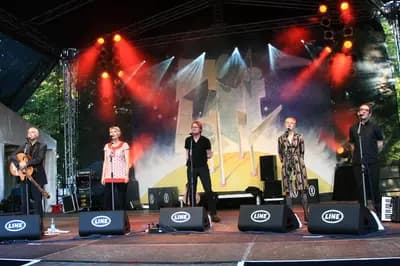
The Balkans have produced some of the most rhythmically complex, emotionally intense, and globally influential music traditions in the world, from the asymmetric folk rhythms of Bulgaria and Macedonia to the Ottoman-influenced turbo-folk of Serbia and the internationally celebrated brass band culture of Roma communities across the region. Balkan music has had a profound impact on world music through artists like Goran Bregovic, whose film scores brought Romani brass music to global audiences, and Fanfare Ciocârlia, who have taken Bulgarian and Romanian wedding music to stages worldwide. Streaming data from 2024 shows Balkan music genres growing at over 30% annually among international listeners aged 18-34.
Curated by our music editors. Builds on critical consensus while letting community vote rewrite the order — updated continuously.
Create a free account or sign in to join the discussion.
Sign in to join the conversation

Goran Bregovic is Bosnia's most internationally celebrated musician — a composer and bandleader who rose to fame as the lead guitarist of Bijelo Dugme, the biggest rock band in Yugoslav history, before becoming the composer behind director Emir Kusturica's most acclaimed films including Time of the Gypsies (1988), Arizona Dream (1993), and Underground (1995, Palme d'Or winner). His Wedding and Funeral Band fuses Romani brass, Orthodox chant, Turkish folk, and Western rock into a hypnotic, celebratory sound that has sold millions of albums worldwide. Bregovic's concerts regularly sell out major European venues and his work with opera singer Cesaria Evora demonstrated his ability to bridge global musical traditions.

Lepa Brena (born Fahreta Jahic in Bosnia in 1960) is the best-selling musical artist in the history of Yugoslavia and the successor states — a pop-folk superstar whose career has spanned over four decades and produced an estimated 50 million records sold across the former Yugoslav region. Her distinctive style blending folk melody with pop production made her the dominant figure of 1980s Yugoslav pop culture, and she remained one of the most commercially successful artists in Serbia, Bosnia, Croatia, and North Macedonia through the 2000s and 2010s. In a 2015 poll of Serbian listeners, she was voted the most popular artist of the 20th century in Serbia.

Fanfare Ciocarlia are a 12-piece Romanian Romani brass band from the village of Zece Prajini in Moldavia who have become the most internationally famous ambassadors of Eastern European Romani music since their international debut in 1996. Their dizzying, fast-paced performances — reaching tempos at which individual notes blur into walls of sound — have been described by critics as "the most exciting live music experience in the world." They have toured 60 countries, collaborated with artists from Borat's Sagdiyev character to the punk band Gogol Bordello, and their recordings on the Piranha label have sold over 500,000 copies globally.

Ceca is Serbia's most commercially successful musical artist of the post-communist era — a turbo-folk superstar who has sold an estimated 20 million albums across the former Yugoslav region and commands audiences of 100,000 or more at open-air concerts in Belgrade's Usce Park. Born Svetlana Velickovic in Zabljak, she rose to fame in the late 1980s as a teenage folk singer before becoming a dominant force in the distinctly Balkan turbo-folk genre that blends Serbian folk melody with dance production. Her concerts remain the largest-attended musical events in the Balkans and her personal and political story — including her marriage to paramilitary commander Arkan — has made her one of the most controversial and discussed cultural figures in Serbian history.

Esma Redzepova (1943-2016) is known as the "Queen of Romani Music" — a Macedonian singer who was one of the first Roma musicians to achieve major international recognition, performing at Carnegie Hall in 1971, collaborating with Yul Brynner, and being nominated for the Nobel Peace Prize in 2002 for her humanitarian work on behalf of Roma children. Her powerful, improvised vocal style drew on centuries of Macedonian Romani musical tradition and she recorded over 500 songs across her 55-year career. Redzepova was a pivotal figure in bringing Roma culture and music to global audiences and remains the most celebrated Romani musician in history.

Zdravko Colic is a Bosnian pop-rock singer who has been the most consistently beloved and popular male vocalist in the former Yugoslav space for over 50 years, with a career beginning in the early 1970s and concerts that continue to sell out arenas across Serbia, Croatia, Bosnia, and beyond. His combination of romantic balladry, rock energy, and folk-influenced melody has made him a transgenerational figure — equally beloved by grandparents who grew up with him in Yugoslavia and grandchildren who discovered him through streaming. A 2023 Belgrade Arena concert sold out 60,000 tickets in 11 minutes, a regional record.

Ivo Papasov is a Bulgarian Roma clarinetist from Kurdzhali who is widely considered the greatest exponent of Bulgarian wedding music (svatbarska muzika) — a genre that combines traditional Bulgarian folk scales and asymmetric rhythms (5/8, 7/8, 9/8 time signatures) with jazz improvisation at extraordinary speeds. His recordings in the 1980s were banned by the Bulgarian communist government as "too Turkish" but bootleg cassettes circulated throughout the country, making him a cult figure before his international breakthrough at WOMAD 1988. Papasov has been described by Yehudi Menuhin as "one of the greatest folk musicians alive" and his influence on Balkan and world music is incalculable.

Djordje Balasevic (1953-2021) was a Serbian singer-songwriter and poet who is considered the greatest lyricist in the history of Yugoslav rock music — a figure whose literary craftsmanship, political courage (openly opposing both Yugoslav nationalism and the Milosevic regime), and tender romanticism made him uniquely beloved across all successor states of Yugoslavia regardless of nationality or political affiliation. His concerts in Belgrade, Zagreb, and Sarajevo after the wars of the 1990s were described as acts of cultural reconciliation. His death in February 2021 from COVID-19 complications was mourned across the entire former Yugoslav region as a national loss in every successor state simultaneously.

Elena Paparizoú (Helena Paparizou) is a Greek-Swedish pop artist who won the Eurovision Song Contest 2005 with "My Number One," achieving Greece's first ever Eurovision victory and triggering a 15-year golden era of Greek Eurovision success that culminated in Dami Im-style global recognition. Born in Gothenburg to Greek parents, she had previously been the lead singer of Antique, the Swedish-Greek duo that represented Greece at Eurovision 2000 and sparked a major international interest in Greek pop. Her post-Eurovision career in Greece has produced multiple platinum albums and she remains one of the best-selling Greek female artists of the 21st century.

Shantel is a Frankfurt-born DJ and producer of Bukovina (Ukrainian-Romanian) heritage who became one of the most important figures in the global popularisation of Balkan music through his "Bucovina Club" club nights and album series beginning in 2005, which brought Balkan brass, klezmer, and folk influences to European dance floors and launched a genre known as "Balkanbeats." His DJ sets at major European festivals — Glastonbury, Roskilde, Sziget — introduced millions of listeners to the rhythmic complexity and exuberant energy of Eastern European folk traditions recontextualised for contemporary club culture. Shantel's 2006 compilation "Bucovina Club" is one of the defining records of 2000s world music and remains a foundational text of the Balkan music revival.
The most-voted lists across every category — curated weekly. Join the early readers.
No spam. One email per week. Unsubscribe anytime.
Explore more Music rankings on Top10Grid
Cast your vote above to unlock the real distribution
Tap the arrows on any item to vote

Top 10 Most Influential Musicians of All Time
39 views · @admin

Top 10 Greatest Female Musicians of All Time
38 views · @admin

Top 10 Greatest Musicians of All Time
27 views · @admin

Top 10 Musicians Who Made More Money From Business Than Music
25 views · @admin

Top 10 Korean Female Solo Artists 2026
22 views · @admin
Top 10 Music Producers Who Made More Hits Than the Artists
21 views · @admin
Because you're viewing Music
Top 10 Greatest Rappers of All Time
794 views · 1 votes

Top 10 Best Nigerian Musicians of All Time
230 views · 0 votes

Top 10 World Cup Songs and Anthems
160 views · 0 votes

Top 10 Greatest Albums of the 2000s
113 views · 0 votes

Top 10 Apple Music — Top Songs (GB) — March 14, 2026
90 views · 0 votes

Top 10 Apple Music — Top Albums (US) — March 13, 2026
75 views · 0 votes

Goran Bregovic is Bosnia's most internationally celebrated musician — a composer and bandleader who rose to fame as the lead guitarist of Bijelo Dugme, the biggest rock band in Yugoslav history, before becoming the composer behind director Emir Kusturica's most acclaimed films including Time of the Gypsies (1988), Arizona Dream (1993), and Underground (1995, Palme d'Or winner). His Wedding and Funeral Band fuses Romani brass, Orthodox chant, Turkish folk, and Western rock into a hypnotic, celebratory sound that has sold millions of albums worldwide. Bregovic's concerts regularly sell out major European venues and his work with opera singer Cesaria Evora demonstrated his ability to bridge global musical traditions.

Lepa Brena (born Fahreta Jahic in Bosnia in 1960) is the best-selling musical artist in the history of Yugoslavia and the successor states — a pop-folk superstar whose career has spanned over four decades and produced an estimated 50 million records sold across the former Yugoslav region. Her distinctive style blending folk melody with pop production made her the dominant figure of 1980s Yugoslav pop culture, and she remained one of the most commercially successful artists in Serbia, Bosnia, Croatia, and North Macedonia through the 2000s and 2010s. In a 2015 poll of Serbian listeners, she was voted the most popular artist of the 20th century in Serbia.

Fanfare Ciocarlia are a 12-piece Romanian Romani brass band from the village of Zece Prajini in Moldavia who have become the most internationally famous ambassadors of Eastern European Romani music since their international debut in 1996. Their dizzying, fast-paced performances — reaching tempos at which individual notes blur into walls of sound — have been described by critics as "the most exciting live music experience in the world." They have toured 60 countries, collaborated with artists from Borat's Sagdiyev character to the punk band Gogol Bordello, and their recordings on the Piranha label have sold over 500,000 copies globally.

Ceca is Serbia's most commercially successful musical artist of the post-communist era — a turbo-folk superstar who has sold an estimated 20 million albums across the former Yugoslav region and commands audiences of 100,000 or more at open-air concerts in Belgrade's Usce Park. Born Svetlana Velickovic in Zabljak, she rose to fame in the late 1980s as a teenage folk singer before becoming a dominant force in the distinctly Balkan turbo-folk genre that blends Serbian folk melody with dance production. Her concerts remain the largest-attended musical events in the Balkans and her personal and political story — including her marriage to paramilitary commander Arkan — has made her one of the most controversial and discussed cultural figures in Serbian history.

Esma Redzepova (1943-2016) is known as the "Queen of Romani Music" — a Macedonian singer who was one of the first Roma musicians to achieve major international recognition, performing at Carnegie Hall in 1971, collaborating with Yul Brynner, and being nominated for the Nobel Peace Prize in 2002 for her humanitarian work on behalf of Roma children. Her powerful, improvised vocal style drew on centuries of Macedonian Romani musical tradition and she recorded over 500 songs across her 55-year career. Redzepova was a pivotal figure in bringing Roma culture and music to global audiences and remains the most celebrated Romani musician in history.

Zdravko Colic is a Bosnian pop-rock singer who has been the most consistently beloved and popular male vocalist in the former Yugoslav space for over 50 years, with a career beginning in the early 1970s and concerts that continue to sell out arenas across Serbia, Croatia, Bosnia, and beyond. His combination of romantic balladry, rock energy, and folk-influenced melody has made him a transgenerational figure — equally beloved by grandparents who grew up with him in Yugoslavia and grandchildren who discovered him through streaming. A 2023 Belgrade Arena concert sold out 60,000 tickets in 11 minutes, a regional record.

Ivo Papasov is a Bulgarian Roma clarinetist from Kurdzhali who is widely considered the greatest exponent of Bulgarian wedding music (svatbarska muzika) — a genre that combines traditional Bulgarian folk scales and asymmetric rhythms (5/8, 7/8, 9/8 time signatures) with jazz improvisation at extraordinary speeds. His recordings in the 1980s were banned by the Bulgarian communist government as "too Turkish" but bootleg cassettes circulated throughout the country, making him a cult figure before his international breakthrough at WOMAD 1988. Papasov has been described by Yehudi Menuhin as "one of the greatest folk musicians alive" and his influence on Balkan and world music is incalculable.

Djordje Balasevic (1953-2021) was a Serbian singer-songwriter and poet who is considered the greatest lyricist in the history of Yugoslav rock music — a figure whose literary craftsmanship, political courage (openly opposing both Yugoslav nationalism and the Milosevic regime), and tender romanticism made him uniquely beloved across all successor states of Yugoslavia regardless of nationality or political affiliation. His concerts in Belgrade, Zagreb, and Sarajevo after the wars of the 1990s were described as acts of cultural reconciliation. His death in February 2021 from COVID-19 complications was mourned across the entire former Yugoslav region as a national loss in every successor state simultaneously.

Elena Paparizoú (Helena Paparizou) is a Greek-Swedish pop artist who won the Eurovision Song Contest 2005 with "My Number One," achieving Greece's first ever Eurovision victory and triggering a 15-year golden era of Greek Eurovision success that culminated in Dami Im-style global recognition. Born in Gothenburg to Greek parents, she had previously been the lead singer of Antique, the Swedish-Greek duo that represented Greece at Eurovision 2000 and sparked a major international interest in Greek pop. Her post-Eurovision career in Greece has produced multiple platinum albums and she remains one of the best-selling Greek female artists of the 21st century.

Shantel is a Frankfurt-born DJ and producer of Bukovina (Ukrainian-Romanian) heritage who became one of the most important figures in the global popularisation of Balkan music through his "Bucovina Club" club nights and album series beginning in 2005, which brought Balkan brass, klezmer, and folk influences to European dance floors and launched a genre known as "Balkanbeats." His DJ sets at major European festivals — Glastonbury, Roskilde, Sziget — introduced millions of listeners to the rhythmic complexity and exuberant energy of Eastern European folk traditions recontextualised for contemporary club culture. Shantel's 2006 compilation "Bucovina Club" is one of the defining records of 2000s world music and remains a foundational text of the Balkan music revival.
If you liked this, you might love these


Top 10 Greatest Rappers of All Time
10 items

Top 10 Best Nigerian Musicians of All Time
10 items

Top 10 World Cup Songs and Anthems
12 items

Top 10 Greatest Albums of the 2000s
10 items

Top 10 Apple Music — Top Songs (GB) — March 14, 2026
12 items

Top 10 Apple Music — Top Albums (US) — March 13, 2026
12 items