
Top 10 Worst Music Awards Decisions
From Grammy upsets to shocker snubs, these are the music awards moments that made fans scream at their TVs — and still spark heated debate. Which one outraged you most?
Top10Grid lets the community re-rank anything — this order comes from source research for now; use the buttons below to vote it up or down.

Current Rankings
- 0

Macklemore's The Heist beating Kendrick Lamar's good kid, m.A.A.d city for Best Rap Album at the 2014 Grammys is arguably the most embarrassing decision in the awards' history. The choice defied critical consensus, as Kendrick's album had a Metacritic score of 91, compared to 74 for The Heist. Macklemore himself recognized the error, texting Kendrick an apology that read, 'You got robbed.' The snub sparked years of debate and remains a symbol of Grammy bias, with Kendrick later winning Best Rap Album in 2016 for To Pimp a Butterfly.
- 0

The Recording Academy's 1989 decision to award the first-ever Hard Rock/Metal Grammy to Jethro Tull, a flute-driven prog-rock band, over Metallica's ...And Justice for All remains a jaw-dropping misstep. Metallica's album sold over 8 million copies in the U.S. alone, while Jethro Tull's Crest of a Knave moved fewer than 1 million. The academy's own voters reportedly had no metal nominees listed, highlighting systemic oversight.
- 0
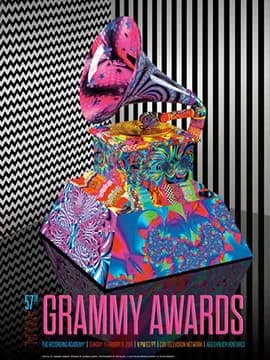
Beck's Morning Phase winning Album of the Year over Beyoncé's self-titled visual album at the 2015 Grammys was a watershed moment for accusations of racial bias. Beyoncé's album debuted at No. 1, sold over 4 million units globally, and redefined the album format with its 14-song video component. In contrast, Beck's album received solid reviews but lacked cultural impact, with a Metacritic score of 81 to Beyoncé's 89. Kanye West's nearly staged interruption encapsulated public outrage.
- 0

Taylor Swift's 1989 winning Album of the Year over Beyoncé's Lemonade at the 2017 Grammys deepened perennial criticism of the academy's oversight of Black artistry. Lemonade, a visually and thematically ambitious work addressing race and feminism, sold 2.5 million copies in its first year and earned a Metacritic score of 92, outranking 1989's 76. Despite Swift's commercial success, 1989's sales of 10 million were high, but Lemonade's cultural resonance was unmatched.
- 0

In a truly bewildering decision at the 2012 Grammy Awards, indie-folk band Bon Iver, primarily known for their melancholic, experimental sound, took home the award for Best New Artist. This choice notably overshadowed Nicki Minaj, who had been a dominant force in pop and hip-hop for two consecutive years, boasting multiple chart-topping hits and a platinum-selling debut album, *Pink Friday*. The disparity in commercial success and cultural impact between the two acts was significant, with Minaj's album selling over 2 million copies in the US alone, far exceeding Bon Iver's *Bon Iver, Bon Iver* sales of roughly 400,000 within the same period. This outcome starkly highlighted the Grammy voters' apparent disconnect from the prevalent mainstream music landscape, a criticism that often plagues the Academy's selections. The decision was widely lambasted as an example of the Grammys prioritizing niche appeal over widespread popular and critical acclaim.
- 0

The 1990 Grammy Awards witnessed an unprecedented moment in music history when pop duo Milli Vanilli were stripped of their Best New Artist Grammy due to a lip-syncing scandal. This marked the first and only time in the Grammy's history that an award was revoked, sending shockwaves through the industry. The duo, fronted by Fab Morvan and Rob Pilatus, had achieved massive commercial success, selling over 7 million copies of their debut album *Girl You Know It's True* in the US alone. However, revelations that they had not sung on their records, but merely fronted tracks recorded by uncredited vocalists, exposed a fundamental lack of authenticity. The incident not only deeply embarrassed the Recording Academy but also ignited a widespread debate about artistic integrity and the often-hidden realities of music production, permanently altering how the industry viewed and vetted its rising stars. This scandal stands as a stark warning compared to other controversies, which typically involve snubs rather than outright disqualifications.
- 0

Despite releasing "Blinding Lights," the biggest song of 2020, The Weeknd astonishingly received zero nominations for the 2021 Grammy Awards. The track dominated global charts, spending four weeks at number one on the Billboard Hot 100 and becoming the first song in history to spend a full year in the top 10 of the Billboard Hot 100. Furthermore, its album, *After Hours*, sold over 4 million units worldwide, significantly outperforming many nominated albums. This complete shutout prompted The Weeknd, whose real name is Abel Tesfaye, to publicly label the Grammys as "corrupt" and announce his intention to boycott future submissions, a decisive move that garnered significant industry support. His reaction was far more definitive than Kanye West's criticisms, which have often been more performative. The controversy intensified the ongoing scrutiny of the Recording Academy's nomination process, with many critics citing the decision as a prime example of the awards failing to recognize groundbreaking, commercially successful artistry in favor of less impactful choices.
- 0

The 2001 Grammy Awards delivered a truly controversial outcome when Steely Dan's *Two Against Nature* claimed the coveted Album of the Year award. This decision famously overlooked two critically acclaimed and culturally impactful albums: Radiohead's avant-garde masterpiece *Kid A* and Eminem's groundbreaking *The Marshall Mathers LP*. While *Two Against Nature* was a respectable jazz-rock album, selling over 1 million copies in the US, its victory was widely perceived as the Recording Academy prioritizing safe, nostalgic choices over genuine artistic innovation and contemporary influence. *The Marshall Mathers LP*, by contrast, sold over 21 million copies globally and sparked significant cultural dialogue, showcasing the Grammys' tendency to reward established acts rather than embrace evolving musical landscapes. This choice sparked outrage among fans and critics alike, who viewed it as a stark example of the Grammys' disconnect from the cutting edge, a sentiment echoed in the Bon Iver over Nicki Minaj decision years later. Radiohead's *Kid A* alone redefined alternative rock, making Steely Dan's win feel comparatively out of touch with the era's musical advancements.
- 0

Herbie Hancock's *River: The Joni Letters* shockingly claimed Album of the Year in 2008, a decision that widely perplexed critics and overshadowed more culturally impactful releases. This jazz tribute to Joni Mitchell notably triumphed over Amy Winehouse's critically adored *Back to Black* and Kanye West's genre-defining *Graduation*. While jazz critics lauded *River* for its depth and craft, mainstream audiences and industry observers viewed it as a 'legacy award' for the veteran musician. Commercially, *River* was a dark horse; before the Grammys, it had sold a modest 55,000 copies, a stark contrast to *Graduation*'s nearly 2 million and *Back to Black*'s impressive 1.5 million in sales at the time. The win sparked a significant post-Grammy sales surge for Hancock, with *River*'s sales increasing by 966% the following week, ultimately reaching 114,000 units.
- 0

Bruno Mars' *24K Magic* winning Album of the Year in 2018 over Kendrick Lamar's *DAMN.* epitomized the Grammy's perceived preference for polished pop over groundbreaking artistic statements. *DAMN.* was a critical darling and a commercial powerhouse, becoming the first non-classical or jazz album to win a Pulitzer Prize for Music. It debuted at number one on the Billboard 200, selling 353,000 copies in its first week and accumulating over 340 million streams. In contrast, *24K Magic*, while commercially successful with 231,000 equivalent album units sold in its first week and over 400 million global streams, was often described by critics as a fun, well-crafted homage to '90s R&B rather than a revolutionary work. This decision reinforced a narrative among many fans and critics that the Recording Academy frequently overlooks albums with significant cultural and artistic weight, like *DAMN.*, in favor of more accessible, retro-inspired projects like *24K Magic*.
Image credits
- Macklemore Wins Best Rap Album Over Kendrick Lamar (2014): GNX (album) / Wikipedia
- Beck Wins Album of the Year Over Beyoncé (2015): 57th Annual Grammy Awards / Wikipedia
- Bon Iver Wins Best New Artist Over Nicki Minaj (2012): Nicki Minaj / Wikipedia
- Milli Vanilli Stripped of Best New Artist Grammy (1990): Prince (musician) / Wikipedia
Rank it your way
Remix this list into your own ranking, or head to the play hub for every game mode and community breakdown — blind mode, challenges, tier lists, and more.
You Might Also Like

Top 10 Most Controversial Music Videos
Top 10 Most Controversial Music Videos

Top 10 Most Controversial Song Lyrics
Top 10 Most Controversial Song Lyrics

Top 10 African Music Genres
Top 10 African Music Genres
Top 10 Greatest Hip-Hop Albums of All Time
#1 The Notorious B.I.G. — Ready to Die (1994) · #2 Jay-Z — The Blueprint (2001) · #3 Kendrick Lamar — To Pimp a Butterfly (2015)

Top 10 Best Jazz Albums
#1 Kind of Blue — Miles Davis · #2 A Love Supreme — John Coltrane · #3 Time Out — The Dave Brubeck Quartet

Top 10 Apple Music Songs: May 13–19, 2026
#1 Choosin Texas - Ella Langley · #2 Be Her - Ella Langley · #3 drop dead - Olivia Rodrigo