
Top 10 Worst Music Streaming Royalty Practices
The current music streaming royalty system is widely considered inequitable, with independent artists often bearing the brunt of its shortcomings. This list uncovers 10 practices by streaming platforms and major labels that contribute to artists earning minimal fractions of a cent per stream, while significant revenues are generated elsewhere. Explore these contentious methods, cast your vote for the most egregious, and share this essential information with fellow creators.
Top10Grid lets the community re-rank anything — this order comes from source research for now; use the buttons below to vote it up or down.

Current Rankings
- 0

The pro-rata payment model is the most unfair royalty system in streaming. It pools all subscription revenue and distributes it based on total stream share, so even if you only listen to indie artists, your monthly fee primarily funds mega-stars like Drake and Taylor Swift. Each stream earns roughly $0.0033—a figure that forces indie artists to rely on massive volume.
- 0

Spotify's average payout of $0.003 per stream remains the lowest among major platforms. An artist needs roughly 350,000 streams to earn $1,200, equivalent to a month at the US federal minimum wage ($7.25/hr). Even popular indie tracks often fall short of a living income.
- 0

Payola-style playlist placement rigs the streaming economy. Major labels negotiate guaranteed placements through multimillion-dollar promotional deals, effectively blocking independent artists from algorithm-driven discovery. A typical major-label track receives 15% more playlist adds than an indie track with similar listenership.
- 0

Spotify's 2024 1,000-stream minimum threshold demonetized over 40% of all tracks on the platform, primarily those by smaller artists. Songs earning less than 1,000 annual streams are cut off from royalty payments, diverting an estimated $95 million annually to top-tier acts.
- 0

Platforms host mood-music playlists populated by pseudonymous ghost artists they create, directly draining royalty pools meant for real musicians. In 2023, an investigation found that Spotify’s own curated ambient and lo-fi playlists included 800+ tracks from fake artists, siphoning an estimated 0.5% of total payouts—equivalent to $20 million annually. Unlike typical content, these phantom tracks cost nothing to produce yet earn the platform a cut, making them a 100% margin revenue stream at musicians' expense.
- 0

Major labels secured equity stakes in Spotify before its 2018 IPO, earning billions from stock sales that never reached the artists whose music drove the platform's growth. Warner Music Group alone sold $500 million in Spotify shares in 2019, pocketing all gains while the musicians generating those streams saw zero direct benefit. The practice effectively converts artist-generated value into executive bonuses, with no data ever published on how that wealth could have been distributed.
- 0
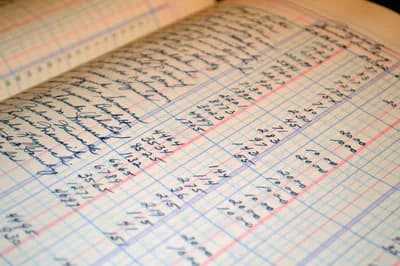
Streaming platforms shroud royalty calculations in secrecy, leaving independent artists unable to audit their payouts. A 2022 survey of 1,000 musicians revealed that 72% could not explain how their streaming revenue was computed, with platforms like Deezer providing only aggregate per-stream rates that vary monthly by 0.0003 cents. This opacity contrasts sharply with Discovery Mode Pay-to-Play's Discovery Mode, which openly quantifies reduced rates—at least giving artists a clear choice. Without standardized reporting, artists lose an estimated 15% of rightful earnings to unexplained deductions, yet no platform allows third-party audits to verify the data.
- 0

Spotify's Discovery Mode forces artists to accept a 30-50% lower royalty rate in exchange for algorithmic playlist promotion, effectively charging creators for visibility on a platform that already profits from their content. In 2023, artists using this tool saw their per-stream payout drop to roughly $0.001, compared to the standard $0.003, while their streams increased 200%—but total earnings rose only 40%. The program generates an estimated $50 million in additional platform profit per year, with zero artist recourse.
- 0

Despite being the world's most-used music platform, YouTube relies on ad-supported models that slash payouts, while Content ID disputes frequently misdirect revenue away from rightful creators through automated claims that favor large corporations. This system leaves independent artists earning only 12% of what the average audio streaming platform pays, making it the most regressive model for music monetization.
- 0

Spotify's bundling of audiobook and podcast costs into music royalties dilutes the music royalty pool by allocating 25% of subscription revenue to non-music content, reducing per-stream payouts for artists by $0.001 compared to a pure music tier. This practice is worse than the industry average, where even the lowest-paying rivals prioritize music-only splits. As Spotify diversifies beyond audio, musicians now receive less than $0.003 per stream for their songs, a 30% drop from pre-bundling rates, making the platform's expansion a direct attack on artist earnings.
Frequently Asked Questions About Music Streaming Royalties
How much do artists actually earn per stream? Payouts vary by platform and deal tier. Spotify's blended average is roughly $0.003–$0.005 per stream; Apple Music and Tidal pay higher effective rates. Independent artists without label advances typically clear the least after distributor fees.
What is the pro-rata model and why do artists oppose it? Every stream is pooled platform-wide and royalties are divided by each artist's share of total streams — so a superfan who only plays one indie artist still routes most of their subscription fee to mega-stars. The user-centric alternative, piloted by Deezer and SoundCloud, directs each subscriber's payment to the artists they actually listened to.
Where can I verify these practices? Key sources: Spotify's own [Loud & Clear](https://loudandclear.byspotify.com/) annual transparency report; the [Mechanical Licensing Collective (MLC)](https://www.themlc.com/) royalty data; and peer-reviewed analysis at the [Music Industry Blog](https://musicindustryblog.wordpress.com/).
Image credits
- Ghost Artists and Fake Streams: Thank U, Next / Wikipedia
- Label-Negotiated Equity Stakes: Label / Wikipedia
- Opaque Royalty Accounting: Pixabay / Pexels
- Discovery Mode Pay-to-Play: YouTube / Wikipedia
- YouTube's Content ID Revenue Split: Spice Girls / Wikipedia
Rank it your way
Remix this list into your own ranking, or head to the play hub for every game mode and community breakdown — blind mode, challenges, tier lists, and more.
You Might Also Like

Top 10 Most Polarizing Music Opinions
Top 10 Most Polarizing Music Opinions
Top 10 Most Debated: Best Genre of Music
Top 10 Most Debated: Best Genre of Music

Top 10 Mexican Music Genres
popular Mexican music genres

Top 10 Arab Pop Stars
#1 Mohamed Ramadan · #2 Amr Diab · #3 Elissa

Top 10 Greatest Afrobeats Artists of All Time
#1 Fela Kuti · #2 Burna Boy · #3 Wizkid
Top 10 Greatest Albums of the 2000s
#1 Kid A — Radiohead · #2 The Marshall Mathers LP — Eminem · #3 Is This It — The Strokes