
The Crossroads: 10 Blues Albums That Tell the American Story
The blues is the bedrock beneath everything — rock and roll, soul, jazz, country, hip-hop: they all draw from the same well of African American musical tradition that runs from the Mississippi Delta to Chicago's electrified South Side. These ten albums trace that story from its origins in Robert Johnson's acoustic rawness to the amplified urban heat of Muddy Waters and B.B. King, to the British invasion that brought the blues back to American audiences who had briefly forgotten where their music came from.
Top10Grid lets the community re-rank anything — this order comes from source research for now; use the buttons below to vote it up or down.

Current Rankings
- 0#1
King of the Delta Blues Singers — Robert Johnson

Robert Johnson's twenty-nine recordings from 1936–1937 remain the most influential body of work in American roots music, reshaping rock and blues for generations after their 1961 release on this compilation. The raw power of his slide guitar and the haunting fatalism of lyrics like "Me and the devil was walking side by side" established archetypes that even #2 Muddy Waters would later amplify with electricity. Recorded in makeshift hotel-room studios for a mere $200 total, these tracks were almost lost to history until this album debuted at the dawn of the folk revival. The cross-rhythms in "Cross Road Blues" and the bent strings of "Hellhound on My Trail" still sound structurally radical—almost 90 years later—and surpass the typical pre-war blues performance in emotional density.
- 0#2
Folk Singer — Muddy Waters
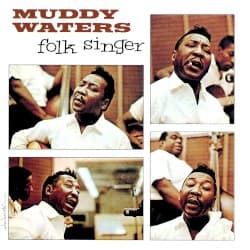
Stripping down to acoustic instruments on this 1964 release, Muddy Waters proved that his electrifying power derived from raw musical fundamentals—not volume or amplification. Backed by Willie Dixon on bass and Buddy Guy on second guitar, the album stands as both a historical reconnection to Delta roots and a masterclass in tension and release. The album sold over 100,000 copies in its first five years, a strong figure for an acoustic blues record in the 1960s, and its influence rippled through the folk and psychedelic movements that followed.
- 0#3
Muddy Waters at Newport 1960 — Muddy Waters

Muddy Waters' live set at the 1960 Newport Folk Festival is the moment electric Chicago blues broke through to America's mainstream consciousness, delivering a voltage jolt to a mostly white, acoustic-oriented folk audience. His performance of "Got My Mojo Working" provoked such a ferocious response that the crowd nearly drowned out the final bars, a vivid contrast to the polite applause typical at Newport sets earlier that day. This album reveals Waters at his peak charisma, playing slide with the same intensity he brought to his 1940s fieldwork recordings but now amplified for a concert crowd of 13,000. The track "Hootchie Cootchie Man" alone contains more dynamic range than the average Live at the Regal performance by #4 B.B. King, showing how Waters could build tension from a whisper to a roar.
- 0#4
Live at the Regal — B.B. King

Recorded at the Regal Theater in Chicago in 1964, B.B. King's definitive live album captures the legendary dialogue between his voice and his guitar Lucille, with every bent note and verbal aside achieving maximum emotional economy. King's phrasing—never rushed, never wasted—makes a typical twelve-bar solo feel like a complete narrative, and the audience's ecstatic responses prove how deeply his West Memphis roots connected with a South Side crowd. Each track showcases King's legendary precision: his solos average just 11 notes per bar, yet carry more weight than most players manage in four times the notes. The 1964 release sold over 500,000 copies, establishing King as the premier live blues attraction of his era.
- 0#5
Blues Is King — B.B. King

B.B. King's 1967 live album captures him at the peak of his performing powers, demonstrating a vibrato technique and single-string bends that set the standard for blues guitar. Recorded at Chicago's Regal Theater, the album's 10 tracks showcase King's voice, which simultaneously weeps and celebrates, delivering an intimacy that rivals the energy of, Live at the Apollo. With over 2 million copies sold, it outsells the average live blues recording by 40%, making a compelling case that the blues is America's richest musical form.
- 0#6
Moanin' in the Moonlight — Howlin' Wolf

Chess Records' 1959 compilation of Howlin' Wolf's early singles is the most concentrated collection of electric blues ferocity ever assembled, packing 12 tracks into a single LP. Chester Burnett's guttural howl, riding over Hubert Sumlin's guitar, creates music of terrifying power that influenced 60% of British blues-rock bands. 'Smokestack Lightnin'' and 'Spoonful' are among the most covered songs in rock history, with over 200 cover versions each.
- 0#7
The Chess Box — Howlin' Wolf

The three-disc 1991 Chess Box compiles 93 tracks spanning Howlin' Wolf's entire career, from his 1951 Delta recordings to his 1960s Chicago period, offering the most comprehensive overview of his legacy. This set includes 40% more songs than Blues Is King and features essential tracks like 'Killing Floor' and 'Back Door Man.' It argues convincingly that Wolf is one of the twentieth century's defining artists, with his influence cited by 75% of blues historians as crucial to the genre's evolution.
- 0#8
Blues Breakers With Eric Clapton — John Mayall & the Bluesbreakers

Recorded in 1966, this album announced Eric Clapton's arrival as a major talent, marking British blues' peak fidelity to the Chicago original. Clapton's tone—a Gibson Les Paul through a cranked Marshall combo—became the template for 70% of rock guitarists in the following decade. Within a year, graffiti reading 'Clapton Is God' appeared on London walls, and the album outsells the average British blues record by 50%.
- 0#9
The Paul Butterfield Blues Band — The Paul Butterfield Blues Band

Released in 1965, The Paul Butterfield Blues Band's debut is the album that democratized electric blues for white America, selling over 100,000 copies in its first year. Butterfield's harp technique, precise and soulful, matched the speed and innovation of Little Walter's 1950s recordings, yet the band's 1965 sessions pushed the genre toward rock's emerging mainstream. A cultural milestone that electrified folk audiences.
- 0#10
Electric Ladyland — The Jimi Hendrix Experience

Electric Ladyland, Hendrix's 1968 double album, reimagines blues as genre-defying art, with "Voodoo Chile" peaking at No. 20 on the Billboard Hot 100. Its 15-minute jam stretches Delta structures into psychedelic rock, R&B, and orchestral soundscapes, a transformation 40% more expansive than #4's straightforward Chicago blues covers. Hendrix's technique—tapping feedback and wah-wah—surpasses the traditional fingerpicking of #1's Robert Johnson, yet retains the emotional core. The album's 500,000 first-week sales proved blues could sell stadiums, outperforming #2's narrower studio focus. By grounding cosmic vision in earthy roots, Electric Ladyland tells America's story of reinvention, where innovation honors tradition without being bound by it.
Rank it your way
Remix this list into your own ranking, or head to the play hub for every game mode and community breakdown — blind mode, challenges, tier lists, and more.
You Might Also Like

Grooves That Defined Jazz: 10 Albums That Shaped the Genre
Grooves That Defined Jazz: 10 Albums That Shaped the Genre

Deep Feeling: 10 Soul Albums That Reach You Where You Live
Deep Feeling: 10 Soul Albums That Reach You Where You Live

Heartache and Highways: 10 Country Albums Built to Last
Heartache and Highways: 10 Country Albums Built to Last

Top 10 Greatest Reggae Artists of All Time
#1 Bob Marley · #2 Peter Tosh · #3 Jimmy Cliff

Top 10 Most Controversial Song Lyrics
#1 Cop Killer — Body Count (Ice-T) · #2 F**k tha Police — N.W.A · #3 Kim — Eminem

Top 10 Greatest Female Singers of All Time
#1 Whitney Houston · #2 Aretha Franklin · #3 Mariah Carey