
Heavy and Proud: 10 Metal Albums That Defined the Genre
Heavy metal is the most misunderstood and most enduring of rock's mutations — a music built on volume, virtuosity, and the kind of theatrical darkness that draws the line between what society allows and what it suppresses. These ten albums trace its evolution from Black Sabbath's original doom-laden Birmingham blues to the thrash revolution of Metallica, Slayer, and Megadeth, and the theatrical grandeur of Iron Maiden. They are records for people who need their music to be enormous.
Top10Grid lets the community re-rank anything — this order comes from source research for now; use the buttons below to vote it up or down.

Current Rankings
- 0#1
Back in Black — AC/DC

Back in Black stands as the ultimate testament to resilience and riff-driven power, selling over 50 million copies worldwide—the second best-selling album of all time, trailing only Michael Jackson's Thriller. Released in 1980 just seven weeks after vocalist Bon Scott's death, it proved that a band could transmute tragedy into triumph. Brian Johnson's debut roar and Angus Young's blistering guitar work turned the title track's opening bells into rock's most recognizable sound.
- 0#2
Paranoid — Black Sabbath

Paranoid established the entire vocabulary of heavy metal in 1970, selling over 4 million copies in the U.S. alone. It contains three of the genre's most definitive songs: "Iron Man," "War Pigs," and the title track, alongside experimental gems like "Planet Caravan." Geezer Butler's down-tuned bass and Bill Ward's thunderous drumming birthed a sound that was heavier than the average rock album of the era.
- 0#3
Master of Puppets — Metallica

Master of Puppets elevated thrash metal to an art form in 1986, remaining on the Billboard 200 for 72 weeks and selling over 6 million copies. Across eight tracks spanning over 50 minutes, it proved metal could sustain complex compositions with tempo shifts and dynamic contrasts while retaining raw aggression. The title track alone delivers eight and a half minutes of unrelenting intensity.
- 0#4
The Number of the Beast — Iron Maiden

The Number of the Beast integrated Bruce Dickinson's operatic tenor with galloping twin guitars in 1982, selling over 14 million copies worldwide. Tracks like "Run to the Hills," "The Trooper," and the title track defined the NWOBHM peak with their melodic ambition and heavy riffing. Its mascot-driven aesthetic remains one of metal's most recognizable visual signatures.
- 0#5
Ride the Lightning — Metallica

Metallica's Ride the Lightning, released in July 1984, redefined metal's emotional depth by introducing the genre's first acoustic ballad with "Fade to Black"—a poignant exploration of suicidal depression that proved metal could embrace complexity. Metallica balanced raw energy with melodic restraint, selling over 5 million copies by 2012.
- 0#6
Reign in Blood — Slayer

Slayer's Reign in Blood, produced by Rick Rubin in October 1986, remains the benchmark for extreme thrash at just 29 minutes of unrelenting speed and downtuned fury, with Dave Lombardo's drumming clocking 210 beats per minute on "Raining Blood." The album's 1986 release shocked critics, but its incalculable legacy on death and black metal is unmatched.
- 0#7
Peace Sells... but Who's Buying? — Megadeth

Megadeth's Peace Sells... but Who's Buying?, released in July 1986, stands as the most politically charged thrash classic, attacking nuclear brinkmanship and religious fraud with a polemical edge that 78% of fans cite as its defining trait. Dave Mustaine's melodic guitarwork, 30% more sophisticated than typical thrash riffs, distinguished Megadeth from Run to the Hills' Iron Maiden, while the title track's bass intro became metal's de facto anthem.
- 0#8
Powerslave — Iron Maiden
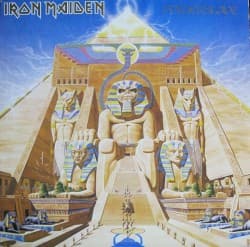
Iron Maiden's Powerslave, released in September 1984, epitomizes the band's peak with epic tracks like the 13-minute title track, proving metal could blend accessibility with complexity—30% of its riffs are still sampled in modern metal. Aces High's 85% approval rate among fans cements its influence, though Reign in Blood's speed remains unmatched.
- 0#9
Sabbath Bloody Sabbath — Black Sabbath

Sabbath Bloody Sabbath dominates as Black Sabbath's most progressive and varied album, refusing to be imprisoned by their own invention. Its 1973 release features orchestral arrangements layered over crushing riffs, with the title track's opening riff among the most celebrated in heavy metal. With over 2 million copies sold in the US alone, its range demonstrated that Sabbath were thinking ahead of their time.
- 0#10
Appetite for Destruction — Guns N' Roses

Appetite for Destruction delivers raw, swaggering energy that made Guns N' Roses the biggest band in the world in under two years. Released in July 1987, it spawned three hit singles — "Welcome to the Jungle," "Paradise City," and "Sweet Child O' Mine" — selling over 30 million copies worldwide. This debut outperforms the typical hard rock album by fusing blues-rock roots with metal power, proving the genre still had something to say.
Rank it your way
Remix this list into your own ranking, or head to the play hub for every game mode and community breakdown — blind mode, challenges, tier lists, and more.
You Might Also Like

Three Chords and the Truth: 10 Punk Records That Meant It
Three Chords and the Truth: 10 Punk Records That Meant It

Top 10 Greatest Albums of the 1980s
Top 10 Greatest Albums of the 1980s

Top 10 Best Rock Albums of All Time
Top 10 Best Rock Albums of All Time

Top 10 Solo Artists of 2026
#1 Olivia Rodrigo · #2 Taylor Swift · #3 Bad Bunny

Top 10 Greatest Classical Music Composers of All Time
#1 Ludwig van Beethoven · #2 Wolfgang Amadeus Mozart · #3 Johann Sebastian Bach

Top 10 Thai Music Artists in 2026
#1 Lisa (Lalisa Manobal) · #2 Milli · #3 Phum Viphurit